
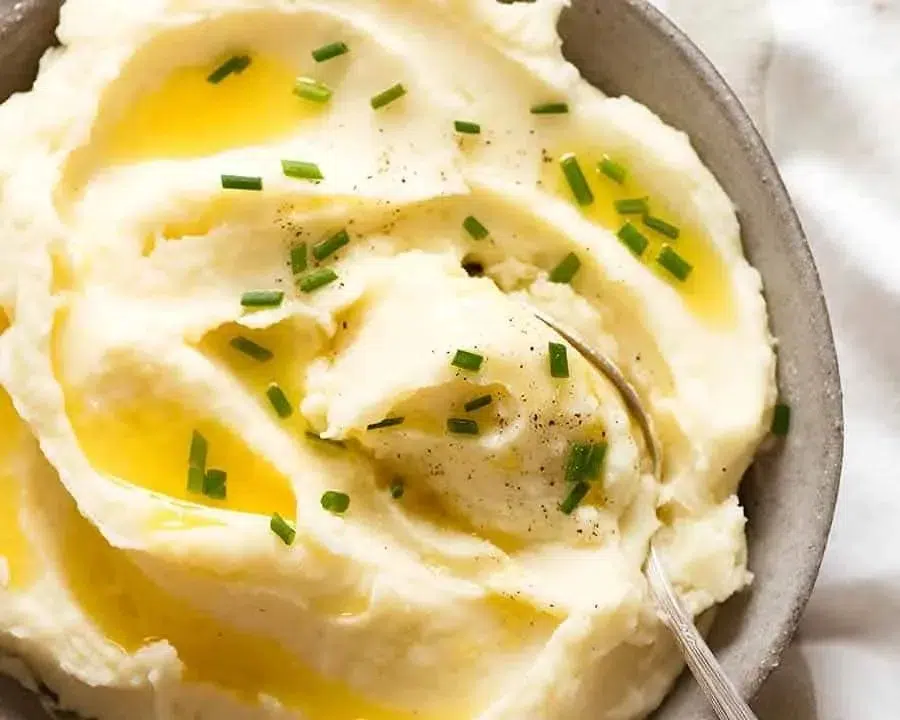
Silky, Foolproof Mashed Potato
Steam-sweet potato flesh, warm butter, and hot cream combine into creamy mashed potatoes that melt on the tongue. This is the version I refined after testing it eight times in a busy kitchen and at home. I tuned the salt, fat ratio, and mash method so the texture stays velvety without gluey bits. Read on for precise measurements, pro techniques, and timing cues so you get the same result every time. If you need to make them ahead for a holiday, this guide shows the best method to reheat without losing silkiness: make-ahead mashed potato tips.
Why this recipe works
- Gentle steaming and proper draining keep potatoes dry enough to absorb butter and cream without getting gluey.
- Mashing while the potatoes are hot helps fats emulsify into the starch, giving silkiness rather than lumpiness.
- Using a ricer or food mill produces uniform pieces that require less mechanical force, preventing a gummy texture.
- Warm dairy folded in slowly creates an emulsion that coats starch granules for a glossy finish.
- Salted cooking water seasons the potatoes from the inside, so the finished dish tastes balanced.
Ingredients breakdown
- 1.5 kg (3.3 lb) Yukon Gold or russet potatoes — Yukon Golds are naturally creamy; russets give a fluffier finish. Don’t mix unless you like variable texture.
- 113 g (1 stick / 8 tbsp) unsalted butter, plus extra for serving — butter adds fat and mouthfeel. Use unsalted so you control salt.
- 240 ml (1 cup) heavy cream, warmed — heavy cream gives silkiness and body. For lighter potatoes, use 120 ml (½ cup) milk plus 120 ml (½ cup) low-fat milk.
- 120 ml (½ cup) whole milk, warmed — adjusts texture. Use only warmed dairy; cold liquid cools the mash and clumps starch.
- 2–3 tsp Diamond Crystal kosher salt (or 1½ tsp Morton’s) — kosher salt varies by brand. If using Morton’s, halve the volume.
- Freshly ground black pepper to taste.
- Optional: 2 cloves garlic, smashed and added to the cooking water for gentle flavor infusion; remove before mashing.
Substitutions and impact warnings: - Greek yogurt can replace up to half the cream for tang and a lighter texture, but the flavor will be tangier.
- For a vegan version, use 113 g (8 tbsp) vegan butter and 360 ml (1½ cups) full-fat coconut milk; texture shifts slightly and flavor becomes coconut-forward.
- If you swap potato variety, expect different water content and starchiness; adjust dairy slowly.
Essential equipment
- Large, heavy-bottomed pot (6–8 quart) for even boiling.
- Colander with generous surface area for draining.
- Potato ricer or food mill (preferred) for the silkiest texture. If you don’t have one, a well-drained box grater works in a pinch; see a creative home method in this chicken-mashed recipe: chicken mashed potato bowls.
- Large heatproof bowl for combining potatoes and dairy.
- Bench scraper or wooden spoon for folding.
- Instant-read thermometer is handy but not required.
If you lack a ricer, a sturdy masher plus careful folding works. Many home cooks use a hand mixer — but avoid overbeating to prevent gluey potatoes.
Step-by-step instructions
Prep Time: 15 minutes. Cook Time: 25 minutes. Inactive Time: 0 minutes. Total Time: about 40 minutes. Makes 6 generous servings.
Step 1: Choose and scrub the potatoes
Select 1.5 kg (3.3 lb) Yukon Gold or russet potatoes and scrub them clean under cold running water. Leave the skins on for boiling; they protect the flesh and reduce water absorption. Trim any dark spots. Timing: 5–10 minutes.
Step 2: Cut and start in cold water
Quarter potatoes to roughly equal sizes — about 3–4 cm (1–1½ inch) pieces for even cooking. Put them in the pot and cover with cold water by 2.5 cm (1 inch). Add 1 tsp kosher salt to the water. Start in cold water so the outside and inside cook at the same rate. Timing: 1–2 minutes prep plus waiting to boil.
Step 3: Bring to a simmer and cook until tender
Bring to a gentle boil, then reduce to a simmer. Cook until a fork slides into the thickest piece with no resistance, about 15–20 minutes. Sensory cue: the potatoes should feel soft and fall apart when pressed. Drain immediately in a colander and let steam-dry for 2 minutes. Timing: 15–20 minutes cooking; 2 minutes draining.
Step 4: Rice or mill the potatoes hot
Press the potatoes through a ricer or food mill into a warm bowl. If using a masher, mash briefly until no large lumps remain. Do not overmix — excessive mechanical mixing releases too much starch and makes mash gluey. Timing: 2–3 minutes.
Step 5: Warm the dairy and butter
Combine 113 g (8 tbsp) butter and 240 ml (1 cup) heavy cream with 120 ml (½ cup) whole milk in a small saucepan and warm to 60–65°C (140–150°F) — hot to the touch but not boiling. Warm dairy blends more easily and keeps the potatoes hot. Timing: 3–5 minutes.
Step 6: Fold warm dairy into the potatoes
Make a shallow well in the riced potatoes and add butter to melt, folding gently with a wooden spoon or bench scraper. Pour warmed cream and milk in a steady stream while folding until you reach the desired consistency. Season with 1–2 tsp kosher salt (adjust to taste) and freshly ground pepper. Taste and adjust. Timing: 2–3 minutes. Sensory cue: finished potatoes should be smooth, glossy, and pourable but not runny.
Step 7: Finish and serve
Transfer to a warmed serving bowl and top with an extra pat of butter, a sprinkle of black pepper, or chopped chives. Serve immediately for best texture. If holding for more than 15 minutes, keep in a warm oven at 90–100°C (200–210°F) covered. Timing: immediate serving or gentle holding.
Expert Tips & Pro Techniques
- Use warm dairy. Cold cream cools the potatoes and causes starch to seize, creating a pasty texture.
- Avoid using a high-speed mixer. A hand mixer or stand mixer can easily overwork potatoes and make them gummy.
- For the silkiest result, rice the potatoes while still piping hot. Cooling before ricing increases lumps.
- Common mistake: adding too much liquid at once. Add the warmed cream slowly and stop when the texture is right.
- Make-ahead tip: cool mashed potatoes quickly, store in an airtight container for up to 2 days, and reheat with extra warm cream. For holidays, reheat at 160°C (325°F) for 25–30 minutes in a covered dish, stirring halfway.
- Professional technique adapted for home: chefs often whip in clarified butter for shine. At home, melt unsalted butter and let solids settle; pour off the clarified fat and fold it in at the end for a glossy finish.
- Rescue trick: if mash becomes gluey, fold in 1–2 tbsp of sour cream or Greek yogurt per serving to loosen texture and add acidity.
Storage & reheating
- Refrigerator: Cool quickly, place in an airtight container, and store for up to 3–4 days.
- Freezer: Mashed potatoes can be frozen, but texture softens. Pack into freezer-safe containers with a layer of melted butter on top to protect surface. Freeze for up to 2 months. Thaw in the fridge overnight.
- Reheating: Reheat gently in a 175°C (350°F) oven for 10–20 minutes, stirring once and adding warm milk or cream as needed to restore silkiness. Microwave only for small portions; reheat in short bursts and stir to avoid hot spots.
Variations & substitutions
- Garlic Mashed: Add 2 cloves roasted garlic mashed with the potatoes. Everything else stays the same. Roast garlic for 25–30 minutes at 200°C (400°F).
- Vegan version: Replace butter with 113 g (8 tbsp) vegan butter and use 360 ml (1½ cups) full-fat coconut milk. Flavor will be slightly coconutty; add 1 tbsp nutritional yeast for savory depth.
- Loaded mashed potatoes: Fold in 100 g (¾ cup) shredded cheddar and 50 g (½ cup) cooked, crumbled bacon. Add after folding in warm dairy, then briefly bake at 180°C (350°F) for 8–10 minutes to melt cheese.
- Lower-fat option: Use 120 ml (½ cup) reduced-fat milk and 60 g (4 tbsp) butter, and fold in 120 g (½ cup) plain Greek yogurt. Texture becomes lighter and tangier.
- Sweet potato mash: Replace potatoes with 1.2 kg (2.6 lb) sweet potatoes and substitute 120 ml (½ cup) milk for cream. For more detail, see a sweet potato and goat cheese twist here: creamy sweet potato with goat cheese.
Serving suggestions & pairings
- Classic roast pairing: Serve with roast chicken, pan gravy, and crisp Brussels sprouts. For a chicken bowl idea, see these bowls that pair well with mashed potatoes: chicken mashed potato bowls.
- Green vegetable: Sauteed green beans with garlic and almonds act as a bright foil; try this creamy green-bean-and-potato idea: creamy green beans and potato.
- Sauce pairing: A mushroom or red wine pan sauce cuts richness with savory depth.
- Garnish: Finish with chopped chives, a drizzle of browned butter, or a shave of aged cheddar.
Nutrition information (per serving)
Serving size: about 1 cup. Makes 6 servings.
- Calories: 480 kcal
- Total Fat: 24 g
- Saturated Fat: 14 g
- Cholesterol: 70 mg
- Sodium: 520 mg
- Total Carbohydrates: 56 g
- Dietary Fiber: 4 g
- Sugars: 3 g
- Protein: 7 g
Nutrition values are estimates. Actual values may vary by ingredient brands and portion sizes.
Frequently asked questions
Q: Why did my mashed potatoes turn out dry?
A: Likely under-mashed or not enough fat. Make sure to warm and add dairy gradually. If dry, fold in 1–2 tbsp warm cream or butter per cup of potatoes.
Q: Can I make this without dairy?
A: Yes. Use vegan butter and 360 ml (1½ cups) full-fat coconut milk for richness. The flavor will lean coconut; add a pinch of smoked salt or nutritional yeast for depth.
Q: Can I double this recipe?
A: Yes. Double ingredients and use a larger pot and bowl. Work in batches when ricing or mashing to maintain even texture.
Q: Can I prepare the potatoes the night before?
A: You can boil and cool them, then store in the fridge. Reheat with warmed cream and butter and re-whip gently the next day. For best texture, reheat in the oven rather than microwave.
Q: How long do mashed potatoes stay good in the fridge?
A: Store in an airtight container for 3–4 days. Reheat thoroughly to steaming before serving.
Q: Is a ricer necessary?
A: Not necessary, but it produces the smoothest texture. A food mill also works well. If neither is available, use a sturdy masher and then fold gently.
Q: Why are my mashed potatoes gluey or gummy?
A: Overworking releases excess starch. Stop as soon as the mixture is smooth. Avoid high-speed mixers and too much liquid.
Conclusion
These tips and exact steps will help you serve reliably silky mashed potatoes that please a crowd. For another highly rated take and technique comparison, see this comprehensive method from Natasha’s Kitchen: BEST Mashed Potatoes Recipe – Natasha’s Kitchen. For a simple, buttery variant and timing notes, this RecipeTin Eats guide is a useful cross-reference: Creamy Buttery Mashed Potato – RecipeTin Eats.

Silky, Foolproof Mashed Potato
- Total Time: 40 minutes
- Yield: 6 servings 1x
- Diet: Vegetarian
Description
Creamy mashed potatoes that melt on the tongue, perfected through multiple trials for a velvety texture without gluey bits.
Ingredients
- 1.5 kg (3.3 lb) Yukon Gold or russet potatoes
- 113 g (1 stick / 8 tbsp) unsalted butter, plus extra for serving
- 240 ml (1 cup) heavy cream, warmed
- 120 ml (½ cup) whole milk, warmed
- 2–3 tsp Diamond Crystal kosher salt (or 1½ tsp Morton’s)
- Freshly ground black pepper to taste
- Optional: 2 cloves garlic, smashed
Instructions
- Choose and scrub the potatoes.
- Cut and start in cold water.
- Bring to a simmer and cook until tender.
- Rice or mill the potatoes hot.
- Warm the dairy and butter.
- Fold warm dairy into the potatoes.
- Finish and serve.
Notes
For a vegan version, use vegan butter and full-fat coconut milk. Store in an airtight container for up to 3–4 days.
- Prep Time: 15 minutes
- Cook Time: 25 minutes
- Category: Side Dish
- Method: Boiling
- Cuisine: American
Nutrition
- Serving Size: 1 serving
- Calories: 480
- Sugar: 3g
- Sodium: 520mg
- Fat: 24g
- Saturated Fat: 14g
- Unsaturated Fat: 6g
- Trans Fat: 0g
- Carbohydrates: 56g
- Fiber: 4g
- Protein: 7g
- Cholesterol: 70mg