Reading time: 14 min · Prep: 15 min · Cook: 30 min · Total: 45 min · Yield: 4 servings · Skill: Easy-Medium
This Lemon Chicken Pasta is one of those recipes that tastes like it belongs on a restaurant menu but comes together in 45 minutes with things you probably already have in your kitchen. Lemon pepper-crusted chicken breasts seared golden in a skillet, tossed with spaghetti in a silky cream sauce with Parmesan cheese, bright lemon zest, a squeeze of fresh lemon juice, and sweet pops of green peas — every bite is rich, fresh, and satisfying. I have made this dish dozens of times and the reaction is always the same: clean plates and requests for the recipe. If you love creamy Italian-style chicken pasta dishes, you will also enjoy our Crispy Chicken with Creamy Pasta which uses a similar pan-to-sauce technique with a crispy twist. For another lemon-forward chicken dinner, try our Sheet Pan Lemon Balsamic Chicken and Potatoes — all the citrus brightness with zero dishes to wash. Keep reading for step-by-step instructions, expert tips, variations, cost breakdown, and every question I get about this recipe answered.
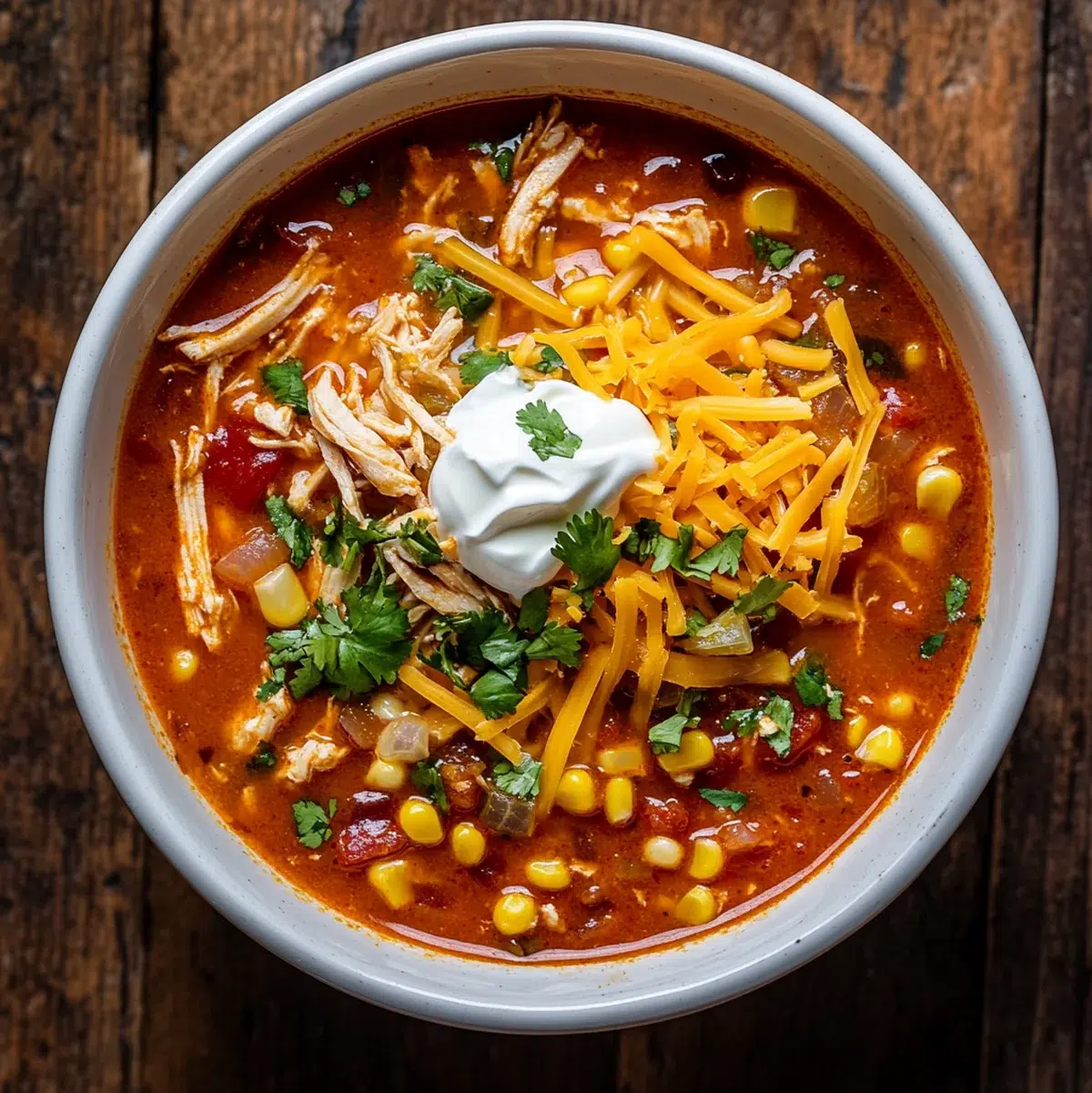
Quick Answer: Dredge halved chicken breasts in a flour-Parmesan-lemon pepper mixture and pan-fry until golden (3–4 minutes per side). Cook spaghetti. In the same skillet, sauté garlic, add heavy cream and chicken broth, simmer until reduced by a third, then stir in Parmesan, peas, lemon zest, and lemon juice. Toss the pasta with the sauce, add butter and fresh parsley, top with sliced chicken. 45 minutes total, 4 servings, 916 calories per plate.
TL;DR: Coat chicken in lemon-pepper flour. Sear it golden. Make a cream sauce in the same pan. Toss with spaghetti and shower with Parmesan. This is the weeknight pasta that tastes like a special occasion — creamy, bright, and on the table in under an hour.
Key Takeaways
- 45 minutes total — 15 minutes of prep, 30 minutes of cooking. The pasta cooks while you make the sauce, so everything finishes together.
- Restaurant-quality cream sauce — heavy cream reduced with chicken broth and Parmesan melts into a silky, clingy sauce that coats every strand of spaghetti.
- Lemon pepper crust elevates the chicken — the flour-Parmesan-lemon pepper coating creates a light, flavorful crust that seals in moisture and adds seasoning in every bite.
- One-skillet sauce — the cream sauce is built directly in the same pan you cooked the chicken in, picking up all those caramelized fond bits.
- Fresh lemon is non-negotiable — both the zest and juice provide bright acidity that cuts through the richness of the cream and Parmesan. Bottled juice will not deliver the same result.
- Peas add sweetness and color — frozen peas cook in the sauce in under 2 minutes and bring a pop of green that makes the dish look as good as it tastes.
- For another creamy pasta with bold flavor, our Cowboy Butter Chicken Linguine swaps lemon for a garlic-herb butter sauce that is equally addictive.
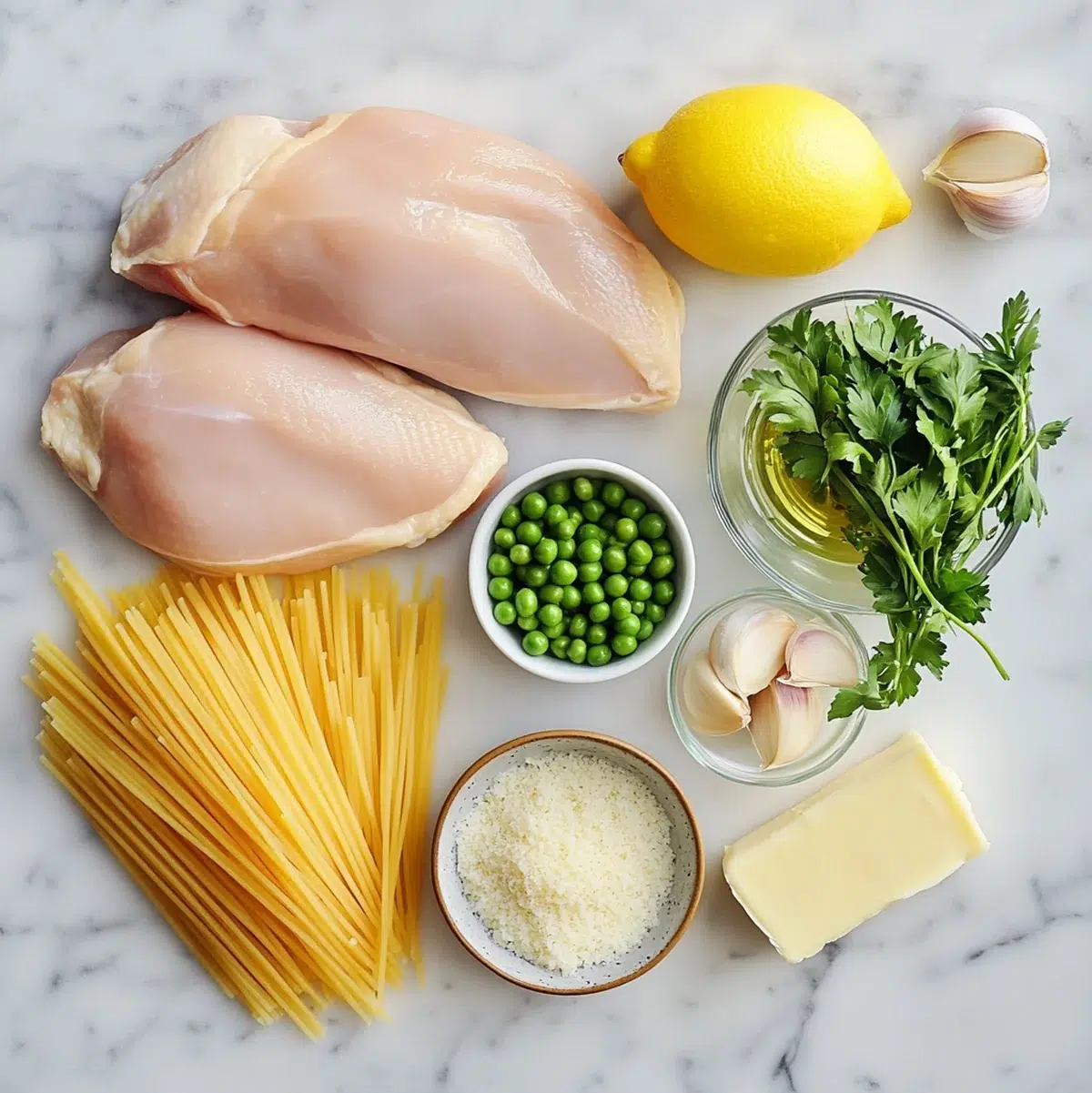
Why This Recipe Works
Lemon Chicken Pasta succeeds because every component is designed to build layers of flavor while keeping the process simple:
- The flour-Parmesan dredge does double duty — it creates a golden crust on the chicken while adding cheesy, seasoned flavor to the exterior. The flour also helps the coating adhere and seals in juices.
- Cooking the sauce in the chicken pan captures fond — those browned bits stuck to the skillet bottom are concentrated flavor. Deglazing with cream and broth dissolves them into the sauce, giving it depth you cannot get from a clean pan.
- Reducing cream with broth concentrates flavor — as the liquid evaporates, the sauce thickens and the flavors intensify. Adding broth prevents the cream from becoming too heavy.
- Lemon zest and juice add separate dimensions — the zest provides fragrant citrus oils, while the juice adds bright acidity. Together they balance the richness perfectly.
- Butter at the end creates glossy emulsion — stirring cold butter cubes into the finished sauce creates a luscious sheen and velvety mouthfeel that coats the pasta beautifully.
“The secret to any great pasta sauce is using the same pan you cooked your protein in. All that frond — those brown bits stuck to the bottom — that is liquid gold. Deglaze it, reduce it, and let it become the backbone of your sauce.”
— Marcella Hazan, author of Essentials of Classic Italian Cooking
Sadka’s Note: I used to skip the dredging step and just season the chicken with salt and pepper. The first time I tried the flour-Parmesan-lemon pepper coating, the difference was night and day — the crust adds so much flavor and that golden sear makes the chicken look absolutely gorgeous on top of the pasta. It takes 2 extra minutes and is completely worth it.
Ingredients Breakdown
- Boneless skinless chicken breasts — 2 large, cut in half lengthwise (about 1 lb / 450 g total). Cutting them in half horizontally creates thinner cutlets that cook faster and more evenly. Pound them to even thickness if one end is significantly thicker than the other.
- All-purpose flour — ¼ cup, for dredging. Creates the base for the coating that gives the chicken its golden crust. You can substitute gluten-free flour blend for a celiac-friendly version.
- Fresh grated Parmesan cheese — ¾ cup total (¼ cup for dredge + ½ cup for sauce). Always use freshly grated — the pre-shredded kind has anti-caking agents that prevent smooth melting. Parmigiano-Reggiano is the gold standard. Our Cheesy Parmesan Mozzarella Bites are another great way to use fresh Parmesan.
- Lemon pepper seasoning — 2 teaspoons. This blend of dried lemon zest, cracked black pepper, and salt adds bright citrus flavor to the dredge. McCormick or any quality brand works well.
- Olive oil — 3 tablespoons total (2 for chicken + 1 for sauce). Use regular olive oil, not extra virgin — higher smoke point means better searing without bitter flavors.
- Spaghetti — 12 ounces (340 g). Cook al dente — it will finish cooking slightly when tossed with the hot sauce. Linguine or fettuccine are excellent substitutes.
- Garlic — 3 cloves, minced. Fresh garlic sautéed low and slow builds the aromatic foundation for the cream sauce.
- Heavy cream — 1¼ cups (300 ml). Full-fat heavy cream is essential for a stable, silky sauce that does not break when reduced. Half-and-half will work but produces a thinner sauce.
- Low-sodium chicken broth — ½ cup (120 ml). Added gradually while the cream reduces — it loosens the sauce and adds savory depth. Low-sodium lets you control the salt.
- Frozen peas — ⅔ cup. They cook in the hot sauce in under 2 minutes and add sweetness, color, and a textural contrast to the creamy pasta.
- Lemon — 1 whole, zested and juiced. You need both: the zest adds fragrant oils and the juice provides bright acidity. About 2 tablespoons of juice from one lemon.
- Butter — 2 tablespoons, cut into small cubes, cold. Stirring cold butter into the finished sauce creates a glossy emulsion and adds richness.
- Fresh Italian parsley — 2 tablespoons, chopped. Adds fresh herbaceous flavor and a pop of green. Do not substitute dried — the freshness is the point.
- Salt and black pepper — to taste. Season at the end after the Parmesan and broth are added, since both contain salt.
Essential Equipment
- Large skillet (12-inch) — a wide skillet gives the chicken room to sear properly without steaming. Stainless steel is ideal because it creates the best fond for the sauce. Non-stick works but produces less browning.
- Large pot for pasta — 6-quart or larger. Plenty of water ensures the pasta cooks evenly and does not stick.
- Microplane or zester — for finely grating the lemon zest. A microplane creates the finest zest that dissolves into the sauce.
- Shallow bowl or plate — for the flour dredge mixture.
- Tongs — for flipping the chicken and tossing the pasta with the sauce.
Step-by-Step Instructions
Step 1 — Prep and Dredge the Chicken
Time: 5 minutes
Cut each chicken breast in half lengthwise to create 4 thin cutlets. In a shallow bowl, combine the ¼ cup flour, ¼ cup freshly grated Parmesan, and 2 teaspoons lemon pepper seasoning. Mix well. Dredge each chicken cutlet through the flour mixture, pressing gently to adhere on both sides. Shake off any excess — a thin, even coating is what you want. The Parmesan in the dredge adds a subtle cheesy flavor that sets this chicken apart from a basic flour coating.
Step 2 — Sear the Chicken Golden
Time: 8 minutes
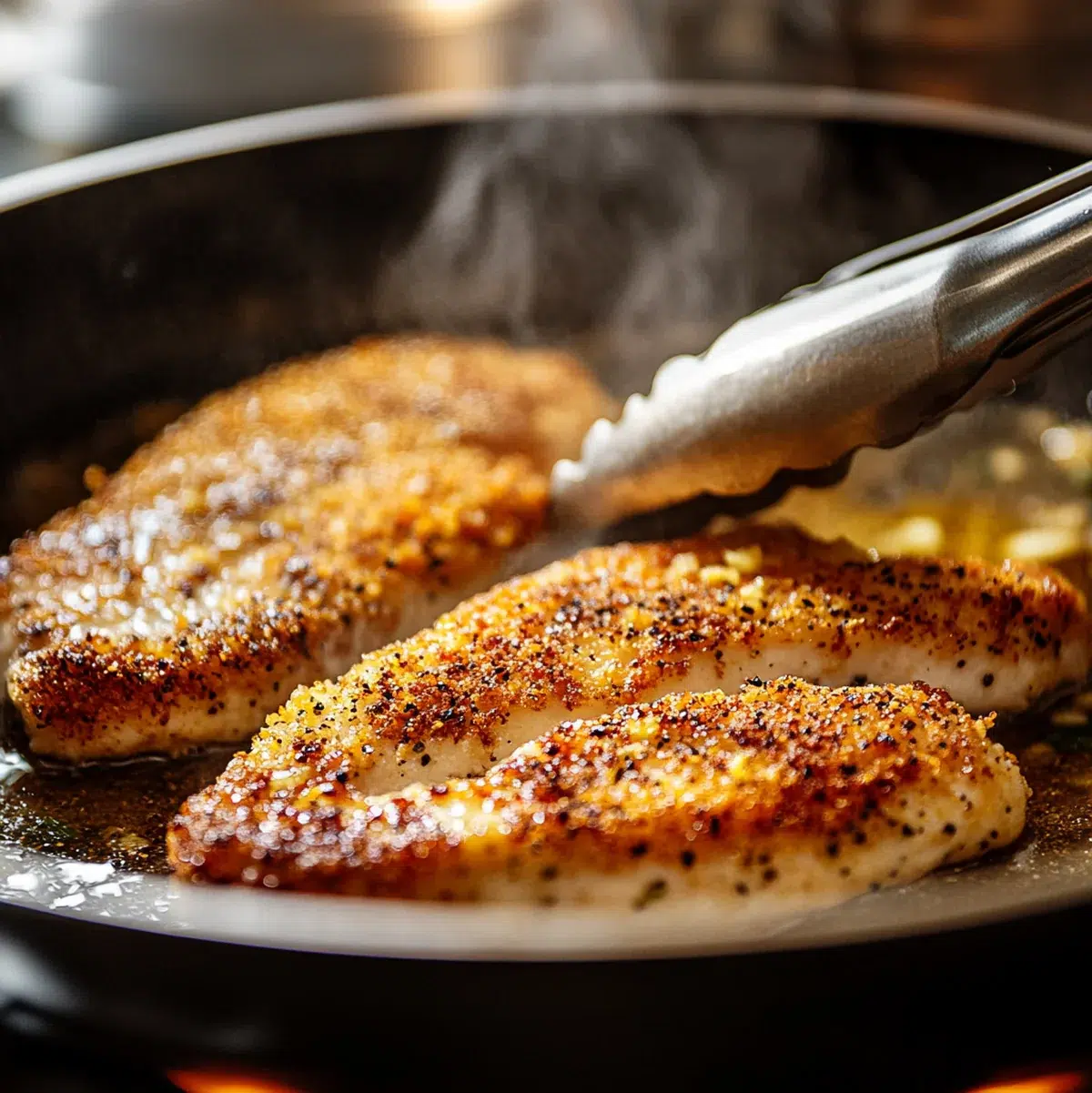
Heat 2 tablespoons olive oil in a large skillet over medium heat. When the oil shimmers, add the dredged chicken cutlets. Cook undisturbed for 3–4 minutes per side until golden brown and cooked through (internal temperature 165°F / 74°C). Transfer the chicken to a plate and cover loosely with aluminum foil to keep it warm while you make the sauce. Do not wash the skillet — those golden brown bits in the pan are the foundation of your cream sauce.
Step 3 — Cook the Pasta
Time: 10 minutes (simultaneous)
While the chicken cooks, bring a large pot of salted water to a rolling boil. Cook the spaghetti according to package directions until al dente — typically 8–10 minutes. Reserve ½ cup of starchy pasta water before draining (this is your secret weapon for adjusting sauce consistency later). Drain well but do not rinse — the starch on the pasta helps the sauce cling.
Step 4 — Build the Cream Sauce
Time: 10 minutes
Wipe the skillet fairly clean (leaving some of the fond) and heat 1 tablespoon olive oil over medium-low heat. Add the minced garlic and cook for 1 minute, stirring constantly — you want it fragrant and barely golden, never burned. Pour in the heavy cream and bring to a gentle simmer. Add the chicken broth a little at a time while the cream reduces, stirring occasionally. Simmer until the mixture is reduced by about one-third — it should coat the back of a spoon. This concentration step is what transforms a thin cream into a rich, clingy sauce.
Step 5 — Add Lemon, Peas, and Parmesan
Time: 3 minutes
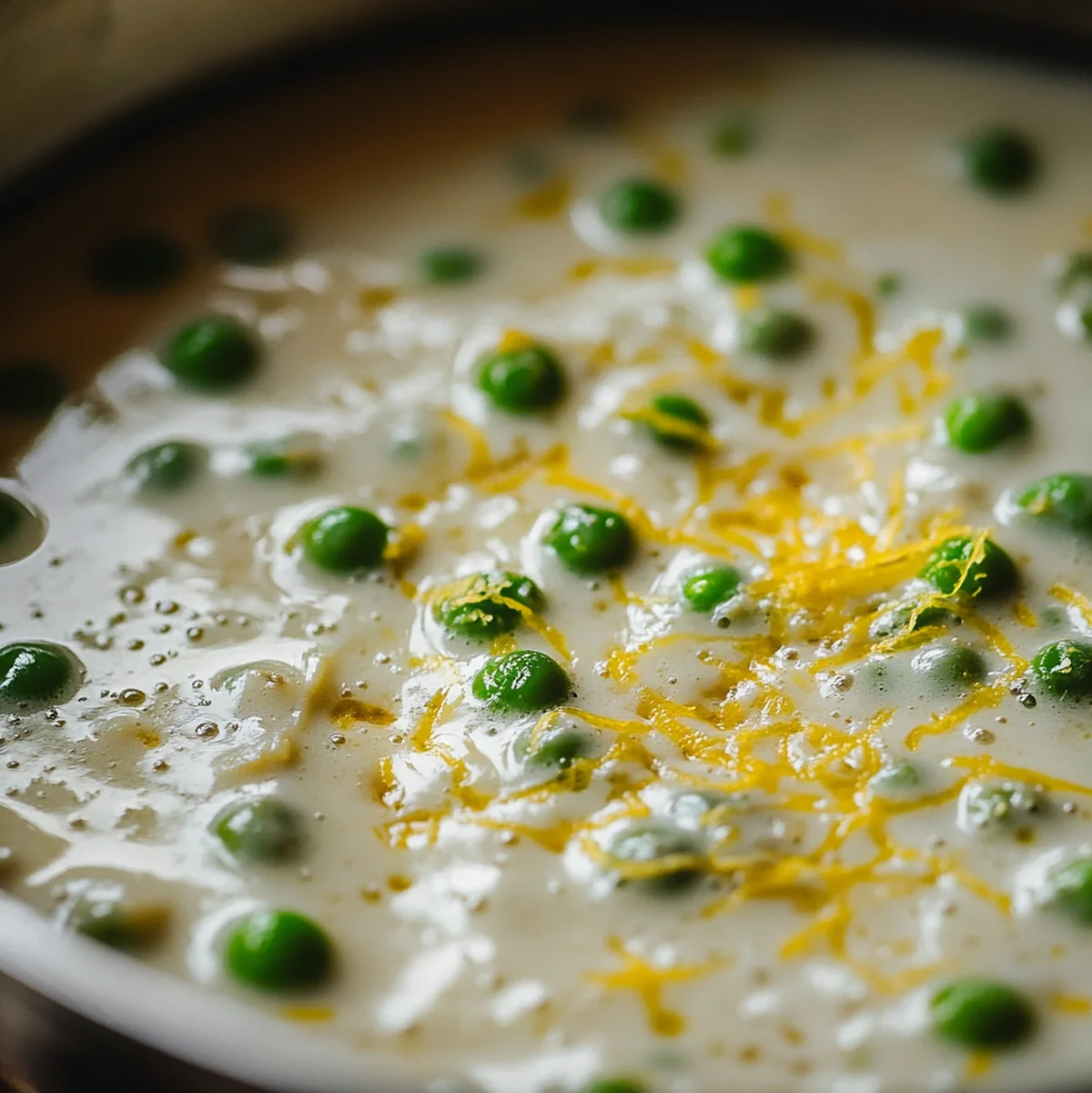
Add the frozen peas, lemon zest, and lemon juice to the simmering sauce. Stir and cook for 1–2 minutes until the peas are bright green and heated through. Reduce the heat to the lowest setting and gradually stir in the remaining ½ cup Parmesan cheese in small handfuls, stirring continuously until each addition melts smoothly. Adding the cheese slowly over low heat prevents it from clumping into lumps — patience here gives you a perfectly silky sauce.
Step 6 — Toss, Finish, and Serve
Time: 4 minutes
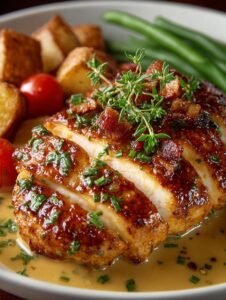
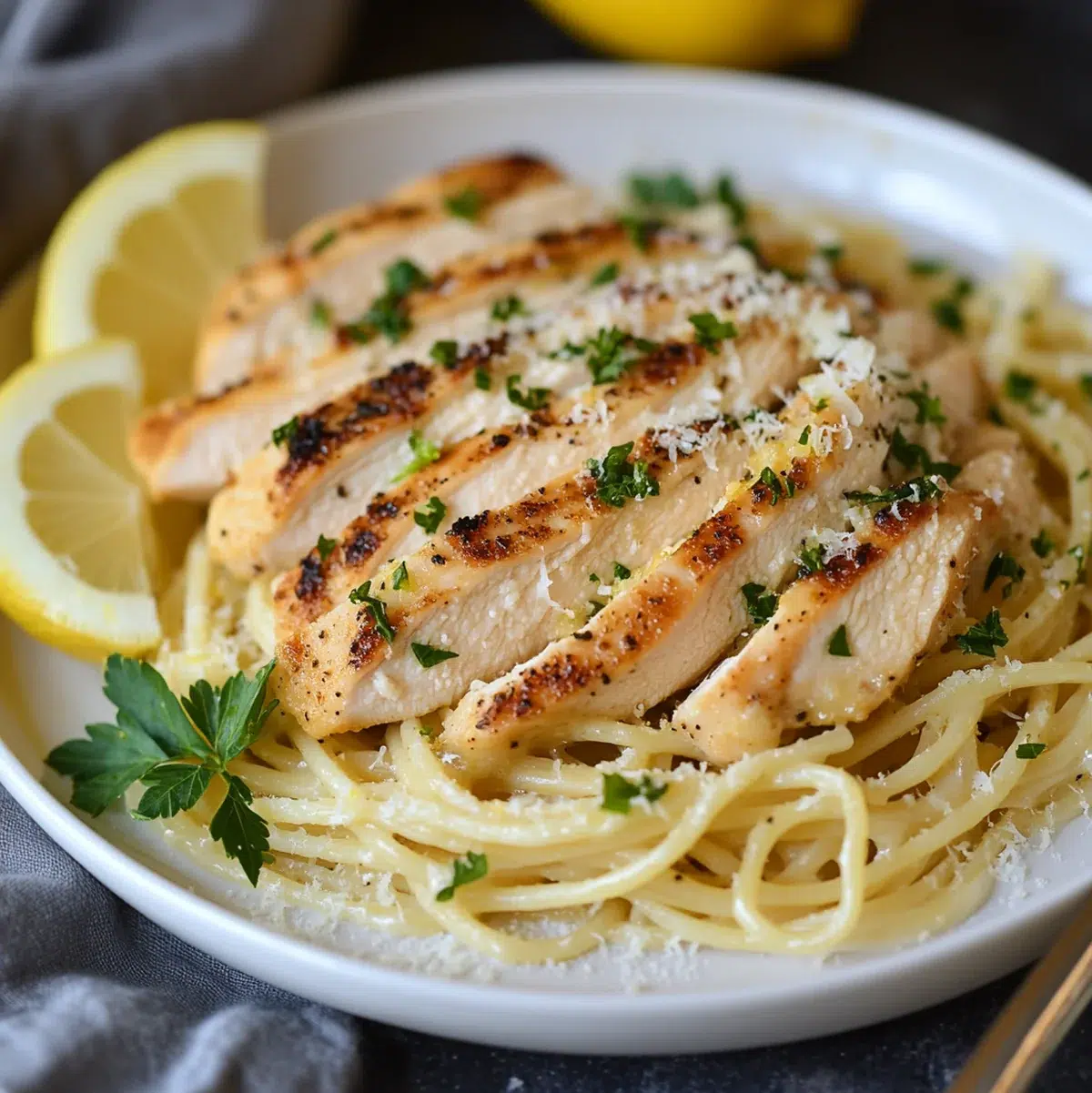
Add the drained spaghetti to the skillet and toss vigorously with tongs to coat every strand in the cream sauce. If the sauce seems too thick, add a splash of the reserved pasta water and toss again. Stir in the cold butter cubes until melted and incorporated — this creates a glossy, restaurant-quality sheen. Fold in the fresh parsley and season with salt and black pepper to taste. Slice the chicken into strips and arrange on top of the pasta. Serve immediately — this dish is best enjoyed fresh from the pan. Pair it with warm Garlic Bread for the ultimate Italian dinner experience. A crisp Creamy Asparagus Soup makes an elegant first course.
“When you toss pasta with a cream sauce, the starchy pasta water is your best friend. It loosens the sauce without thinning the flavor, and the starch helps it cling to every strand. Always save that pasta water — it is the most underrated ingredient in Italian cooking.”
— Massimo Bottura, chef and owner of Osteria Francescana, three Michelin stars
Variations & Substitutions
- Lemon Chicken Alfredo — double the Parmesan to 1½ cups and add an extra tablespoon of butter for a richer, more Alfredo-like sauce. Our Pot Fettuccine Alfredo uses a similar approach if you want a pure Alfredo experience.
- Creamy Lemon Chicken with Asparagus — replace peas with 1 cup of trimmed asparagus pieces, blanched for 2 minutes. Our Air Fried Steak Asparagus shows another delicious way to use asparagus.
- Lighter version — swap heavy cream for half-and-half and reduce butter to 1 tablespoon. The sauce will be thinner but still flavorful. Use whole wheat spaghetti for extra fiber.
- Chicken thigh swap — boneless skinless thighs stay moister and are more forgiving with timing. They take about 5–6 minutes per side instead of 3–4.
- Shrimp lemon pasta — replace chicken with 1 lb large shrimp. Skip the dredge — just season with lemon pepper and sear for 2 minutes per side. The sauce stays the same.
- Veggie version — skip the chicken entirely. Add sautéed mushrooms, sun-dried tomatoes, and artichoke hearts to the cream sauce for a hearty vegetarian pasta.
- Different pasta shapes — linguine, fettuccine, penne, or rigatoni all work well. Tubular shapes like penne trap the cream sauce inside for extra flavor in every bite.
- Spicy kick — add ¼ teaspoon red pepper flakes with the garlic, or finish with a drizzle of chili oil. The heat contrasts beautifully with the lemon brightness.
Cost Breakdown
| Ingredient | Est. Cost |
|---|---|
| Chicken breasts (2 large) | $4.50 |
| Spaghetti (12 oz) | $1.25 |
| Heavy cream (1¼ cups) | $2.00 |
| Parmesan cheese (¾ cup) | $2.50 |
| Lemon (1 whole) | $0.50 |
| Frozen peas (⅔ cup) | $0.40 |
| Garlic (3 cloves) | $0.20 |
| Chicken broth (½ cup) | $0.30 |
| Butter (2 tbsp) | $0.25 |
| Olive oil, flour, lemon pepper, parsley | $0.60 |
| TOTAL (4 servings) | ~$12.50 |
| Per serving | ~$3.13 |
At about $3 per plate, this is a fraction of what you would pay for a similar dish at an Italian restaurant. Use thighs instead of breasts to bring the cost down to around $2.50 per serving.
Meal Prep & Make-Ahead Tips
- Prep the dredge mix ahead: Combine flour, Parmesan, and lemon pepper in a zip-top bag up to 2 days in advance. Store in the fridge.
- Pre-cook the chicken: Sear the chicken up to 1 day ahead and refrigerate. Slice and add to the hot pasta just before serving — the warm sauce will reheat the chicken beautifully.
- Cook pasta separately: For meal prep, store the pasta and sauce in separate containers. Pasta absorbs sauce as it sits, so keeping them apart ensures the right consistency when reheating.
- Batch cooking: This recipe doubles easily. Use two skillets or sear the chicken in batches. the sauce quantities double perfectly in a large skillet.
- Freeze the chicken only: The cream sauce does not freeze well (it can separate on thawing). However, the cooked dredged chicken freezes beautifully for up to 2 months — thaw and slice over freshly made pasta.
Sadka’s Note: My meal prep hack for this recipe is to make double the chicken and freeze half. On busy nights, I just boil spaghetti, whip up a quick cream sauce (10 minutes), and slice the pre-cooked thawed chicken on top. Full dinner in 15 minutes instead of 45. The dredged chicken reheats beautifully in the microwave for 90 seconds or in a warm skillet for 2 minutes.
Serving Suggestions & Pairings
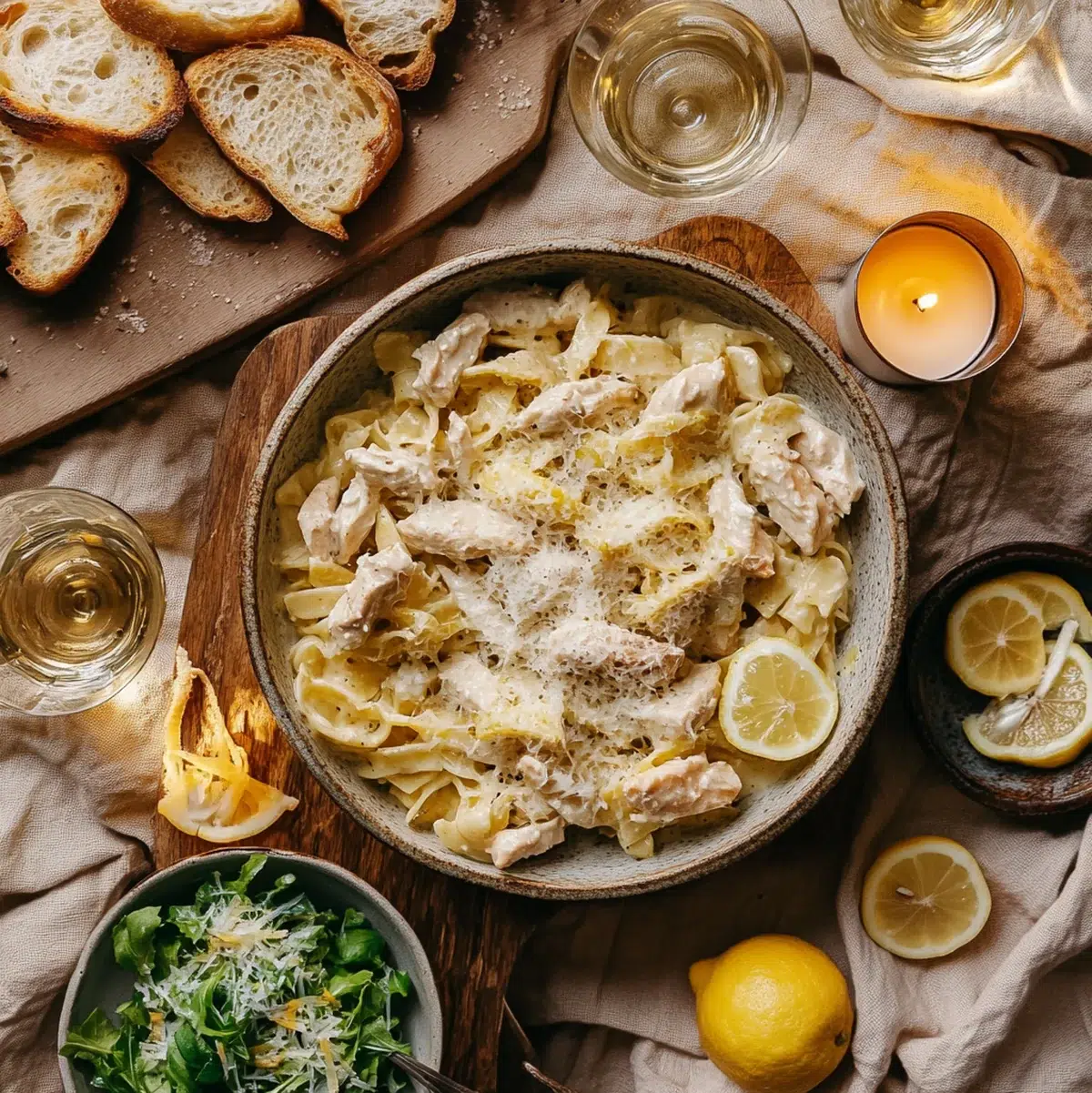
- With garlic bread: Our Garlic Bread with Butter is the ultimate Italian dinner side — crispy, buttery, and perfect for mopping up leftover sauce.
- Light salad on the side: A simple arugula salad with lemon vinaigrette echoes the citrus theme and adds freshness to balance the creamy pasta.
- Roasted vegetables: Our Roasted Parmesan Crusted Cauliflower adds another layer of cheesy, roasted flavor alongside the pasta.
- Soft dinner rolls: Warm Soft Dinner Rolls are another bread option that pairs beautifully with creamy pasta.
- Wine pairing: A crisp Pinot Grigio or unoaked Chardonnay mirrors the lemon notes and cuts through the cream beautifully. For a lighter option, prosecco or sparkling water with lemon.
- For a full Italian spread: Start with our Creamy Asparagus Soup as an appetizer, serve the lemon chicken pasta as the main, and finish with a light dessert.
Storage & Reheating
| Method | Container | Duration | Reheating |
|---|---|---|---|
| Refrigerator | Airtight container | 2–3 days | Stovetop low heat + splash of cream or broth, 5 min |
| Freezer (chicken only) | Freezer bag | Up to 2 months | Thaw overnight, warm in skillet 2 min per side |
| Microwave | Microwave-safe bowl | Reheat only | Add 1 tbsp cream, cover, 2 min on 70% power, stir |
Tip: Cream sauces thicken significantly when refrigerated. Always add a splash of cream, broth, or pasta water when reheating to restore the silky consistency. Reheat gently over low heat — high heat can cause the sauce to break and become oily.
Expert Tips & Pro Techniques
“The key to a stable cream sauce is temperature control. Add your cheese over the lowest heat possible and stir constantly. High heat makes Parmesan seize up and turn grainy — low heat and patience give you silk.”
— Ina Garten, author of Go-To Dinners and host of Barefoot Contessa
- Pound the chicken to even thickness: Place each cutlet between plastic wrap and pound gently to about ½ inch thick. This ensures every piece cooks at the same rate — no dry ends with a raw center.
- Do not crowd the pan: If your skillet is not large enough for all 4 cutlets with space between them, cook in two batches. Crowding steams the chicken instead of searing it.
- Cook garlic low and slow: Garlic goes from golden to bitter in seconds. Medium-low heat and constant stirring for just 1 minute gives you sweet, aromatic garlic without any bitterness.
- Add broth gradually: Pouring all the broth in at once can drop the temperature and slow the reduction. Adding it in small amounts while the cream simmers maintains the reduction process.
- Add cheese off the direct heat: Remove the pan from the burner or lower to the absolute minimum before adding Parmesan. This single step is the difference between a silky sauce and a grainy one.
- Reserved pasta water is your safety net: If the sauce gets too thick after tossing with pasta, add the starchy pasta water 1–2 tablespoons at a time until you achieve your desired consistency.
“A great cream pasta should coat the noodles and cling — not pool at the bottom of the bowl. The trick is reducing the cream properly and finishing with cold butter, which emulsifies everything into that restaurant-quality glossy finish.”
— Giuliano Hazan, Italian cooking instructor and author of The Classic Pasta Cookbook
“Lemon is the single most underused ingredient in home cooking. A squeeze of fresh juice and a pinch of zest can transform a heavy cream dish into something bright, balanced, and craveable. It is the easiest upgrade you can make.”
— Yotam Ottolenghi, chef and author of Simple and Plenty
Sadka’s Note: The biggest game changer for me was learning to melt the Parmesan on the lowest heat setting. I ruined my first two batches with clumpy, grainy cheese because I was too impatient. Now I literally turn the burner to the lowest setting, add a small handful at a time, and stir slowly. Perfect silk every time. It takes 90 extra seconds of patience and saves the whole dish.
Sadka’s Note: I always zest the lemon before juicing it — much easier to zest a whole lemon than a squeezed one. Use a microplane for the finest zest that melts into the sauce invisibly. And do not skip the butter at the end — those two tablespoons transform the sauce from good to incredibly silky and glossy.
Nutrition Information
Per serving (1 plate, 4 servings per recipe). Values are estimates based on standard ingredients.
| Nutrient | Amount | % Daily Value |
|---|---|---|
| Calories | 916 kcal | 46% |
| Total Fat | 51 g | 66% |
| Saturated Fat | 20 g | 100% |
| Trans Fat | 0 g | — |
| Unsaturated Fat | 20 g | — |
| Cholesterol | 150 mg | 50% |
| Sodium | 600 mg | 26% |
| Carbohydrates | 80 g | 29% |
| Fiber | 3 g | 11% |
| Sugar | 3 g | — |
| Protein | 35 g | 70% |
This is a rich, indulgent pasta dish. For a lighter version, use half-and-half instead of heavy cream, reduce the Parmesan by ¼ cup, and use only 1 tablespoon of butter — this brings calories down to approximately 650 per serving while keeping the flavor profile intact.
Frequently Asked Questions
Can I use chicken thighs instead of chicken breasts?
Yes. Boneless skinless chicken thighs are an excellent substitute. They stay moister and have more flavor than breasts. Dredge and sear them the same way, but cook for 5–6 minutes per side instead of 3–4, since thighs are slightly thicker.
What pasta shape works best for lemon chicken pasta?
Spaghetti is the classic choice and works beautifully. Linguine and fettuccine are excellent alternatives that hold even more sauce. Penne and rigatoni trap the cream sauce inside the tubes for extra flavor in every bite. Angel hair is too delicate and tends to become mushy in cream sauce.
Can I make the cream sauce ahead of time?
You can make the sauce up to 1 day ahead and refrigerate it. It will thicken significantly when cold. Reheat gently over low heat, adding a splash of cream or broth to thin it back to the desired consistency. Add the lemon juice fresh when reheating for maximum brightness.
Why did my Parmesan clump in the sauce?
Parmesan clumps when added to sauce that is too hot. The fix is to reduce the heat to the absolute lowest setting (or remove the pan from heat entirely) before adding the cheese. Add it in small handfuls, stirring constantly, and let each addition melt before adding more. Pre-shredded Parmesan also clumps more because of the anti-caking agents — always use freshly grated.
Can I substitute the heavy cream?
Half-and-half works but produces a thinner, less rich sauce. Evaporated milk is a decent lower-fat option that still reduces well. Do not use regular milk — it will not thicken properly and may curdle when simmered. For a dairy-free version, full-fat coconut cream works surprisingly well with the lemon flavor.
How do I know when the cream sauce is reduced enough?
The sauce is ready when it coats the back of a spoon and you can draw a line through it with your finger that holds its shape. It should be thick enough to cling to pasta but not so thick that it is paste-like. This typically takes 6–8 minutes of gentle simmering. Remember the sauce will thicken further when the cheese and butter are added.
Can I use bottled lemon juice instead of fresh?
Fresh lemon juice is strongly recommended. Bottled lemon juice has a flat, slightly metallic taste compared to fresh. The zest, which provides most of the lemon aroma, is only available from fresh lemons. If you must use bottled juice, the dish will lack the bright, fragrant quality that makes this recipe special.
How do I reheat lemon chicken pasta without it becoming dry?
Add 1–2 tablespoons of heavy cream or chicken broth to the pasta before reheating. On the stovetop, warm over low heat stirring gently for 3–5 minutes. In the microwave, cover the bowl, heat at 70% power for 2 minutes, then stir. The added liquid restores the creamy consistency that thickens when refrigerated.
“Never rinse your pasta after draining. That starchy coating is what lets the sauce grab on and cling to every strand. The Italians have known this for centuries — the pasta water and the residual starch are part of the sauce itself.”
— Lidia Bastianich, chef, restaurateur, and author of Lidia’s Mastering the Art of Italian Cuisine
Final Thoughts
Lemon Chicken Pasta is the kind of recipe that makes you wonder why you ever ordered Italian takeout. Golden, lemon pepper-crusted chicken over spaghetti tossed in a silky Parmesan cream sauce with bright lemon zest, sweet peas, and fresh parsley — every element works together to create something that is simultaneously comforting and vibrant. The entire dish comes together in 45 minutes using one skillet and one pot, and the technique of building the cream sauce in the chicken pan means you get layers of flavor with minimal effort. Whether you are cooking for a weeknight dinner or impressing guests on date night, this recipe delivers every single time.
Sadka’s Note: This is the recipe my husband requests most. He calls it “the lemon pasta” and asks for it at least twice a month. What I love about it is that it feels special — like something you would order at a nice Italian restaurant — but it is honestly one of the simpler dinners I make. The lemon keeps it from feeling heavy despite the cream, and the peas add just the right pop of sweetness and color. If you make only one pasta recipe from this site, make it this one.
Sadka’s Tip: If you make this recipe, I would love to hear about it. Drop a comment below and tell me what pasta shape you used and whether you added any twists. One reader added sun-dried tomatoes and it was incredible — your ideas are what make this community amazing!
Sources & References
- Serious Eats — Cream Sauce Technique for Pasta — technique notes for reducing cream and building pan sauces.
- Bon Appétit — Lemon Chicken Pasta — reference for balancing citrus acidity in cream-based pasta dishes.
- Food Network — Ina Garten’s Lemon Chicken — expert technique for incorporating lemon zest and juice into cream sauces.
- Simply Recipes — Lemon Pasta with Chicken — storage and reheating guidance for cream-based pasta dishes.
- Allrecipes — Chicken with Lemon Cream Sauce — community-tested variations and ingredient substitutions.
- The Kitchn — How to Make Cream Sauce for Pasta — foundational technique for Parmesan cream sauce stability.
- USDA — Food and Nutrition — nutritional data reference for calorie and macronutrient estimates.
Lemon Chicken Pasta: 5 Amazing Recipes You’ll Love
- Total Time: 45 minutes
- Yield: 4 servings 1x
- Diet: Gluten Free
Description
Lemon Chicken Pasta is loaded with lightly breaded lemon pepper seasoned chicken breasts, lemon cream sauce with Parmesan cheese, and sweet peas.
Ingredients
- 2 large boneless skinless chicken breasts cut in half lengthwise
- ¼ cup all-purpose flour
- ¾ cup fresh grated parmesan cheese
- 2 teaspoons lemon pepper
- 3 tablespoons olive oil
- 12 ounces spaghetti pasta
- 3 cloves garlic minced
- 1¼ cups heavy cream
- ½ cup low sodium chicken broth
- ⅔ cup frozen peas
- 1 lemon zested and juiced
- 2 tablespoons butter cut in small cubes
- 2 tablespoons fresh chopped Italian parsley
- Salt and black pepper to taste
Instructions
- Combine the flour, ¼ cup Parmesan Cheese, and lemon pepper in a shallow bowl. Dredge the chicken breasts in the flour. Heat 2 tablespoons olive oil in a large skillet over medium heat. Cook the chicken until it is golden brown on both sides and cooked through; 3-4 minutes each side. Plate the chicken and cover it with a loose aluminum foil tent.
- Meanwhile bring a large pot of water to boil and cook the pasta according to the package directions. Do not overcook and drain well.
- Wipe the skillet fairly clean and heat 1 tablespoon olive oil over medium low heat. Add the minced garlic and cook for 1 minute while stirring constantly. Add the heavy cream and bring it to a simmer. Add the chicken broth a little at a time while the cream reduces.
- Add the peas, lemon zest, and lemon juice and continue simmering until the mixture is reduced by about ⅓. Reduce the heat as low as it will go and stir in ½ cup Parmesan Cheese in small increments stirring until it is melted.
- Add the cooked pasta to the sauce; tossing to coat. Add the butter stirring until melted and incorporated. Stir in the fresh parsley and season with salt and black pepper to taste. Slice the chicken and add it to the pasta. For best results serve promptly.
Notes
- Prep Time: 15 minutes
- Cook Time: 30 minutes
- Category: Main Course
- Method: Stovetop
- Cuisine: Italian
Nutrition
- Serving Size: 1 plate
- Calories: 916 kcal
- Sugar: 3 g
- Sodium: 600 mg
- Fat: 51 g
- Saturated Fat: 20 g
- Unsaturated Fat: 20 g
- Trans Fat: 0 g
- Carbohydrates: 80 g
- Fiber: 3 g
- Protein: 35 g
- Cholesterol: 150 mg

Written by Sadka
Sadka is the founder and editor-in-chief of Al3abFun. Passionate about making delicious food accessible to everyone, Sadka oversees recipe development, nutritional accuracy, and editorial quality across all published content. With a background in food science and digital publishing, Sadka ensures every recipe meets the highest standards of taste, accuracy, and presentation.