Reading time: 14 min · Prep: 25 min · Bake: 30–35 min · Cool & Assemble: 45 min · Total: ~2 hours · Yield: 16 servings · Skill: Intermediate
This Hawaiian Carrot Pineapple Cake is a two-layer tropical twist on classic carrot cake — moist, warmly spiced sponge loaded with freshly shredded carrots, well-drained crushed pineapple, toasted coconut, and chopped pecans, all stacked with thick, tangy cream cheese frosting. The pineapple keeps every crumb incredibly moist while adding a subtle sweetness that balances the warm cinnamon, nutmeg, and ginger. I tested this recipe over six rounds to nail the moisture balance: too much pineapple makes the cake soggy, too little and you lose the tropical character entirely. The secret is draining the pineapple thoroughly and folding it in at the very end so it distributes evenly without releasing excess liquid into the batter. If you love layer cakes, our Classic Coconut Cake uses a similar two-layer technique with coconut cream. For a chocolate celebration cake, our Dubai Chocolate Cake delivers rich cocoa-cardamom layers with glossy ganache.
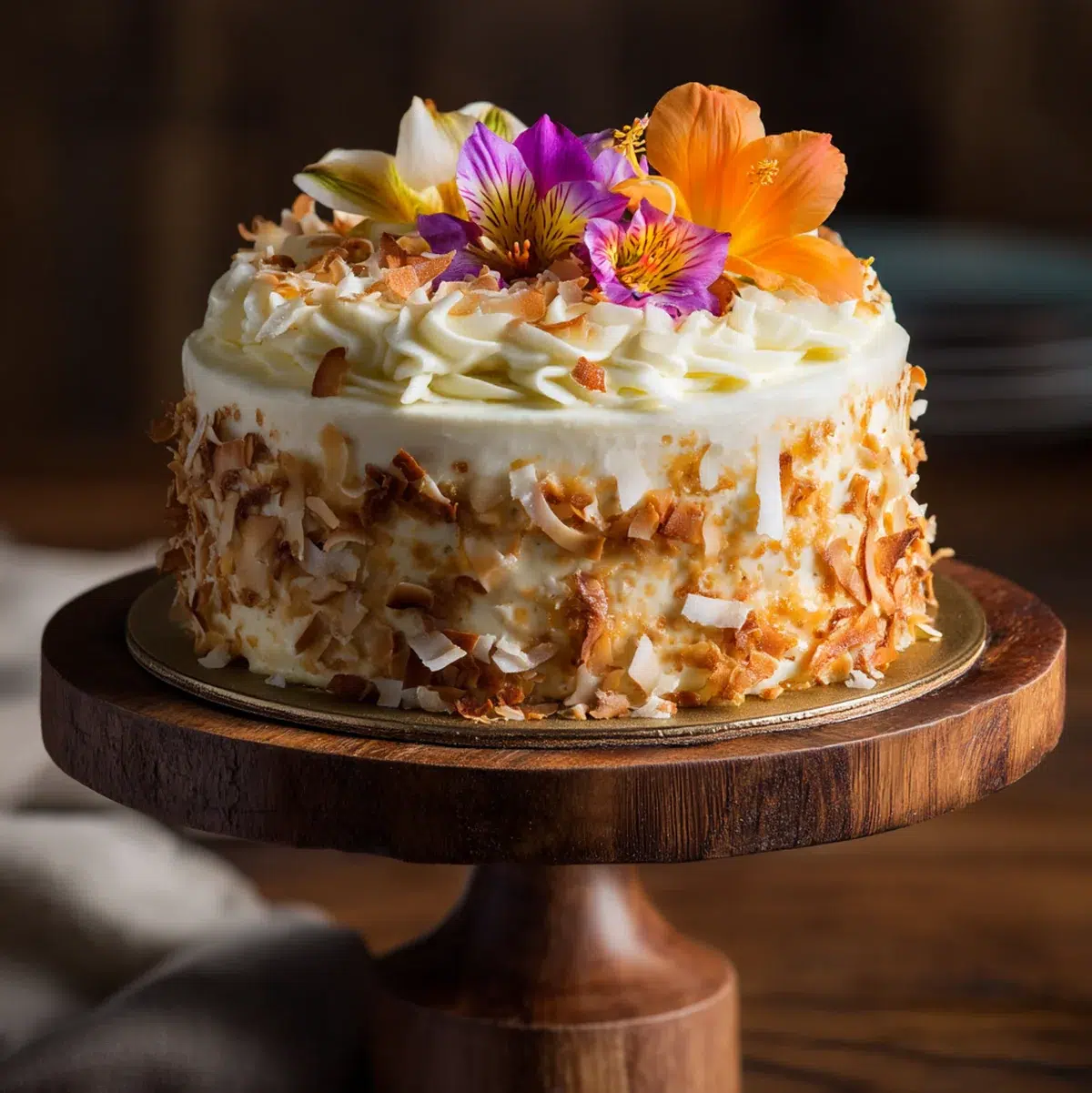
Quick Answer: Whisk together flour, baking soda, cinnamon, nutmeg, ginger, and salt. Combine with oil, eggs, sugar, and vanilla. Fold in shredded carrots, drained crushed pineapple, toasted coconut, and chopped pecans. Divide between two greased 9-inch pans and bake at 350°F (175°C) for 30–35 minutes. Cool completely, then fill and frost with tangy cream cheese frosting. Top with toasted coconut and pecans. 16 servings, 420 calories per slice.
TL;DR: A tropical carrot cake with pineapple, coconut, and pecans baked in two layers with cream cheese frosting. Oil-based for maximum moisture. The pineapple must be drained thoroughly — that is the make-or-break step. Best made a day ahead so the flavors meld.
Key Takeaways
- Drain the pineapple completely — this is the single most important step. Excess liquid from canned pineapple will make your cake soggy and prevent it from setting properly. Press it in a fine-mesh strainer until nearly dry.
- Oil keeps it moist for days — oil-based cakes stay soft and tender at room temperature and in the fridge, unlike butter cakes that firm up when chilled.
- Three warm spices create depth — cinnamon, nutmeg, and ginger work together to give the cake warmth and complexity. Cinnamon alone is not enough for a truly great carrot cake.
- Toast the coconut and pecans — toasting transforms both ingredients from flat and chewy to fragrant and crunchy. It takes 5 minutes and makes a huge difference in flavor and texture.
- Cream cheese frosting must be cold — cold cream cheese and cold butter prevent a runny frosting. Beat just until smooth — overbeating warms it up and makes it thin.
- Better the next day — the overnight rest allows moisture to redistribute and spice flavors to deepen. Bake a day ahead for the best result.
- For a simpler tropical treat, our Fluffy Banana Pancakes use ripe bananas for natural sweetness with minimal effort.
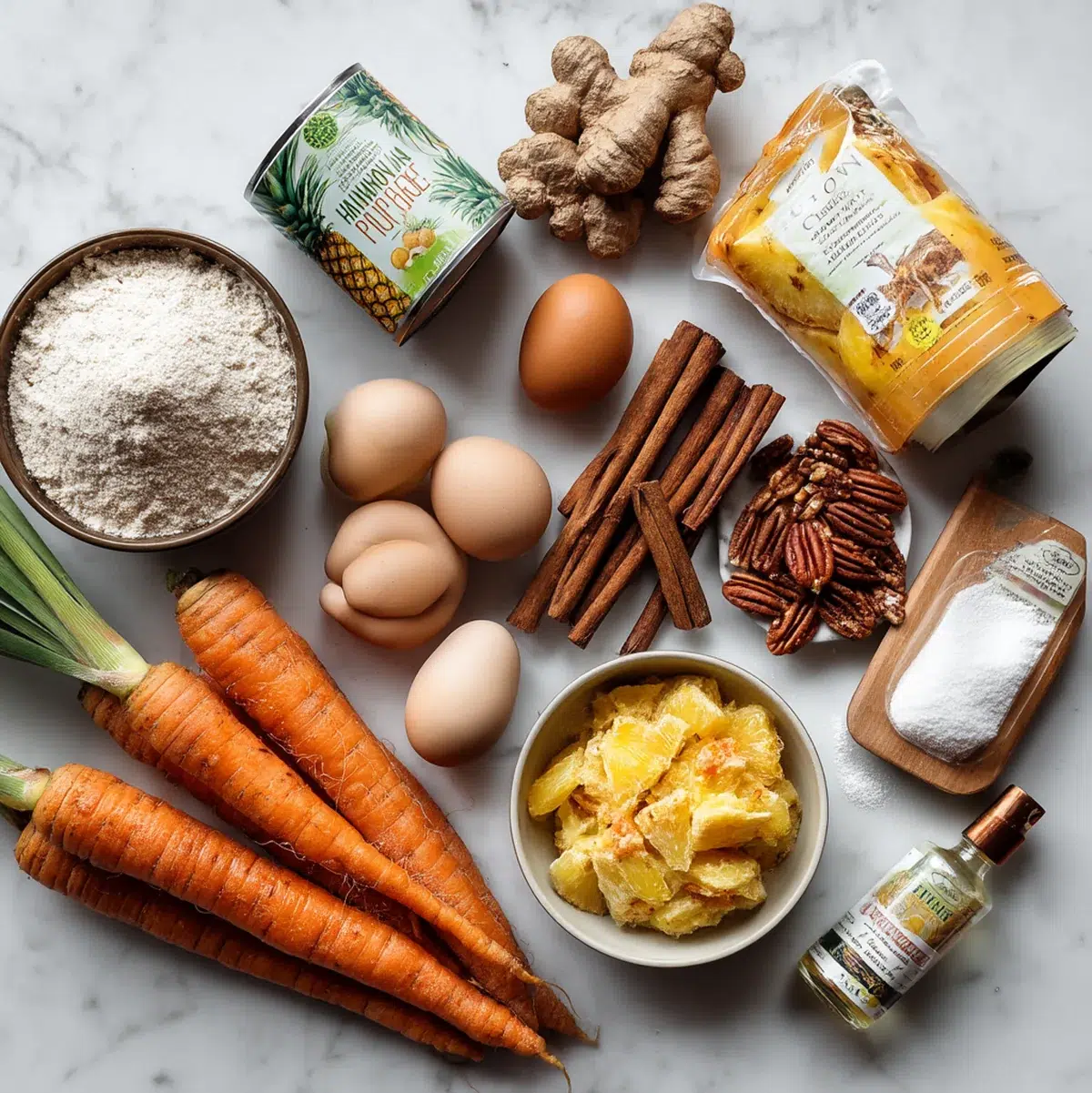
Why This Hawaiian Carrot Pineapple Cake Works
This Hawaiian Carrot Pineapple Cake succeeds because every ingredient is chosen to maximize moisture, flavor, and tropical character. Additionally, the combination of oil, pineapple, and warm spices creates a cake that stays moist for days:
- Oil stays liquid at every temperature — unlike butter, which solidifies when chilled, vegetable oil keeps the cake soft and moist whether it is at room temperature, in the fridge, or straight from the freezer. This is why oil-based carrot cakes always outperform butter-based versions for moisture retention.
- Pineapple adds moisture and enzymes — crushed pineapple releases juice during baking that keeps the crumb incredibly tender. The fruit’s natural acidity also reacts with baking soda for a lighter lift.
- Carrots provide structure and sweetness — finely shredded carrots add natural sugar, moisture, and a tender chew. They also give the cake its signature golden-orange color throughout the crumb.
- Three spices create layered warmth — cinnamon provides the familiar base note, ground ginger adds bright heat, and nutmeg contributes a warm, almost perfumy depth. Together, they create a spice profile that is aromatic without being heavy.
- Cream cheese frosting cuts the sweetness — the tang of cream cheese balances the sweet cake, creating a contrast in every bite that prevents the cake from feeling too rich.
“The best carrot cakes use oil, not butter. Oil produces a moister, more tender crumb that lasts for days. Butter firms up when cold and makes the cake dense. If you want a carrot cake that stays soft on day three, oil is the only choice.”
— Rose Levy Beranbaum, author of The Cake Bible
Sadka’s Note: My first attempt at this cake was a disaster — I dumped the pineapple in without draining it and the cake came out completely soggy in the center. It took me three more tries to learn that you have to press the pineapple in a strainer until it is almost dry. That one step is the difference between a soggy mess and the moistest cake you have ever eaten.
Ingredients Breakdown
For the Cake Layers
- All-purpose flour — 280 g (2¼ cups). Provides the cake’s structure. Spoon and level your flour or use a kitchen scale — scooping packs in up to 30% extra and makes the cake dry and dense.
- Baking soda — 2 tsp (10 g). The primary leavening agent. Reacts with the acidity in pineapple and buttermilk for a tall, tender rise.
- Ground cinnamon — 2 tsp (4 g). The dominant warm spice. Use true Ceylon cinnamon for a more delicate, complex flavor, or cassia cinnamon for the bolder, more familiar taste.
- Ground ginger — 1 tsp (2 g). Adds bright, warm heat that lifts the other spices. Do not substitute fresh ginger — the moisture will affect the batter consistency.
- Ground nutmeg — ½ tsp (1 g). A supporting spice that adds depth and warmth. Freshly grated whole nutmeg is more fragrant than pre-ground, but both work.
- Fine sea salt — 1 tsp (5 g). Enhances every flavor in the cake and balances sweetness. Do not skip it.
- Vegetable oil — 240 ml (1 cup). The moisture backbone of the cake. Any neutral oil works: canola, sunflower, or grapeseed. Do not substitute with butter — the cake will not be as moist.
- Granulated sugar — 300 g (1½ cups). Sweetens the batter and helps retain moisture. Sugar is hygroscopic — it absorbs water and keeps the crumb tender.
- Light brown sugar — 100 g (½ cup, packed). Adds molasses depth and moisture. The combination of white and brown sugar gives the cake both sweetness and caramel complexity.
- Large eggs — 4, at room temperature. Provide structure, richness, and emulsification. Room temperature eggs incorporate more smoothly into oil-based batters.
- Pure vanilla extract — 2 tsp (10 ml). Rounds out the spice and fruit flavors. Use real extract, not imitation.
- Carrots — 300 g (3 cups), finely shredded. Use the small holes on a box grater or a food processor shredding disk. Fine shreds melt into the cake; large shreds stay chunky and can create wet pockets.
- Canned crushed pineapple — 225 g (8 oz can), thoroughly drained. Press in a fine-mesh strainer until nearly dry. The pineapple adds moisture and tropical sweetness, but excess juice makes the cake soggy.
- Sweetened shredded coconut — 60 g (¾ cup), toasted. Toast in a dry skillet over medium heat for 3–4 minutes until golden. Toasting intensifies the coconut flavor and adds crunch.
- Chopped pecans — 75 g (¾ cup), toasted. Toast at 325°F (165°C) for 5–7 minutes. Pecans add buttery richness and crunch that contrasts with the soft, moist crumb.
For the Cream Cheese Frosting
- Cream cheese — 450 g (16 oz / two 8 oz blocks), cold. Full-fat only — reduced-fat cream cheese contains more water and produces a thin, runny frosting. Cold cream cheese is essential for a thick, stable frosting.
- Unsalted butter — 115 g (½ cup / 1 stick), cold. Cold butter helps keep the frosting thick and prevents it from becoming too soft.
- Powdered sugar — 360 g (3 cups), sifted. Sweetens and thickens the frosting. Sift to remove lumps for a perfectly smooth texture.
- Pure vanilla extract — 1 tsp (5 ml). Adds warmth and depth to the frosting.
For the Topping
- Toasted coconut flakes — 30 g (¼ cup). For garnish on top and sides.
- Chopped pecans — 30 g (¼ cup). For garnish.
Essential Equipment
- Two 9-inch (23 cm) round cake pans — at least 2 inches deep. Line bottoms with parchment paper and grease the sides.
- Box grater or food processor — for finely shredding the carrots. Fine shreds integrate better into the batter than large chunks.
- Fine-mesh strainer — essential for draining the crushed pineapple thoroughly. Press with a spoon or spatula to extract as much liquid as possible.
- Electric hand mixer or stand mixer — for mixing the batter and beating the cream cheese frosting until smooth.
- Wire cooling rack — for cooling cake layers evenly and preventing soggy bottoms from trapped steam.
- Offset spatula — for spreading frosting smoothly between layers and on top. A regular knife works in a pinch.
- Kitchen scale — for accurate flour and sugar measurements. Baking is chemistry — precision matters.
Step-by-Step Instructions
Step 1 — Prep the Mix-Ins
Time: 10 minutes
Drain the entire 225 g (8 oz) can of crushed pineapple in a fine-mesh strainer set over a bowl. Press firmly with a spoon or spatula until the pineapple feels almost dry — you should extract about 60–80 ml (¼ to ⅓ cup) of juice. Reserve this juice for the frosting or discard it. Finely shred 300 g (3 cups) carrots using the small holes of a box grater. Toast 75 g (¾ cup) chopped pecans at 325°F (165°C) for 5–7 minutes until fragrant. Toast 60 g (¾ cup) shredded coconut in a dry skillet over medium heat for 3–4 minutes, stirring constantly, until golden brown. Set everything aside.
Step 2 — Mix the Dry Ingredients
Time: 5 minutes
Preheat oven to 350°F (175°C). Grease two 9-inch round cake pans, line the bottoms with parchment paper, and grease the parchment. In a large bowl, whisk together 280 g (2¼ cups) all-purpose flour, 2 tsp baking soda, 2 tsp cinnamon, 1 tsp ground ginger, ½ tsp nutmeg, and 1 tsp fine sea salt. Sift the mixture to remove lumps and ensure the spices are evenly distributed throughout the flour.
Step 3 — Mix the Wet Ingredients
Time: 5 minutes
In a separate large bowl, whisk together 240 ml (1 cup) vegetable oil, 300 g (1½ cups) granulated sugar, 100 g (½ cup packed) light brown sugar, 4 large eggs (room temperature), and 2 tsp vanilla extract until smooth and well combined. The mixture should be thick, glossy, and uniform in color.
Step 4 — Combine and Fold
Time: 5 minutes
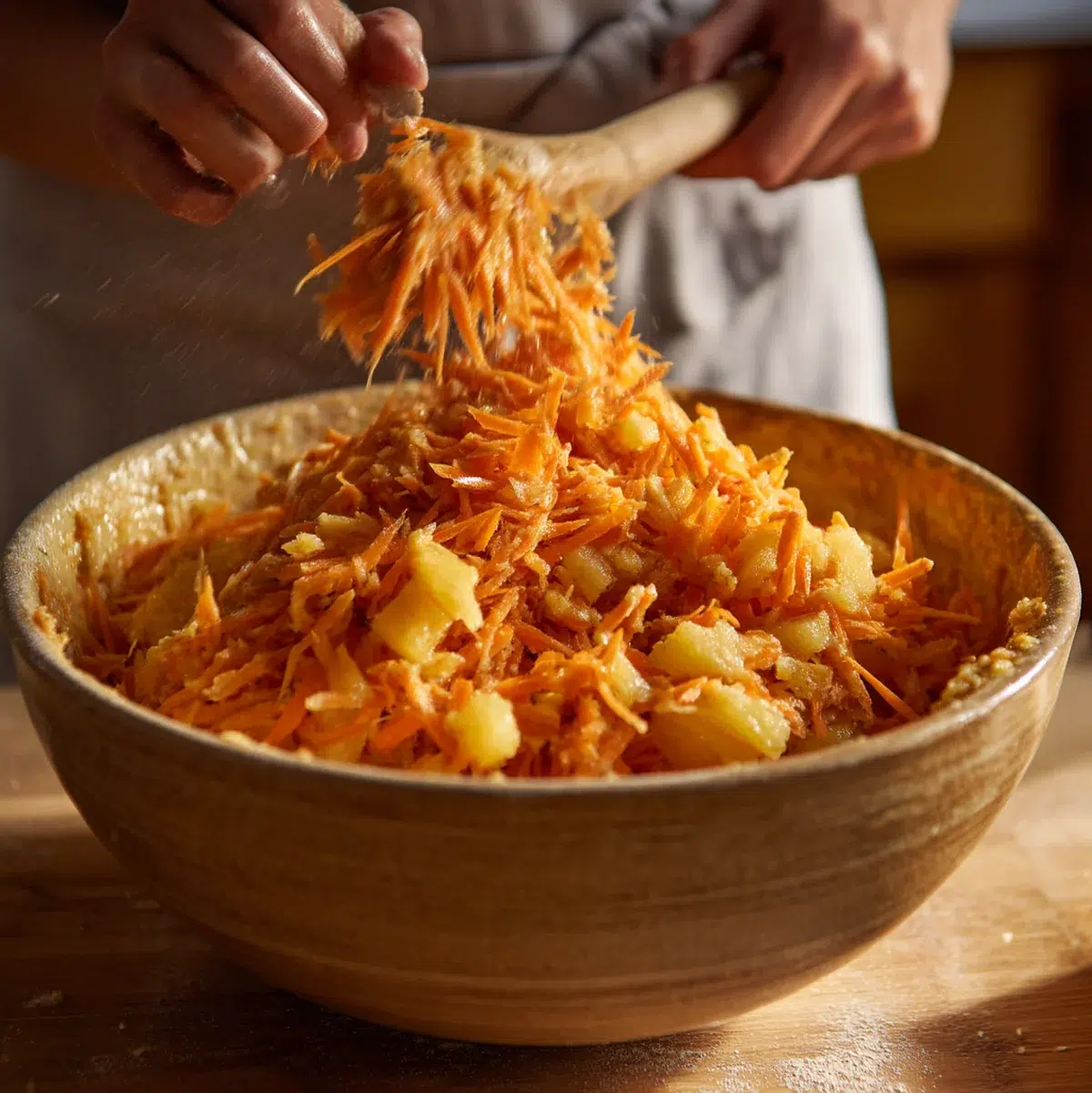
Pour the wet ingredients into the dry and mix on low speed (or stir by hand) until just combined — about 20 seconds. Do not overmix. Fold in the shredded carrots, drained pineapple, toasted coconut, and chopped pecans using a large spatula. Make sure the additions are evenly distributed but stop folding as soon as they are incorporated. Overmixing at this stage develops gluten and makes the cake tough.
Step 5 — Bake
Time: 30–35 minutes
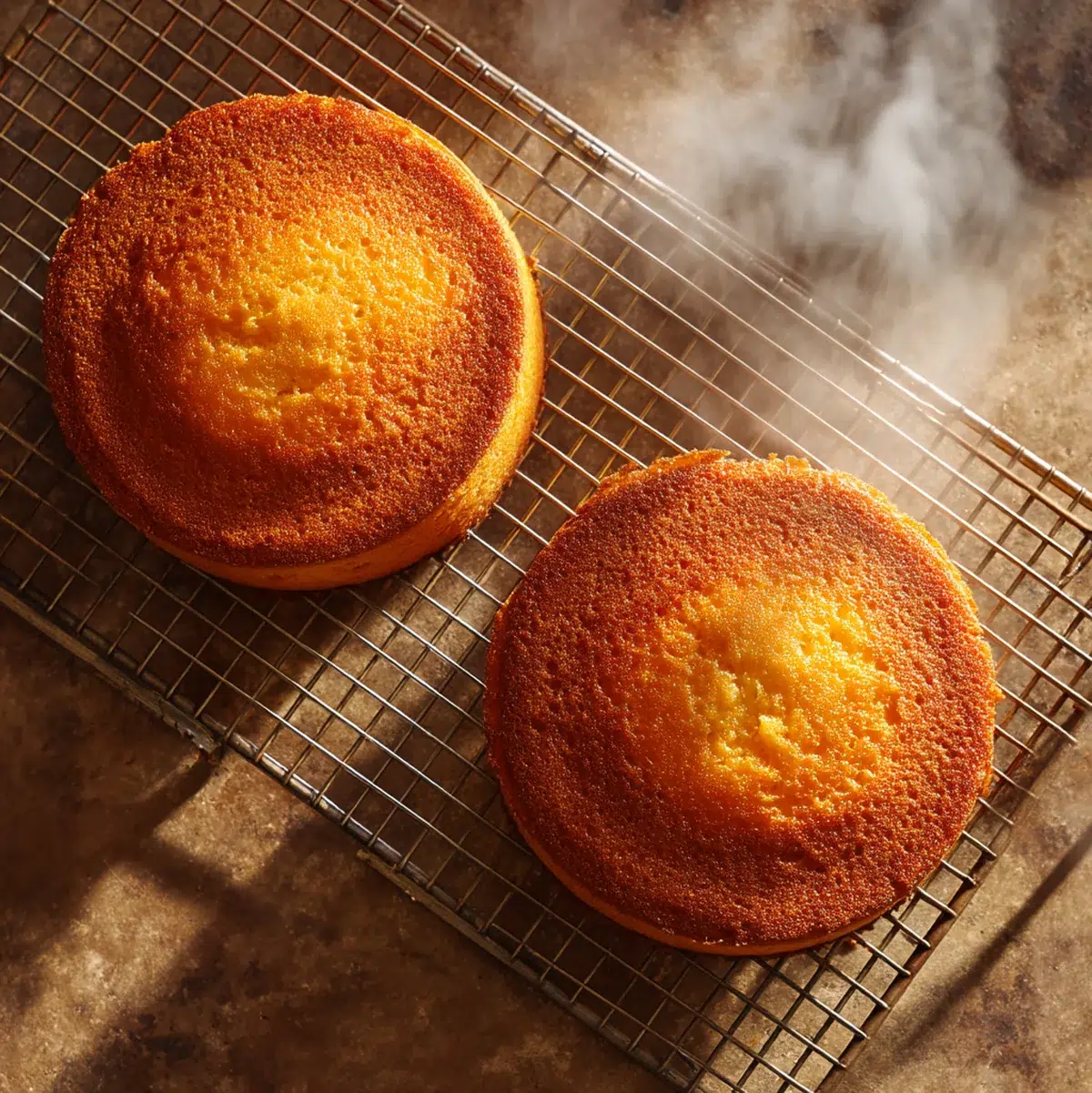
Divide the batter evenly between the two prepared pans (use a kitchen scale for equal weight). Smooth the tops with an offset spatula. Bake at 350°F (175°C) for 30–35 minutes, rotating the pans halfway through. The cakes are done when a toothpick inserted in the center comes out with just a few moist crumbs — not wet batter. Do not overbake — the cakes continue to cook from residual heat as they cool. Let the cakes cool in the pans for 10 minutes, then invert onto wire racks and cool completely (at least 1 hour).
Step 6 — Make Frosting and Assemble
Time: 15 minutes
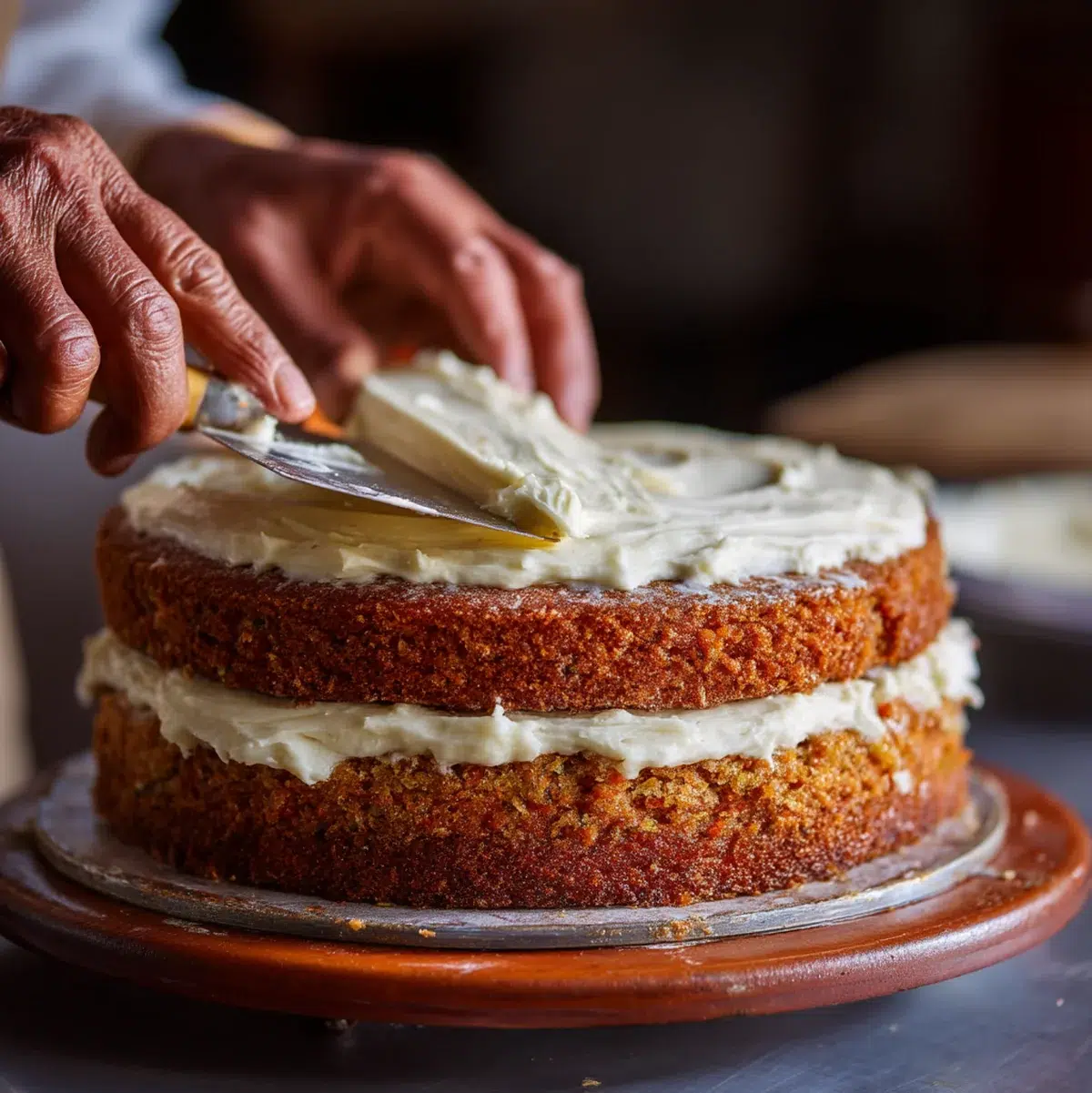
Beat 450 g (16 oz) cold cream cheese and 115 g (½ cup) cold unsalted butter with an electric mixer on medium speed until smooth — about 2 minutes. Add 360 g (3 cups) sifted powdered sugar and 1 tsp vanilla extract. Beat on low until combined, then increase to medium-high for 1 minute until fluffy. Do not overbeat — the frosting will thin out. Place the first cake layer on a serving plate, spread about one-third of the frosting over the top, place the second layer on top (flat-side up), and frost the top and sides with the remaining frosting. Garnish with toasted coconut flakes and chopped pecans. Refrigerate for at least 30 minutes before slicing to set the frosting.
“The number one mistake in cream cheese frosting is overbeating. Cold cream cheese and cold butter beaten just until smooth give you a thick, stable frosting. The moment you overbeat, the friction warms the fat and thins it out — you end up with a runny mess sliding off the cake.”
— Dorie Greenspan, author of Dorie’s Cookies and Baking: From My Home to Yours
Variations & Substitutions
- Bundt cake version — pour all batter into a greased and floured 10-cup bundt pan. Bake at 350°F for 45–50 minutes. Drizzle with a simple cream cheese glaze instead of full frosting.
- Cupcake version — fill standard muffin cups two-thirds full. Bake at 350°F for 20–22 minutes. Makes about 24 cupcakes. Pipe cream cheese frosting on top and sprinkle with toasted coconut.
- Sheet cake version — pour all batter into a 9×13 inch pan. Bake 35–40 minutes. Frost the top only — no layering needed. Perfect for potlucks and picnics.
- Nut-free — omit the pecans entirely or replace with toasted sunflower seeds for crunch without tree nuts.
- Coconut-free — omit the coconut from the batter and topping. Add an extra ¼ cup chopped pecans to compensate for texture. Our No Bake Cookie Dough Bars offer another nut-based treat without coconut.
- Pineapple-free — replace the crushed pineapple with 120 g (½ cup) unsweetened applesauce for moisture. The tropical flavor will be less pronounced, but the cake will still be incredibly moist.
- Add raisins or walnuts — fold in 75 g (½ cup) golden raisins or walnuts for a more traditional carrot cake profile.
- Maple cream cheese frosting — replace 60 ml (¼ cup) of the powdered sugar with 2 Tbsp pure maple syrup. The maple complements the warm spices beautifully.
Cost Breakdown
| Ingredient | Est. Cost |
|---|---|
| Cream cheese (16 oz) | $4.00 |
| Pecans (1 cup total) | $3.00 |
| Carrots (3 cups shredded) | $1.50 |
| Flour, sugars, leavening | $1.40 |
| Vegetable oil (1 cup) | $0.60 |
| Eggs (4 large) | $1.00 |
| Crushed pineapple (8 oz can) | $1.20 |
| Shredded coconut (1 cup) | $1.50 |
| Butter, powdered sugar, vanilla, spices | $2.30 |
| TOTAL (16 servings) | ~$16.50 |
| Per serving | ~$1.03 |
Just over $1 per slice for a bakery-quality layer cake. A comparable slice at a bakery runs $5–$7. The pecans and cream cheese are the biggest cost drivers — buy pecans in bulk and store them in the freezer for the best value.
Make-Ahead & Storage Tips
- Bake layers ahead: Cake layers can be baked 2 days in advance. Wrap each cooled layer tightly in plastic wrap and store at room temperature. Slightly stale layers are actually easier to frost — they are firmer and crumble less.
- Freeze unfrosted layers: Wrap cooled layers in plastic wrap, then foil, and freeze up to 3 months. Thaw overnight at room temperature (still wrapped) before frosting.
- Frosting ahead: Cream cheese frosting can be made up to 3 days ahead. Store in an airtight container in the fridge. Let it soften at room temperature for 15 minutes, then re-whip briefly on low speed before using.
- Fully assembled cake: Keeps in the fridge for up to 5 days. The cake actually tastes better after 24 hours — the spice flavors deepen and the moisture redistributes.
- Toast coconut and pecans in bulk: Toast extra and store in airtight jars for up to 2 weeks. Use them on oatmeal, yogurt, or our No Bake Samoa Cookies for another coconut-caramel treat.
Sadka’s Note: I always bake this cake the day before I need it. Not just because it is easier to split the work, but because the cake genuinely tastes better after sitting overnight. The spices meld, the pineapple moisture distributes, and the frosting firms up perfectly. Every time I have tried to serve it the same day it was baked, it was good — but the next day it was exceptional.
Serving Suggestions & Pairings
- Tropical fruit salad: Serve alongside fresh mango, kiwi, and passion fruit for a full tropical dessert table. The fresh fruit lightens the rich cake.
- Vanilla ice cream: A scoop of cold vanilla ice cream alongside a warm-from-the-fridge slice is indulgent and classic. Our Strawberries and Cream Ice Cream adds a fruity twist.
- Coffee or chai tea: The warm spices in the cake pair beautifully with spiced chai or a strong cup of coffee. The bitterness cuts through the sweet frosting.
- Brunch centerpiece: This cake doubles as a stunning brunch dessert. Serve with mimosas and our Cottage Cheese Pancakes for a complete spread.
- Holiday dessert table: Perfect for Easter, Mother’s Day, or summer gatherings. Pair with our Easter Jell-O Pie for a colorful dessert spread.
- Garnish ideas: Edible flowers, extra toasted coconut, pecan halves arranged in a ring on top, or a light dusting of cinnamon.
Storage & Reheating
| Method | Container | Duration | Notes |
|---|---|---|---|
| Room temperature | Cake dome or covered | Up to 4 hours | Cream cheese frosting should not sit out longer |
| Refrigerator | Airtight or tightly covered | Up to 5 days | Best method; bring to room temp 20 min before serving |
| Freezer (slices) | Wrap individually in plastic + foil | Up to 3 months | Thaw in fridge overnight or room temp 1 hour |
| Freezer (whole unfrosted) | Wrap layers separately | Up to 3 months | Frost after thawing for best texture |
Important: Because of the cream cheese frosting, this cake must be refrigerated if not being served within 4 hours. However, always bring it to room temperature for 20 minutes before serving — cold cake has a muted flavor and dense texture.
Expert Carrot Pineapple Cake Tips & Pro Techniques
“Drain your pineapple until you think it is dry, then drain it some more. The number one reason carrot-pineapple cakes fail is excess moisture from undrained pineapple. I press mine in a strainer with paper towels underneath until no liquid comes out when I squeeze.”
— Stella Parks, pastry chef and author of BraveTart: Iconic American Desserts
- Finely shred the carrots: Use the smallest holes on your box grater. Fine shreds integrate into the batter and create an even, tender crumb. Large shreds create pockets that hold moisture unevenly and can make parts of the cake soggy.
- Room temperature eggs are essential: Cold eggs can cause the oil-sugar-egg mixture to break and not emulsify properly. Therefore, set eggs out for 30 minutes before baking your Hawaiian Carrot Pineapple Cake, or warm them in a bowl of warm water for 5 minutes.
- Do not overmix the batter: Mix dry and wet ingredients until just combined — about 20 seconds. Overmixing develops gluten, making the cake tough and dense instead of tender and moist.
- Rotate pans halfway through baking: Most ovens have hot spots. Rotating ensures even browning and an even rise across both layers.
- The toothpick test is your best friend: Insert a toothpick in the center — it should come out with a few moist crumbs, not wet batter. The cake continues cooking from residual heat, so pulling it slightly early gives you a perfectly moist result.
- Cool completely before frosting: Warm cake layers will melt the cream cheese frosting on contact. Wait at least 1 hour — or chill the layers in the fridge for 30 minutes for faster cooling.
- Cold frosting ingredients only: Cold cream cheese and cold butter produce a thick, stable frosting. Room temperature ingredients make it runny and difficult to spread.
“Carrot cake is one of the few baked goods where oil is unequivocally superior to butter. The oil keeps the crumb tender and moist, and because carrot cake is so heavily spiced and studded with mix-ins, you do not miss the butter flavor at all. This is a cake where texture trumps flavor in the fat choice.”
— Claire Saffitz, author of Dessert Person and former Bon Appétit pastry chef
Sadka’s Note: The toasted coconut makes or breaks this cake for me. Before I started toasting it, the coconut was chewy and bland — almost waxy. After I started toasting it in a dry skillet for just 3–4 minutes, it became golden, fragrant, and crunchy. That tiny step elevates the entire cake from good to incredible. Do not skip it.
Sadka’s Note: I learned a trick for cutting this cake cleanly: dip a sharp knife in hot water, wipe it dry, then cut. The heat melts through the frosting like butter and gives you beautiful, clean slices. Wipe and dip between every cut. It sounds excessive but the presentation goes from messy to professional.
“Pineapple in carrot cake is not just about flavor — it is about moisture. The enzymes in pineapple break down proteins in the flour, creating an extraordinarily tender crumb that butter-and-egg cakes cannot match. But you must drain it well, or those same juices will turn your cake into a pudding.”
— Christina Tosi, chef and founder of Milk Bar
“I always use a combination of white and brown sugar in carrot cake. The molasses in brown sugar adds moisture and a subtle caramel depth that amplifies the warm spices. All white sugar makes the cake taste flat; all brown sugar makes it too heavy. The 3:1 ratio of white to brown is my sweet spot.”
— Erin Clarkson, baker and author of Bake
Nutrition Information
Per serving (1 slice, 16 servings per cake, with frosting). Values are estimates based on standard ingredients.
| Nutrient | Amount | % Daily Value |
|---|---|---|
| Calories | 420 kcal | 21% |
| Total Fat | 24 g | 31% |
| Saturated Fat | 8 g | 40% |
| Cholesterol | 65 mg | 22% |
| Sodium | 280 mg | 12% |
| Carbohydrates | 48 g | 17% |
| Fiber | 2 g | 7% |
| Sugar | 34 g | — |
| Protein | 5 g | 10% |
At 420 calories per slice, this is a celebration cake meant for special occasions. For a lighter option, use the sheet cake version and cut into 20 smaller squares (about 335 calories each). The pecans contribute healthy unsaturated fats, and the carrots add vitamin A and fiber.
Frequently Asked Questions
Can I use fresh pineapple instead of canned?
Yes, but canned crushed pineapple is strongly preferred. Fresh pineapple contains more active bromelain enzymes that can make the cake overly soft or prevent it from setting. If using fresh, finely chop and cook it in a dry pan for 5 minutes to deactivate the enzymes before adding to the batter.
Why is my carrot cake soggy in the middle?
The most common cause is undrained pineapple. Press the crushed pineapple in a fine-mesh strainer until nearly dry. Other causes: too much oil, underbaking, or using a pan that is too small. Always do the toothpick test.
Can I make this without coconut?
Absolutely. Omit the coconut from both batter and topping. Add an extra ¼ cup chopped pecans or walnuts to compensate for texture. The cake will still be moist — just less tropical.
How do I keep the cream cheese frosting from being runny?
Use cold cream cheese and cold butter. Beat only until smooth — about 2 minutes on medium speed. Overbeating warms the fats and thins the frosting. Sift the powdered sugar to avoid lumps. If still thin, refrigerate 30 minutes and try again.
Do I need to peel the carrots before shredding?
Yes. Carrot skin can be bitter and stays tough during baking. Peel first, then shred on the smallest holes of a box grater or use a food processor with a fine shredding disk.
Can I make this as a single layer cake?
Yes. Pour all batter into a greased 9×13 inch sheet pan and bake 35–40 minutes. Frost the top only. This is easier for potlucks and transporting. Cut into 20 squares for slightly smaller portions.
How far in advance can I make this cake?
The cake tastes better made a day ahead. Bake layers and store wrapped at room temperature up to 2 days. Frost the day before or morning of serving. Fully assembled, it keeps in the fridge up to 5 days. Unfrosted layers freeze up to 3 months.
Can I use walnuts instead of pecans?
Yes. Walnuts are the classic carrot cake nut and work perfectly. They have a slightly more bitter, tannic flavor compared to pecans’ buttery sweetness. Toast them the same way — 325°F for 5–7 minutes. Both are excellent choices.
Final Thoughts on This Cake Recipe
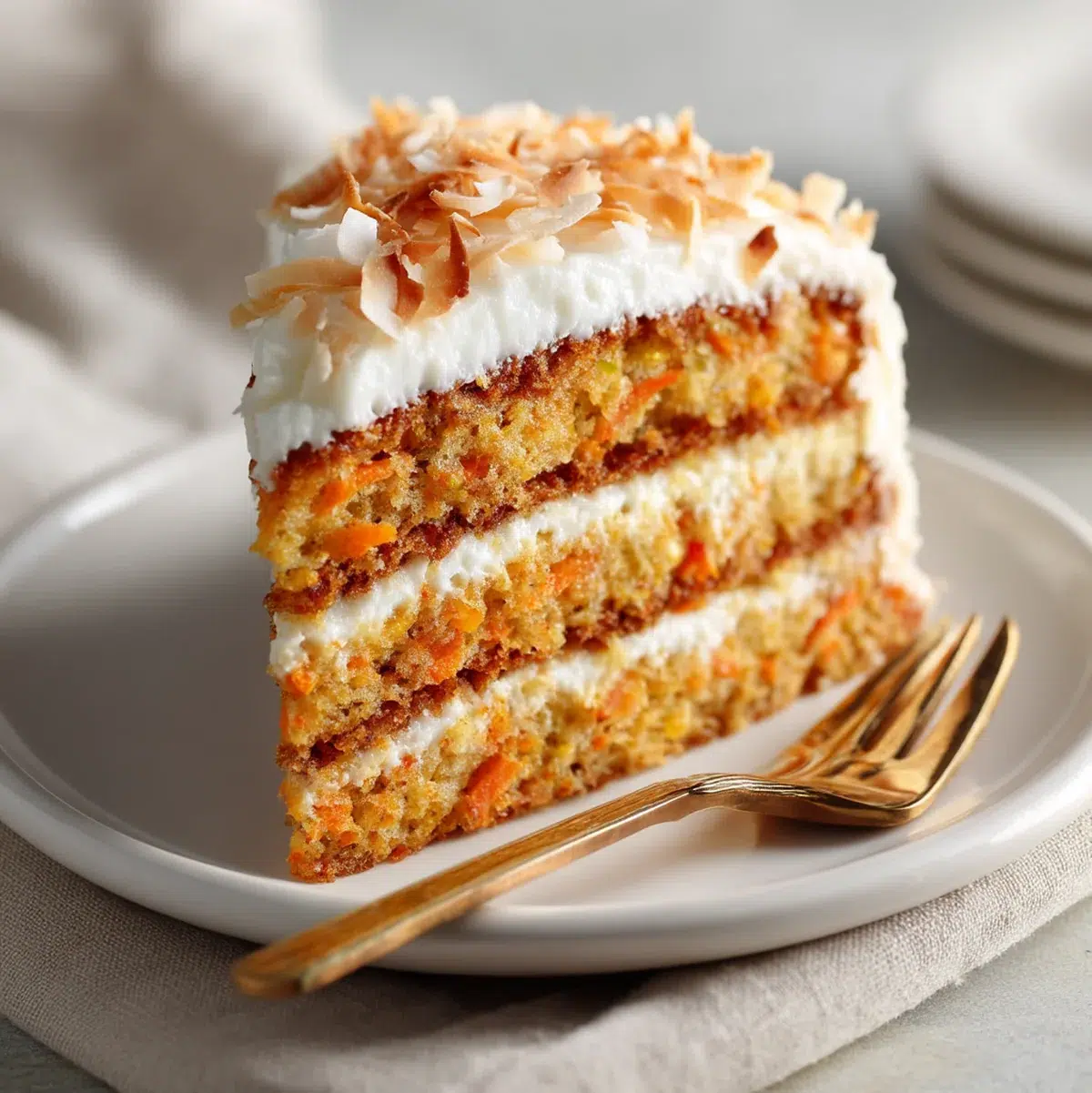
Furthermore, this Hawaiian Carrot Pineapple Cake is everything a tropical celebration cake should be — warmly spiced, incredibly moist, loaded with shredded carrots and crushed pineapple, studded with toasted coconut and pecans, and stacked with thick, tangy cream cheese frosting. The pineapple is the ingredient that makes this version stand apart from ordinary carrot cake: it adds a subtle tropical sweetness and extraordinary moisture that keeps every slice tender for days. At just over $1 per slice with 16 generous servings, this is a bakery-quality layer cake that feeds a crowd without breaking the bank. Consequently, whether you are baking this Hawaiian Carrot Pineapple Cake for Easter, a summer picnic, a birthday, or just because it is Tuesday, this is the carrot pineapple cake recipe you will come back to again and again. However, remember that draining the pineapple thoroughly is the single most important step for success.
Sadka’s Note: This is my go-to cake for every family gathering. My aunt always made carrot cake with pineapple when I was growing up, and this recipe is my version of hers — updated and tested until it was perfect. Every time I bring it to a potluck, it is the first dessert to disappear. The combination of warm spices, tropical fruit, and tangy cream cheese frosting hits every note. If you make only one cake this year, make this one.
Sadka’s Tip: Save the pineapple juice you drained off — do not throw it away. Mix it with sparkling water and a squeeze of lime for a refreshing tropical drink, or add it to smoothies. It is also a great secret ingredient in marinades for grilled chicken — the enzymes tenderize the meat beautifully.
Sources & References
- Serious Eats — BraveTart’s Best Carrot Cake — technique reference for oil-based carrot cake and pineapple drainage method.
- Bon Appétit — Carrot Cake with Cream Cheese Frosting — frosting technique and spice ratio reference.
- Food Network — Classic Carrot Cake — baking temperature and timing reference.
- Sally’s Baking Addiction — Favorite Carrot Cake — ingredient ratio and cream cheese frosting stability tips.
- King Arthur Baking — Carrot Cake — flour measurement guidance and mix-in ratios.
- USDA — Food and Nutrition — nutritional data reference for calorie and macronutrient estimates.

Written by Sadka
Sadka is the founder and editor-in-chief of Al3abFun. Passionate about making delicious food accessible to everyone, Sadka oversees recipe development, nutritional accuracy, and editorial quality across all published content. With a background in food science and digital publishing, Sadka ensures every recipe meets the highest standards of taste, accuracy, and presentation.