
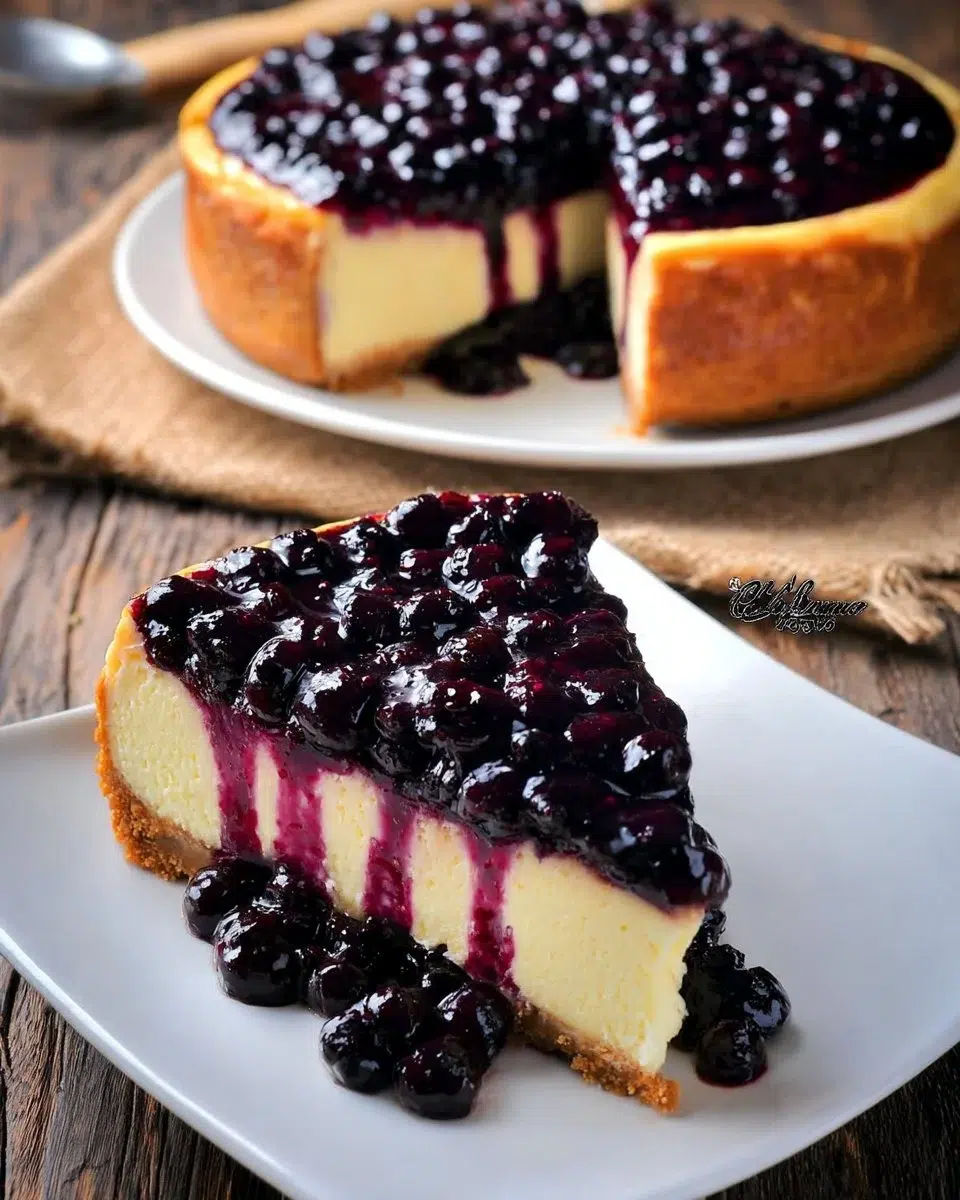
Creamy Classic Cheesecake
The first bite is velvet on the tongue, with bright tang and a buttery crust that snaps just right — this cheesecake recipe delivers that perfect balance. I developed this version over years in pastry kitchens and refined it at home after testing it 12 times with different cream cheeses and crusts. The method focuses on temperature control and gentle mixing so the filling stays dense and silky, not cracked or curdled. Read on for clear, repeatable steps, metric and imperial measures, and professional tips adapted for home ovens so you can serve a confident centerpiece. For a fruit-forward twist, try the apple-crisp mini version linked below to inspire your garnish choices.
Why this recipe stands out:
- Precise temperature control prevents cracks and ensures a dense, smooth texture.
- Low-and-slow baking with a water bath evens heat and limits browning.
- Room-temperature ingredients blend uniformly, avoiding lumps and overbeating.
- A light sour cream topping adds tang and hides small surface imperfections.
- Tested with different cream cheese brands to find a stable, forgiving ratio.
Ingredients breakdown
- Crust — 200 g (1 3/4 cups) graham cracker crumbs, 85 g (6 tbsp) granulated sugar, 115 g (1/2 cup / 8 tbsp) unsalted butter, melted. The crumbs give structure; the butter binds. If using digestive biscuits, the flavor will be slightly less sweet.
- Filling — 900 g (32 oz) full-fat cream cheese, softened to room temperature; 200 g (1 cup) granulated sugar; 3 large eggs at room temperature; 240 ml (1 cup) sour cream; 60 ml (1/4 cup) heavy cream; 2 tsp pure vanilla extract; 2 tbsp all-purpose flour (16 g). Use full-fat cream cheese for the classic texture. Do not use low-fat — it curdles more easily.
- Topping — 120 ml (1/2 cup) sour cream, 1 tbsp granulated sugar, 1/2 tsp vanilla. Spread after baking for a glossy finish.
- Salt — 1/4 tsp fine salt. If you use Morton kosher salt, increase slightly; if Diamond Crystal, use amounts as written.
Substitutions and impact:
- Greek yogurt can replace the sour cream topping (equal measure) but expect a tarter finish.
- For a gluten-free crust: swap crumbs for a certified 1:1 gluten-free graham alternative. The texture will be slightly more crumbly.
- Brand note: full-fat Philadelphia or local block-style cream cheese yields the most consistent result. Some whipped tub-style cheeses have added stabilizers and change texture.
Essential equipment
- 9-inch (23 cm) springform pan — this size fits the batter volume and avoids overflow.
- Electric mixer (hand or stand) with paddle attachment — for smooth blending without excess air.
- Large roasting pan for a water bath — the shallow, wide pan distributes steam.
- Instant-read thermometer — critical for accurate doneness reading.
- Offset spatula or spoon for smoothing the surface.
- Aluminum foil to wrap the pan tightly (prevent water seepage).
If you don’t have a springform pan, line a 9-inch cake pan with a tall collar of parchment and aluminum foil as a workaround.
Step-by-step instructions
Prep time: 30 minutes. Cook time: 1 hour. Inactive time: 7 hours chilling. Total time: 8 hours 30 minutes. Serves 12 (1 slice).
Step 1: Prepare the crust
Preheat oven to 175°C (350°F). Stir together 200 g (1 3/4 cups) graham cracker crumbs, 85 g (1/2 cup) sugar, and 115 g (1/2 cup / 8 tbsp) melted butter until evenly moistened. Press the mixture firmly into the bottom (and 1 cm up the sides) of a 9-inch springform pan and bake for 8–10 minutes, until slightly darkened and fragrant; cool on a rack for 15 minutes.
Step 2: Bring ingredients to room temperature
Remove 900 g (32 oz) cream cheese and 3 eggs from the fridge 1–2 hours before mixing so they reach room temperature. This step ensures a lump-free, even filling and reduces mixing time.
Step 3: Make the filling — low speed
Set oven to 160°C (325°F). In a mixer, beat cream cheese on low until smooth, 1–2 minutes; add 200 g (1 cup) sugar and 2 tbsp (16 g) flour and mix until homogeneous, 30–45 seconds. Do not whip at high speed — keep it gentle to avoid incorporating air.
Step 4: Add eggs one at a time
With the mixer on low, add 3 large eggs one at a time, mixing just until combined after each addition, about 15 seconds each. Then mix in 240 ml (1 cup) sour cream, 60 ml (1/4 cup) heavy cream, and 2 tsp vanilla for 20–30 seconds until smooth. The mixture should be silky and slightly thick.
Step 5: Assemble and seal for the water bath
Pour filling into cooled crust and smooth the top. Wrap the springform pan tightly with two layers of heavy-duty foil to prevent water from seeping in. Place the wrapped pan in a large roasting pan and pour hot water into the roasting pan until it reaches halfway up the side of the springform.
Step 6: Bake slowly for even texture
Bake at 160°C (325°F) for 50–60 minutes. The edges should be set and the center slightly wobbly like gently jello. An instant-read thermometer inserted near the center should read about 65°C (149°F). Remove from the oven and lift the springform from the water bath carefully.
Step 7: Add the topping and cool
Gently spread 120 ml (1/2 cup) sour cream mixed with 1 tbsp sugar and 1/2 tsp vanilla over the warm cake. Bake uncovered at 160°C (325°F) for 5 more minutes to set the topping. Let cool on a wire rack for 1 hour, then chill, uncovered, in the refrigerator for at least 6 hours or overnight for the best slice.
Step 8: Unmold and serve
Run a thin knife around the edge before releasing the springform to avoid sticking. For clean slices, warm a knife under hot water, dry it, and wipe between cuts. Serve chilled with fruit compote, salted caramel, or a dusting of cocoa.
Expert Tips & Pro Techniques
- Prevent cracks: cool the cake gradually. After baking, crack-free surfaces benefit from the sorbet-like slow shrink as it cools.
- Common mistake: overmixing adds air, which causes bubbling and cracks — mix only until smooth and no more. If you see peaks, gently fold with a spatula to deflate.
- Water bath tips: place a folded towel under the roasting pan to avoid sloshing and distribute heat evenly.
- Make-ahead: bake the cheesecake up to 2 days ahead, keep chilled, and add fresh toppings the day you serve.
- Home pro technique: press the crust firmly with the bottom of a measuring cup for an even base, and tent the pan lightly with foil in the final 15 minutes if the top browns too fast.
- Flavor boost: add 1 tbsp lemon zest to the filling for brightness without changing texture.
Storage & Reheating
- Refrigerator: Keep whole or sliced cheesecake in an airtight container or covered tightly with plastic wrap. Store for up to 5 days.
- Freezer: Cheesecake freezes well. Wrap tightly in plastic wrap and then foil or an airtight container for up to 2 months. Thaw in the refrigerator overnight before serving.
- Reheating: Serve chilled. If you prefer a slightly softer slice, let sit at room temperature for 20–30 minutes before serving. Avoid microwaving — it makes the crust soggy and the texture sweaty.
Variations & Substitutions
- New York–style version: Increase cream cheese to 1.1 kg (36–40 oz) and add 2 tbsp (30 ml) heavy cream for an extra-rich texture; bake the same but expect a slightly longer set time. This adapts elements of a classic New York cheesecake for extra density. (Uses the term New York cheesecake once.)
- No-bake option: Replace eggs with 240 ml (1 cup) whipped heavy cream stabilized with 1 tbsp gelatin dissolved in 60 ml (1/4 cup) warm water. Chill at least 6 hours. Texture will be lighter and less dense than the baked version. (Includes no-bake cheesecake once.)
- Fruit-studded: Fold 180 g (1 cup) fresh berries into the cooled filling before baking; stir only once to avoid color streaks. Baking time remains the same.
- Mini cheesecakes: Divide batter into 12 cupcake liners in a muffin tin, bake at 160°C (325°F) for 18–22 minutes. Cooling and chilling times unchanged for structure. (See linked mini ideas below.)
Serving suggestions & pairings
- Classic pairing: a tart berry compote and lightly whipped cream complement the richness.
- Beverage: Serve with an espresso or a late-harvest Riesling to match the density and sweetness.
- Garnish ideas: candied citrus peel, toasted nuts, or a drizzle of salted caramel.
- For a fun dessert board, pair slices with shortbread cookies and seasonal fruit; for small portions try the mini variations linked below.
Nutrition information (per serving — 1 slice, 12 servings)
- Calories: 520 kcal
- Total Fat: 38 g
- Saturated Fat: 22 g
- Cholesterol: 150 mg
- Sodium: 280 mg
- Total Carbohydrates: 36 g
- Dietary Fiber: 0.5 g
- Sugars: 28 g
- Protein: 8 g
Nutrition values are estimates. Actual values may vary based on specific ingredients and preparation methods.
Frequently Asked Questions
Q: Why did my cake crack on top?
A: Most cracks come from too much air in the batter or rapid temperature changes. Mix gently and cool the cake slowly; the water bath helps a lot.
Q: Can I make this without eggs?
A: Yes — use a no-bake method with whipped cream and dissolved gelatin as described in the variations. The texture will be lighter and less creamy.
Q: Can I double this recipe for a larger party?
A: You can double the ingredients and bake in two 9-inch pans or a larger pan, but do not attempt to bake a double batch in one pan — heat won’t penetrate evenly. Baking time may change slightly.
Q: Can I prepare this the night before?
A: Absolutely. It benefits from chilling overnight; in fact, the texture is better after at least 6 hours of refrigeration.
Q: How long does this keep in the fridge?
A: Stored in an airtight container, it will keep up to 5 days in the refrigerator.
Q: Is this a baked cheesecake or a no-bake cheesecake?
A: This version is baked for a dense, silky texture; see the no-bake variation if you prefer an egg-free, chilled version. (Includes baked cheesecake once.)
Q: How do I avoid a soggy crust when reheating?
A: Avoid microwaving. If you must warm a slice, reheat in a 175°C (350°F) oven for 6–8 minutes on a sheet pan; this keeps the crust crisper.
Internal links (distributed)
Inspiration for a fruit-forward garnish can be found in this apple crisp mini approach: apple crisp mini cheesecakes.
For a chocolate and candy-bar twist idea when designing your flavor, see this KitKat combination: KitKat cheesecake.
If you like tropical flavors, the mango version shows how to fold fruit into batters safely: mango cheesecake.
For a boozy, autumnal take, adapt toppings from this maple bourbon variant for drizzling: maple bourbon cheesecake.
If you want portion control and party-friendly serving, check these mini ideas: mini cheesecakes.
Conclusion
This approach gives a reliably smooth, crack-free cake that slices cleanly and tastes rich without being overly sweet. For additional techniques and variations from experienced bakers, see The Best Cheesecake Recipe – Sugar Spun Run for helpful troubleshooting and The BEST Cheesecake Recipe (New York style) – Bake With Zoha for a dense, classic take.
Print
Creamy Classic Cheesecake
- Total Time: 510 minutes
- Yield: 12 servings 1x
- Diet: Vegetarian
Description
This creamy classic cheesecake features a buttery crust and a smooth, dense filling, developed over years to achieve the perfect balance without cracks.
Ingredients
- 200 g (1 3/4 cups) graham cracker crumbs
- 85 g (6 tbsp) granulated sugar
- 115 g (1/2 cup / 8 tbsp) unsalted butter, melted
- 900 g (32 oz) full-fat cream cheese, softened
- 200 g (1 cup) granulated sugar
- 3 large eggs, room temperature
- 240 ml (1 cup) sour cream
- 60 ml (1/4 cup) heavy cream
- 2 tsp pure vanilla extract
- 2 tbsp all-purpose flour (16 g)
- 120 ml (1/2 cup) sour cream for topping
- 1 tbsp granulated sugar for topping
- 1/2 tsp vanilla for topping
- 1/4 tsp fine salt
Instructions
- Prepare the crust by preheating the oven to 175°C (350°F) and mixing graham cracker crumbs, sugar, and melted butter. Press into the springform pan and bake for 8–10 minutes.
- Bring ingredients to room temperature by removing cream cheese and eggs from the fridge 1–2 hours before mixing.
- Make the filling by beating cream cheese on low speed until smooth, then mixing in sugar and flour.
- Add the eggs one at a time, mixing just until combined. Then mix in sour cream, heavy cream, and vanilla until smooth.
- Assemble the cheesecake by pouring filling into cooled crust and wrapping the pan in foil for the water bath.
- Bake at 160°C (325°F) for 50–60 minutes until edges set and center is slightly wobbly.
- Add the topping by spreading sour cream mixture and baking for an additional 5 minutes.
- Unmold and serve after cooling and chilling for at least 6 hours.
Notes
For best results, ensure proper temperature control and avoid overmixing to prevent cracks in the cheesecake.
- Prep Time: 30 minutes
- Cook Time: 60 minutes
- Category: Dessert
- Method: Baking
- Cuisine: American
Nutrition
- Serving Size: 1 slice
- Calories: 520
- Sugar: 28g
- Sodium: 280mg
- Fat: 38g
- Saturated Fat: 22g
- Unsaturated Fat: 10g
- Trans Fat: 0g
- Carbohydrates: 36g
- Fiber: 0.5g
- Protein: 8g
- Cholesterol: 150mg