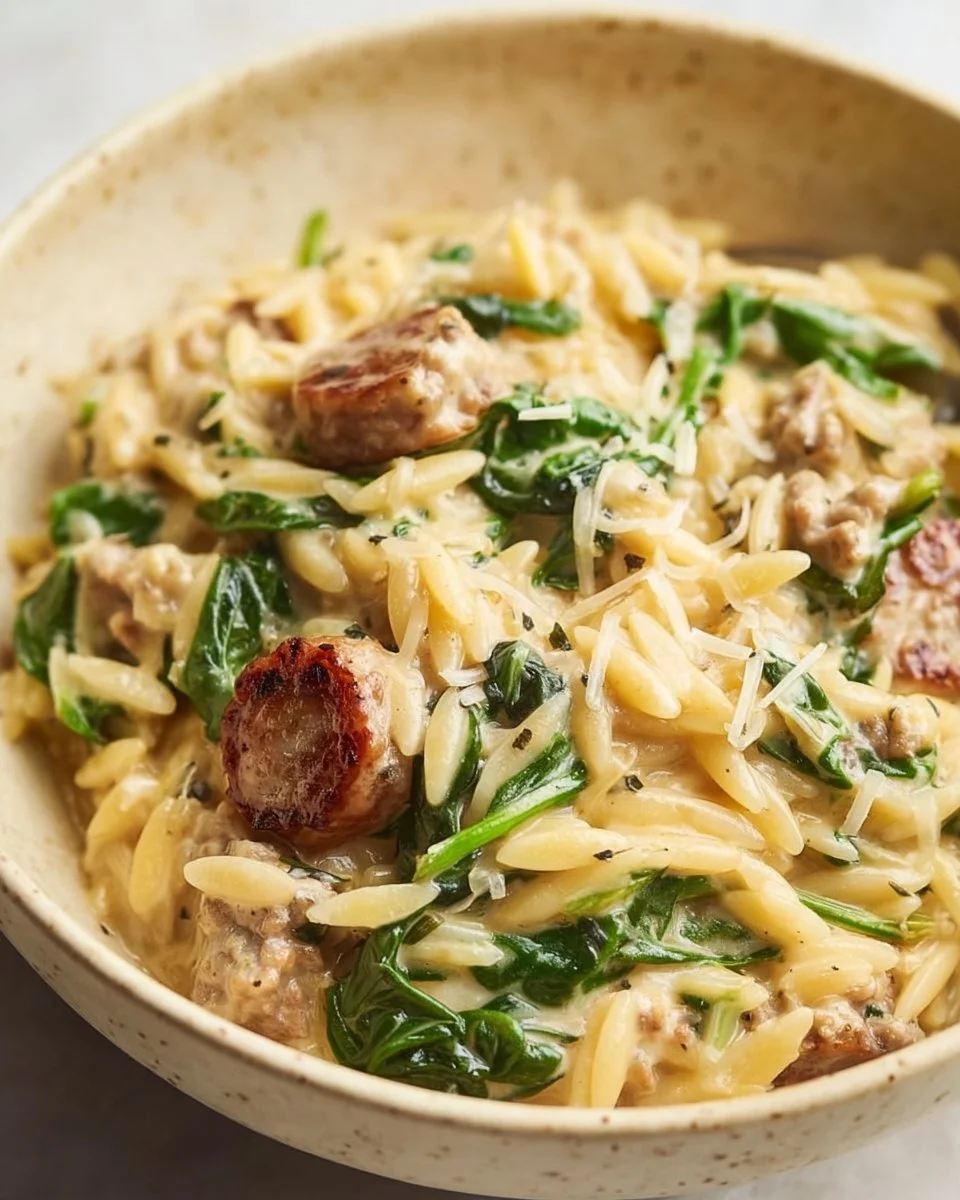
Creamy Garlic Parmesan Sausage Orzo
Warm, garlicky, and saucy — this one-pan orzo is comfort food that comes together fast. Creamy Garlic Parmesan Sausage Orzo puts savory Italian sausage, fragrant garlic, and silky Parmesan into tiny pasta grains that soak up flavor. After testing this version eight times and scaling the seasoning for home kitchens, I landed on the method below as the most reliable for rich, creamy results without clumping or a greasy finish. If you enjoy quick, skillet-style dinners, this recipe pairs the same comforting sauces I use in my creamy garlic chicken skillet but keeps prep and cleanup minimal. Read on for exact measurements, timing, and pro tips so your orzo is tender, saucy, and perfectly seasoned.
Why This Recipe Works
- Browning the sausage first creates fond — the browned bits add deep, meaty flavor to the sauce.
- Toasting the orzo briefly before adding liquid gives the pasta a nuttier taste and keeps it from getting mushy.
- Finishing with hot stock and cream off the heat prevents the cheese from seizing and keeps the sauce silky.
- A short rest lets the orzo absorb sauce so each bite is creamy, not soupy.
- Low, steady simmering cooks the orzo evenly and allows collagen in the sausage to melt into the sauce.
Ingredients Breakdown
- Italian sausage (450 g / 1 lb): Use sweet or mild links, casings removed. Browning adds flavor and fat that becomes the sauce base. If you prefer less fat, use 375 g (¾ lb) and drain excess oil, though the sauce will be slightly leaner.
- Orzo pasta (300 g / 1 1/2 cups dry): Small rice-shaped pasta that cooks quickly. Do not use instant orzo if you want good bite.
- Chicken stock (900 ml / 3 3/4 cups): Provides savory depth. Vegetable stock works, but the flavor will be lighter.
- Heavy cream (240 ml / 1 cup): Gives the sauce body and shine. To reduce fat, substitute half-and-half (same volume) — the sauce will be thinner.
- Parmesan cheese, finely grated (80 g / 3/4 cup): Adds salt, umami, and creaminess. Use freshly grated Parmigiano-Reggiano for best melt; pre-grated contains anti-caking agents and won’t melt as smoothly.
- Garlic (4 cloves / ~12 g), minced: Key aromatic. Increase by 1 clove if you love garlic.
- Onion (1 small / 120 g), finely chopped: Balances richness.
- Olive oil (15 ml / 1 tbsp) and unsalted butter (30 g / 2 tbsp): Fat for browning and flavor. Butter at the end enriches the sauce.
- Salt and black pepper: Season to taste. Use Diamond Crystal kosher salt if you can; if using Morton’s, use roughly half the amount because it’s denser.
- Fresh parsley (optional, for garnish): Brightens the dish.
Essential Equipment
- 12-inch (30 cm) skillet with a tight-fitting lid — the pan must hold the liquid without boiling over. If you don’t have a 12-inch skillet, use a 3–4 quart sauté pan.
- Wooden spoon or heatproof spatula for scraping fond.
- Microplane or fine grater for freshly grating Parmesan.
- Measuring cups and a scale for best accuracy — weigh the orzo and cheese if possible.
- Instant-read thermometer (optional) to check any meat doneness; sausage should reach 74°C (165°F). If you don’t have one, ensure no pink remains and juices run clear.
Step-by-Step Instructions
Makes 4 servings. Prep Time 15 minutes; Cook Time 20 minutes; Inactive Time None; Total Time 35 minutes.
Step 1: Brown the sausage
Heat 15 ml (1 tbsp) olive oil in a 12-inch (30 cm) skillet over medium-high heat until shimmering, about 1–2 minutes. Add 450 g (1 lb) Italian sausage, breaking it into bite-sized pieces. Sauté until deeply browned and no pink remains, about 6–8 minutes, stirring every 1–2 minutes to develop even color. Drain off excess fat if pan is overly slick, but leave a tablespoon for flavor.
Step 2: Sweat the aromatics
Reduce heat to medium and add 30 g (2 tbsp) unsalted butter, 1 small onion (120 g) chopped, and 4 cloves (≈12 g) minced garlic. Sauté until the onions are translucent and fragrant, about 4–5 minutes, stirring frequently. Cook just until soft; do not let the garlic burn.
Step 3: Toast the orzo
Add 300 g (1 1/2 cups) dry orzo to the pan and stir to coat for 1–2 minutes until the edges turn lightly golden and smell nutty. Toasting helps the orzo hold its shape and adds flavor.
Step 4: Deglaze and simmer
Pour in 240 ml (1 cup) white wine or skip for non-alcoholic (optional) and scrape the browned bits for 30 seconds. Then add 900 ml (3 3/4 cups) hot chicken stock and bring to a gentle simmer over medium heat. Stir, reduce heat to low, cover, and cook for 9–11 minutes, stirring once halfway, until the orzo is nearly al dente and most liquid is absorbed. Sensory cue: orzo should be firm-tender with a creamy sauce, not dry.
Step 5: Finish with cream and cheese
Remove pan from heat and stir in 240 ml (1 cup) heavy cream and 80 g (3/4 cup) freshly grated Parmesan. Stir until the cheese melts and the sauce is glossy, about 1–2 minutes. Taste and season with salt and black pepper. Do not overheat after adding cheese — overheating can make the sauce grainy.
Step 6: Rest and serve
Let the skillet sit, covered, for 3–5 minutes so the orzo absorbs sauce and thickens slightly. Finish with a squeeze of lemon or 2 tbsp chopped parsley for brightness. Serve hot, about 300 g (roughly 1 1/4 cups) per person.
Expert Tips & Pro Techniques
- Use freshly grated Parmesan: pre-grated cheese contains starches that prevent smooth melting.
- Avoid adding all the cream at once if the sauce looks loose; start with 120 ml (1/2 cup) and add more until you get the desired consistency.
- Common mistake: overcooking orzo. Stop cooking when it’s just al dente; it will finish during the 3–5 minute rest.
- Make-ahead: Cook the dish through Step 4, cool, and refrigerate up to 24 hours. Reheat gently in a skillet over low heat with 60–120 ml (1/4–1/2 cup) extra stock or cream to loosen the sauce.
- Professional trick for silkier sauce: stir in 1 tbsp unsalted butter off the heat right before serving for extra shine and mouthfeel.
- To reduce splatter when adding hot stock, tip the pan slightly and pour against the side rather than directly over the pasta.
Storage & Reheating
- Refrigerator: Transfer leftovers to an airtight container and refrigerate up to 3 days. The sauce will thicken as the orzo absorbs liquid.
- Freezer: This dish is best fresh or refrigerated; freezing changes texture. If you must freeze, cool completely, portion into freezer-safe containers, and freeze up to 1 month. Thaw overnight in the fridge before reheating.
- Reheating: Reheat on the stovetop over low heat with 60–120 ml (1/4–1/2 cup) hot stock or cream per serving, stirring until warmed through, about 6–8 minutes. Avoid microwaving when possible — it can make the texture uneven.
Variations & Substitutions
- Vegetarian: Replace sausage with 300 g (2 cups) sliced mushrooms and 1 extra tablespoon olive oil. Increase salt slightly and add 1 tsp smoked paprika for depth. All other steps and times stay the same.
- Lighter version: Swap heavy cream for 240 ml (1 cup) half-and-half; stir 1 tbsp cornstarch dissolved in 15 ml (1 tbsp) water into the cream before adding to thicken slightly. Sauce will be thinner and less rich.
- Gluten-free: Use 300 g (1 1/2 cups) gluten-free orzo or rice-shaped pasta (such as brown rice orzo). Cooking time may change — follow package but expect 10–14 minutes simmering and check for doneness.
- Swap the protein: Remove sausage and use 500 g (about 1 lb) boneless chicken thighs, cut into 2.5 cm (1-inch) pieces. Brown first and cook through to 74°C (165°F), then proceed; you can follow tips from our creamy garlic chicken thighs method for juicy results (use the same simmer time so orzo cooks properly).
- Spicy: Use spicy Italian sausage or add 1/2 tsp red pepper flakes when sautéing the garlic.
Serving Suggestions & Pairings
- Serve this with a crisp green salad dressed in lemon vinaigrette to cut the richness. For a matching flavor profile, try it with our garlic butter steak on the side for an indulgent meal.
- For veggies, roast broccoli or asparagus at 200°C (400°F) for 12–15 minutes until tender and slightly charred.
- Wine pairing: a medium-bodied white like Pinot Grigio or a light red like Chianti complements the sausage and cheese.
- For a seafood twist, serve alongside a simple garlic shrimp sauté — techniques borrowed from this creamy garlic shrimp skillet work well to keep flavors cohesive.
Nutrition Information
Per serving (serving size ~1 1/4 cups; recipe yields 4 servings)
- Calories: 680 kcal
- Total Fat: 38 g
- Saturated Fat: 17 g
- Cholesterol: 110 mg
- Sodium: 920 mg
- Total Carbohydrates: 52 g
- Dietary Fiber: 2 g
- Sugars: 3 g
- Protein: 30 g
Nutrition values are estimates. Actual values may vary based on specific ingredients and preparation methods.
Frequently Asked Questions
Q: Why did my orzo turn out mushy?
A: Overcooking orzo or using too much liquid causes mushiness. Cook until just al dente (firm-tender) and stop simmering when most liquid is absorbed. Remember it will rest and absorb sauce for 3–5 minutes.
Q: Can I make this without cream?
A: Yes. Replace 240 ml (1 cup) heavy cream with 240 ml (1 cup) additional stock and 1 tbsp butter for richness. The sauce will be lighter and less glossy.
Q: Can I double this recipe for a crowd?
A: Yes, you can double quantities in a larger 4–5 quart skillet or sauté pan. Keep the same ratio of liquid to orzo and ensure the pan is large enough so the pasta cooks evenly.
Q: Can I prepare this the night before?
A: Yes. Cook through Step 4, cool completely, cover, and refrigerate up to 24 hours. Reheat on the stovetop with extra stock or cream to loosen the sauce before finishing with cheese.
Q: How long does this keep in the fridge?
A: Stored in an airtight container, it keeps 3 days. For best texture eat within 48 hours.
Q: Is there a low-carb version?
A: Swap orzo for riced cauliflower (about 600 g / 6 cups riced cauliflower) and reduce simmer to 4–5 minutes; finish with the same cream and cheese for a lower-carb, different-texture dish.
Q: My sauce got grainy after adding cheese — why?
A: Overheating grated cheese or adding it to a very hot, rapidly boiling pan causes proteins to seize and create a grainy texture. Remove pan from heat and stir in cheese gently; add a little cream to stabilize.
Conclusion
This creamy skillet balances meaty sausage, bright garlic, and melting Parmesan for a weeknight dinner that feels special without taking hours. For another take with the same cozy flavors and a slightly different spice profile, see Garlic & Parmesan Sausage Orzo | Don’t Go Bacon My Heart. If you’d like a lighter, herb-forward sausage-orzo version, check out Italian Sausage Orzo – Salt & Lavender for inspiration.
Print
Creamy Garlic Parmesan Sausage Orzo
- Total Time: 35
- Yield: 4 servings 1x
- Diet: Meat
Description
Warm, garlicky, and saucy, this one-pan orzo is comfort food that comes together quickly with savory Italian sausage, fragrant garlic, and silky Parmesan.
Ingredients
- 450 g (1 lb) Italian sausage, casings removed
- 300 g (1 1/2 cups) dry orzo pasta
- 900 ml (3 3/4 cups) chicken stock
- 240 ml (1 cup) heavy cream
- 80 g (3/4 cup) finely grated Parmesan cheese
- 4 cloves garlic, minced
- 1 small onion, finely chopped
- 15 ml (1 tbsp) olive oil
- 30 g (2 tbsp) unsalted butter
- Salt and black pepper, to taste
- Fresh parsley, optional, for garnish
Instructions
- Heat olive oil in a skillet over medium-high heat. Brown the Italian sausage, breaking it into pieces, until no pink remains.
- Add the butter, chopped onion, and minced garlic; sauté until the onions are translucent.
- Add the orzo and toast for 1–2 minutes until lightly golden.
- Deglaze the pan with white wine (optional) and add the chicken stock. Bring to a gentle simmer, cover, and cook until orzo is nearly al dente.
- Stir in the heavy cream and Parmesan cheese until melted and glossy. Season to taste.
- Let sit covered for a few minutes to thicken slightly. Serve with parsley if desired.
Notes
For a lighter version, substitute heavy cream with half-and-half. This dish can also be made vegetarian by replacing sausage with sliced mushrooms.
- Prep Time: 15
- Cook Time: 20
- Category: Main Course
- Method: Stovetop
- Cuisine: Italian
Nutrition
- Serving Size: 1 serving
- Calories: 680
- Sugar: 3g
- Sodium: 920mg
- Fat: 38g
- Saturated Fat: 17g
- Unsaturated Fat: 15g
- Trans Fat: 0g
- Carbohydrates: 52g
- Fiber: 2g
- Protein: 30g
- Cholesterol: 110mg

Written by Anna
Anna is a professional recipe developer and food writer at Al3abFun. With over 8 years of experience in recipe development and food styling, she specializes in creating approachable, tested recipes that bring families together around the dinner table. Anna holds a culinary arts certification and has been featured in various food publications. Every recipe on Al3abFun is triple-tested in her home kitchen to ensure perfect results every time.