Asian Glazed Salmon with Sticky Maple-Soy Glaze
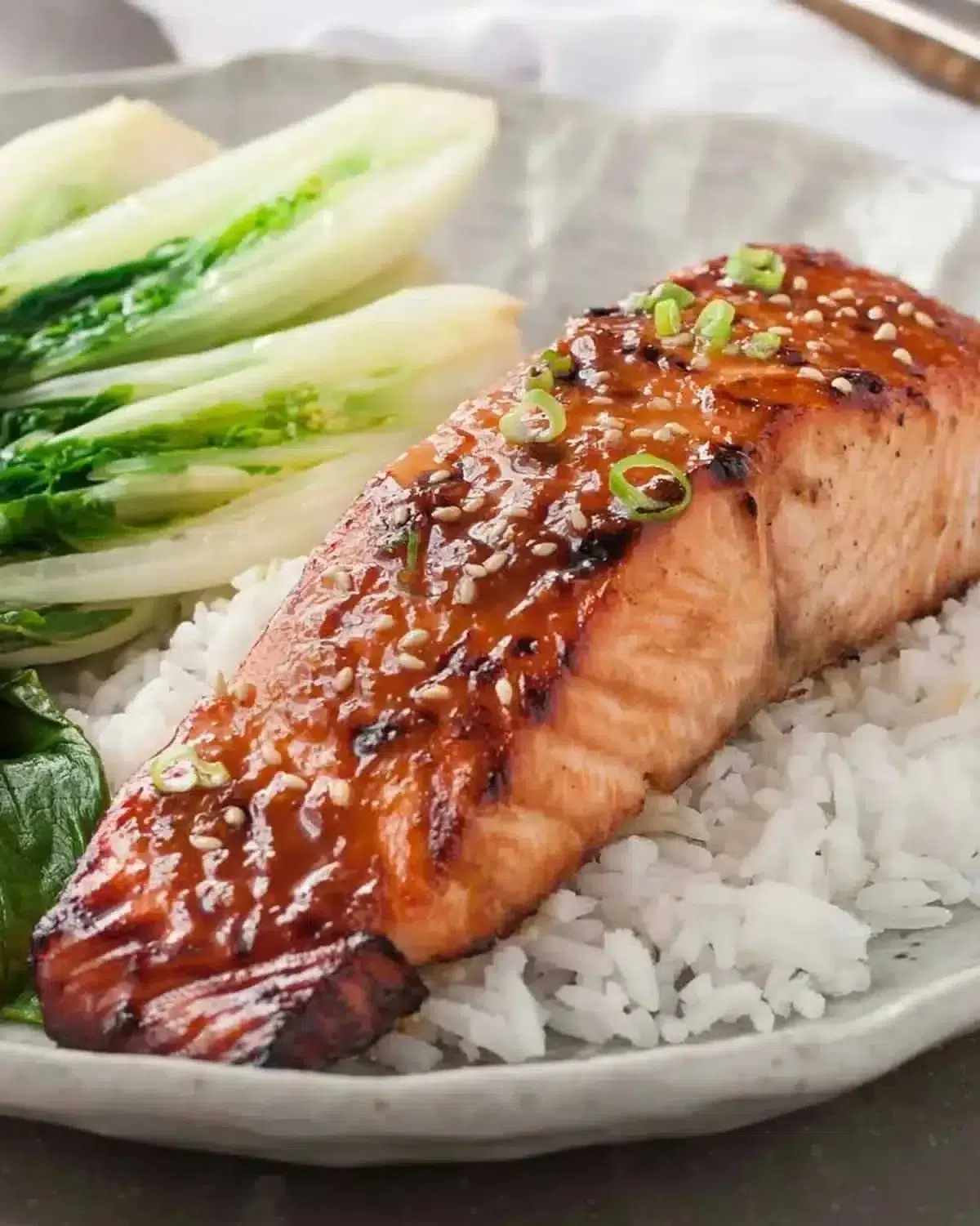
Glossy, sweet, and deeply savory—this Asian glazed salmon is sticky in the best way. The salmon gets a thin, caramelized coating of maple and soy that clings to the fish and browns under high heat. I developed and refined this glaze over a decade of restaurant nights and tested the recipe 12 times at home to balance sweetness, salt, and char. After trying citrus versions and hoisin-heavy versions, this maple-soy ratio gives the cleanest flavor while still glazing properly. If you like a bright citrus spin, try the pomegranate-orange glazed salmon for a tangy alternative. Read on for exact measurements, timing, and technique so you nail the sticky finish every time.
Why This Recipe Works
- A simple maple-to-soy ratio creates a glaze that reduces quickly and sticks without burning.
- High heat at the end caramelizes sugars for a glossy finish and slight char.
- Brushing during cooking layers flavor instead of overwhelming the fish at once.
- A splash of rice vinegar balances sweetness and prevents a cloying finish.
- Using skin-on fillets protects the flesh and makes searing and broiling easier.
Ingredients Breakdown
- Salmon: 680 g (about 4 x 170 g / 6 oz) skin-on salmon fillets. Skin keeps the fillet together, crisps under high heat, and protects delicate flesh.
- Swap note: You can use skinless fillets, but handle them gently when flipping; cook time may be 1–2 minutes shorter.
- Maple syrup: 60 ml (4 tbsp). Adds sticky sweetness and helps the glaze caramelize.
- Impact warning: Use pure maple syrup. Pancake syrup contains corn syrup and won’t caramelize the same.
- Soy sauce: 60 ml (4 tbsp). Provides salt and umami.
- If you need lower sodium, use low-sodium soy and reduce to 45 ml (3 tbsp); flavor will be milder.
- Rice vinegar: 15 ml (1 tbsp). Brightens the glaze and cuts sweetness.
- Toasted sesame oil: 5 ml (1 tsp). Adds sesame aroma; a little goes a long way.
- Fresh ginger: 12 g (1 tbsp) grated. Gives fresh heat and balance.
- Garlic: 2 cloves, minced (about 6 g). Classic savory backbone.
- Cornstarch slurry: 5 ml (1 tsp) cornstarch + 15 ml (1 tbsp) cold water to thicken if needed.
- Use only if your glaze looks too thin after reducing.
- Sesame seeds and sliced scallions for garnish.
- Neutral oil (grapeseed or canola): 15 ml (1 tbsp) to sear.
- Optional chili: 1 tsp gochujang or 1/4 tsp red pepper flakes for heat.
Substitutions with impact:
- Honey instead of maple: Works but gives a different floral note and browns faster.
- Tamari for gluten-free: Use same amount; tamari is less salty and richer.
- Brown sugar: Use 30 g (2 tbsp) instead of maple for budget swaps—flavor changes and may be sweeter.
Brand note: If you use Morton table salt in other recipes, reduce amounts by half compared to Diamond Crystal kosher salt. For this recipe, measuring soy sauce by volume keeps flavor consistent.
Essential Equipment
- Heavy skillet or oven-safe frying pan (10–12 inches / 25–30 cm). A wide pan gives even sear; if you don’t have one, use a baking sheet for finishing.
- Fish spatula or flexible turner. It helps flip without breaking the fillet.
- Small saucepan for reducing glaze, or you can reduce glaze in the skillet after searing.
- Instant-read thermometer to check doneness. Salmon is best at 52–57°C (125–135°F) for medium to medium-well.
- Optional: air fryer for a hands-off finish; see the linked air fryer salmon patties recipe for techniques adapted to air fryers.
Step-by-Step Instructions
Prep Time: 10 minutes · Cook Time: 12 minutes · Inactive Time: None · Total Time: 22 minutes · Servings: 4
Step 1: Make the glaze
In a small saucepan combine 60 ml (4 tbsp) pure maple syrup, 60 ml (4 tbsp) soy sauce, 15 ml (1 tbsp) rice vinegar, 12 g (1 tbsp) grated ginger, and 2 minced garlic cloves (6 g). Bring to a simmer over medium heat and cook, stirring, until reduced and slightly thickened, 6–8 minutes. Taste and add 5 ml (1 tsp) toasted sesame oil and a pinch of red pepper flakes if you want heat.
Step 2: Prepare the salmon
Pat 680 g (about 4 x 170 g / 6 oz) salmon fillets dry with paper towels. Season lightly with pepper and a pinch of salt. Let sit at room temperature for 5 minutes so the fish cooks evenly. Do not over-salt since the glaze contains soy.
Step 3: Sear skin-side down
Heat 15 ml (1 tbsp) neutral oil in a heavy skillet over medium-high until shimmering, about 2 minutes. Place fillets skin-side down and press gently with a spatula for 20 seconds so the skin lays flat. Sear until the skin is crisp and the sides start to change color, about 4–5 minutes. Cook time varies by thickness; look for opaque color moving up the sides.
Step 4: Begin glazing
Flip the fillets carefully and spoon 1–2 tbsp (15–30 ml) of the glaze over the tops. Sear the flesh side for 1 minute to set the glaze. This step locks in the glaze flavor and allows a light caramel to form.
Step 5: Finish under high heat
Preheat the broiler to high or increase the burner to high and transfer the pan to the broiler if it is oven-safe. Brush another 1 tbsp (15 ml) glaze over each fillet. Broil or pan-sear for 2–3 minutes until the glaze bubbles and becomes glossy and slightly charred at edges. For internal doneness, aim for 52–57°C (125–135°F) for medium; for well-done, 63°C (145°F). Do not overcook—overcooked salmon dries quickly.
Step 6: Rest and garnish
Remove the salmon from heat and let rest 3 minutes. Brush one last thin layer of warm glaze, then garnish with 1 tbsp (8 g) sesame seeds and sliced scallions. Serve immediately with sides.
Expert Tips & Pro Techniques
- Sear first, glaze later: Searing the skin first crisps it while keeping the flesh tender; add glaze in stages to avoid burning.
- Use an instant-read thermometer: Pull salmon at 52–57°C (125–135°F) for moist, medium doneness. Residual heat raises it a few degrees while resting.
- Common mistake — burning the glaze: Sugars burn fast. Keep glaze heat moderate and finish under the broiler briefly rather than cooking glaze for long over direct heat.
- Make-ahead: Make the glaze 3 days ahead and store in the fridge. Warm gently before using. Salmon cooks quickly, so prepare the sauce to save time on weeknights.
- Professional trick at home: Spoon hot glaze over the seared fish and quickly broil for one minute. The rapid heat caramelizes sugars without overcooking the interior.
- Air-fryer adaptation: For an air-fryer finish, sear skin-side down in a skillet for 3 minutes, transfer to the air fryer basket, brush glaze, and cook at 200°C (400°F) for 4–6 minutes. For full air-fryer guidance, see this air fryer salmon recipe adaptation.
Storage & Reheating
- Refrigerator: Store cooled salmon in an airtight container for up to 3 days. Keep glaze in a separate small container to recoat after reheating.
- Freezer: You can freeze cooked glazed salmon for up to 2 months. Wrap tightly in plastic wrap then foil, or use vacuum seal. Thaw overnight in the fridge.
- Reheating: Reheat in a 175°C (350°F) oven for 8–10 minutes or until just warmed through. Rebrush with reserved glaze halfway through heating. Avoid microwaving if you want to keep the skin crisp.
Variations & Substitutions
- Gluten-Free Version: Replace soy sauce with tamari (60 ml / 4 tbsp). Keep all other ingredients the same. No change to cook times.
- Spicy Korean Twist: Add 15 g (1 tbsp) gochujang to the glaze and reduce maple to 45 ml (3 tbsp). Finish with toasted sesame and nori flakes.
- Citrus-Maple Glaze: Add 15 ml (1 tbsp) orange juice and 1 tsp orange zest to the glaze. This brightens flavor without changing cook times.
- Honey-Garlic Swap: Use 45 ml (3 tbsp) honey and add 15 ml (1 tbsp) rice vinegar and 1 tbsp minced garlic. Watch closely—honey browns faster, so reduce broil time by 30–60 seconds.
- Oven-Baked (less char): Sear skin-side down 3 minutes, then bake at 200°C (400°F) for 6–8 minutes after brushing glaze. Finish with a 1-minute broil for gloss.
Serving Suggestions & Pairings
- Pair with steamed jasmine rice and quick pickled cucumbers for a classic balance.
- Serve alongside roasted broccoli or a simple bok choy sauté to add crunch.
- Garnish with extra scallions and a wedge of lime for brightness.
- Looking for a full weeknight menu? Complement with these Asian chicken lettuce wraps for an easy shared meal.
Nutrition Information
Per serving (Serving size: 1 salmon fillet; Recipe yields 4 servings)
- Calories: 440 kcal
- Total Fat: 24 g
- Saturated Fat: 4 g
- Cholesterol: 110 mg
- Sodium: 650 mg
- Total Carbohydrates: 10 g
- Dietary Fiber: 0 g
- Sugars: 9 g
- Protein: 39 g
Nutrition values are estimates. Actual values may vary based on specific ingredients and preparation methods.
Frequently Asked Questions
Q: Why did my salmon turn out dry?
A: Most likely you overcooked it. Salmon cooks quickly. Use an instant-read thermometer and remove at 52–57°C (125–135°F) for moist results. Carryover heat will finish the cooking.
Q: Can I make this without maple syrup?
A: Yes. Substitute 30 g (2 tbsp) brown sugar plus 15 ml (1 tbsp) water, or 45 ml (3 tbsp) honey. Both change the flavor and caramelization slightly; watch timing as they brown faster.
Q: Can I double this recipe?
A: Yes. Double ingredients and cook in batches so the pan isn’t crowded. Crowding lowers pan temperature and prevents proper searing.
Q: Can I prepare this the night before?
A: You can make the glaze and store it for up to 3 days. Cook the salmon just before serving for best texture. If you must, fully cook, cool, and reheat gently in an oven.
Q: How long does this keep in the fridge?
A: Cooked glazed salmon keeps 3 days in an airtight container. Store glaze separately if possible for best shine when reheating.
Q: Can I grill this salmon?
A: Yes. Oil the grates well and grill skin-side down over medium-high for 4–5 minutes, flip, brush glaze, and grill 1–2 minutes more. Watch for flare-ups from the sugars.
Q: Is this recipe suitable for kids?
A: Yes. The maple balances soy for a mildly sweet, savory glaze. Omit red pepper flakes to keep it kid-friendly.
Conclusion
This sticky maple-soy glaze is simple to make and transforms everyday salmon into a weeknight hero. For a similar approach and extra inspiration, see the tested Maple Soy Glazed Salmon – Mess in the Kitchen and an air-fryer adaptation in The Best Air Fryer Salmon Recipe (With Maple Soy Glaze). Enjoy—then tweak the glaze to make it your own.
Print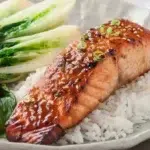
Asian Glazed Salmon with Sticky Maple-Soy Glaze
- Total Time: 22 minutes
- Yield: 4 servings 1x
- Diet: Pescatarian
Description
This Asian glazed salmon is coated with a sticky maple and soy glaze that caramelizes beautifully, offering a perfect balance of sweetness and umami.
Ingredients
- 680 g skin-on salmon fillets (about 4 x 170 g / 6 oz)
- 60 ml (4 tbsp) pure maple syrup
- 60 ml (4 tbsp) soy sauce
- 15 ml (1 tbsp) rice vinegar
- 5 ml (1 tsp) toasted sesame oil
- 12 g (1 tbsp) grated fresh ginger
- 2 cloves garlic, minced (about 6 g)
- 5 ml (1 tsp) cornstarch + 15 ml (1 tbsp) cold water (optional)
- 15 ml (1 tbsp) neutral oil (grapeseed or canola) for searing
- Sesame seeds and sliced scallions for garnish
- 1 tsp gochujang or 1/4 tsp red pepper flakes (optional)
Instructions
- Combine maple syrup, soy sauce, rice vinegar, ginger, and garlic in a small saucepan. Bring to a simmer over medium heat and cook, stirring, until reduced and slightly thickened, about 6–8 minutes.
- Pat the salmon fillets dry with paper towels and season lightly with pepper and a pinch of salt. Let sit at room temperature for 5 minutes.
- Heat oil in a heavy skillet over medium-high until shimmering, about 2 minutes. Place fillets skin-side down and sear until the skin is crisp, about 4–5 minutes.
- Flip the fillets carefully and spoon the glaze over the tops. Sear flesh side for 1 minute.
- Preheat the broiler to high and brush another layer of glaze over each fillet. Broil for 2–3 minutes until the glaze bubbles and becomes glossy.
- Remove from heat, let rest for 3 minutes, and garnish with sesame seeds and scallions. Serve immediately.
Notes
Ensure to use pure maple syrup for the best results. Adjust cook times based on salmon thickness. Use an instant-read thermometer for perfect doneness.
- Prep Time: 10 minutes
- Cook Time: 12 minutes
- Category: Main Course
- Method: Searing
- Cuisine: Asian
Nutrition
- Serving Size: 1 salmon fillet
- Calories: 440 kcal
- Sugar: 9g
- Sodium: 650mg
- Fat: 24g
- Saturated Fat: 4g
- Unsaturated Fat: 20g
- Trans Fat: 0g
- Carbohydrates: 10g
- Fiber: 0g
- Protein: 39g
- Cholesterol: 110mg

Written by Anna
Anna is a professional recipe developer and food writer at Al3abFun. With over 8 years of experience in recipe development and food styling, she specializes in creating approachable, tested recipes that bring families together around the dinner table. Anna holds a culinary arts certification and has been featured in various food publications. Every recipe on Al3abFun is triple-tested in her home kitchen to ensure perfect results every time.