
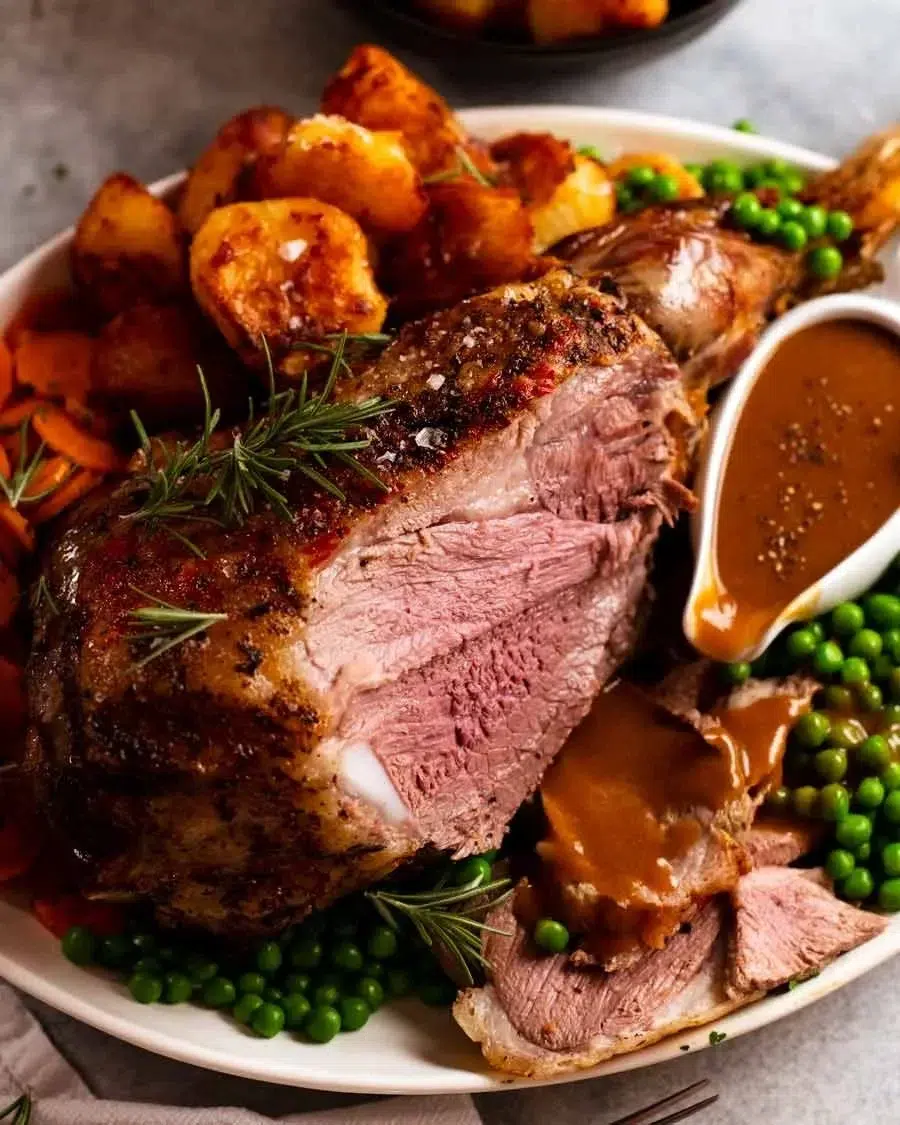
Roast Leg of Lamb with Gravy — Classic Sunday Roast
A crackling, herb-scented crust gives way to rich, juicy meat and a glossy pan gravy that brings everything together — roast leg of lamb with gravy sings of Sunday and special dinners. I developed this version after testing it eight times with different herb rubs and resting times. It’s the recipe I relied on while staging in a London bistro, so it balances crowd-friendly timing with restaurant-level results. Read on for clear timing, metric-and-imperial measurements, and the exact steps to a reliably tender roast. If you enjoy bold roast flavors, you might also like a Christmas roast duck with crispy skin as a second show-stopping main.
Why This Recipe Works
- High-heat sear at the start locks in juices and creates a flavorful crust while preventing overcooking inside. This gives the roast texture and depth.
- A simple herb-garlic paste transfers intense flavor directly into the surface without overpowering the lamb’s natural taste.
- Resting the roast for 15–20 minutes lets the juices redistribute, keeping slices moist and easy to carve.
- Deglazing the roasting pan converts fond (browned bits) into a rich gravy in minutes.
- Timing and thermometer guidance reduce guesswork, producing consistent results whether you want medium-rare or well done. This is why chefs prefer precise temps for the best roast lamb.
Ingredients Breakdown
- 1 boneless leg of lamb, about 1.8–2.2 kg (4–5 lb): The center of the dish. Boneless roasts carve more easily and cook evenly. If using bone-in, add 10–15 minutes to total cook time.
- 4 cloves garlic, minced: Adds savory bite and helps the herb rub adhere.
- 2 tbsp (30 ml) fresh lemon juice: Brightens the rich meat.
- 2 tbsp (30 ml) extra-virgin olive oil: Helps the herbs form a paste and promotes browning.
- 2 tbsp fresh rosemary, finely chopped (or 2 tsp dried): Rosemary pairs classically with lamb; fresh gives brighter flavor.
- 2 tbsp fresh thyme leaves (or 2 tsp dried): Adds herbaceous notes that cut the richness.
- 1 tbsp Dijon mustard: Helps the herb paste cling and lends subtle tang.
- 1½ tsp kosher salt (or 1 tsp table salt): Seasoning is critical; if using Morton’s kosher salt, increase to 2 tsp.
- 1 tsp freshly ground black pepper.
- 240 ml (1 cup) low-sodium chicken or beef stock: Base for the gravy.
- 120 ml (1/2 cup) dry red wine (optional): Adds depth to the gravy; can be replaced with extra stock.
- 1 tbsp (15 g) unsalted butter (optional): Enriches the gravy at the end.
- 1 tbsp cornstarch + 2 tbsp water (optional slurry): For thickening if you prefer a more substantial gravy.
Substitutions and impact warnings:
- Olive oil can be swapped for neutral oil, but flavor will be milder.
- Omit wine and use stock if you need an alcohol-free gravy — the sauce will be slightly less complex.
- If using bone-in leg, note the extra time and the bone will add flavor to pan juices.
Essential Equipment
- Roasting pan with a rack: A rack keeps the meat elevated so hot air circulates. If you don’t have a rack, use a rimmed baking sheet and arrange a bed of halved onions or carrots to lift the meat.
- Instant-read thermometer: Crucial for consistent doneness. Do not rely on time alone.
- Sharp carving knife and fork: For clean, even slices.
- Small saucepan: For making gravy from pan juices.
- Meat tying string (kitchen twine): If your boneless leg is rolled, tie every 2–3 cm (1 inch) to ensure even shape.
- Optional: fine-mesh sieve for a silky gravy; bench scraper to transfer pan fond.
Step-by-Step Instructions
Serves 6. Prep time 20 minutes, Cook time 1 hour 10 minutes, Inactive time 15–20 minutes, Total time about 1 hour 45 minutes.
Step 1: Trim and tie the lamb
Pat 1.8–2.2 kg (4–5 lb) boneless leg of lamb dry with paper towels. Trim away large pockets of fat but leave a thin layer for flavor. If not already tied, roll and tie the roast loosely every 2–3 cm (1 inch).
Step 2: Make the herb paste and rub
Combine 4 cloves minced garlic, 2 tbsp (30 ml) lemon juice, 2 tbsp (30 ml) olive oil, 2 tbsp chopped rosemary, 2 tbsp thyme, 1 tbsp Dijon mustard, 1½ tsp kosher salt, and 1 tsp black pepper in a bowl. Rub the paste all over the lamb, massaging into the surface. Let sit at room temperature for 20–30 minutes to take the chill off.
Step 3: Preheat oven and sear
Preheat oven to 220°C (425°F). Heat a large skillet over high heat and sear the lamb, fat side down first, for 3–4 minutes until well browned, then rotate to brown the other sides for 2–3 minutes. Searing develops fond and a rich crust.
Step 4: Roast to temperature
Place roast on a rack in the roasting pan and insert an instant-read thermometer into the thickest part. Roast at 220°C (425°F) for 15 minutes, then reduce oven to 180°C (350°F) and continue roasting. Remove at the following internal temps for doneness: 52°C (125°F) for rare, 57°C (135°F) for medium-rare, 63°C (145°F) for medium. This second phase takes about 35–50 minutes depending on roast size — start checking at 35 minutes.
Step 5: Rest the meat
Transfer the roast to a cutting board and tent loosely with foil. Rest for 15–20 minutes. Resting is critical — it stops carryover cooking and lets juices redistribute, keeping slices moist.
Step 6: Make the gravy
While the meat rests, pour pan juices into a small saucepan over medium heat, scraping up fond with a wooden spoon. Add 240 ml (1 cup) stock and 120 ml (1/2 cup) red wine if using; boil for 3–4 minutes to concentrate. For a glossy finish, whisk in 1 tbsp (15 g) butter. If you prefer thicker gravy, whisk a slurry of 1 tbsp cornstarch + 2 tbsp water and simmer 1–2 minutes until thickened. Taste and season.
Step 7: Carve and serve
Slice the rested lamb against the grain into 6–8 slices per serving depending on thickness. Spoon warm gravy over slices and serve immediately.
Expert Tips & Pro Techniques
- Always use an instant-read thermometer — temperature, not time, determines doneness. A probe is worth the small cost.
- Common mistake: skipping the sear. Without a good sear the roast will lack depth and color. Sear for 3–4 minutes per side.
- Make-ahead: Roast, cool, and refrigerate uncovered for up to 24 hours; rewarm in a 150°C (300°F) oven for 20–30 minutes and finish with a quick pan sauce. This saves time on the day of serving.
- Professional trick for even browning: brush the roast with a thin coat of honey or mustard before the final 5–10 minutes at high heat for extra sheen and caramelization.
- If pan juices are excessively fatty, chill for 30 minutes and spoon off the fat before making gravy.
- For uniform slices, chill the rested roast for 15 minutes in the fridge; slightly firm meat slices more cleanly.
Storage & Reheating
- Refrigerator: Store cooled lamb in an airtight container for up to 3–4 days. Keep gravy in a separate container for best texture.
- Freezer: The cooked roast can be frozen for up to 3 months. Wrap tightly in plastic and foil, or use a vacuum sealer. Freeze gravy in an airtight container for up to 2 months.
- Thawing: Thaw overnight in the refrigerator.
- Reheating: Reheat slices in a 150°C (300°F) oven for 10–15 minutes covered with foil. Rewarm gravy gently on the stove over low heat until simmering. Avoid microwaving slices for long periods; they can dry out.
Variations & Substitutions
- Greek Style: Replace rosemary and thyme with 2 tbsp finely chopped oregano and add 1 tsp ground cumin. Serve with tzatziki and lemon wedges. Measurements stay the same; cooking times unchanged.
- Herb-Crusted with Mustard: Brush 2 tbsp whole-grain mustard over the meat before rubbing herbs for extra tang. No change to roast times.
- Slow-Roasted Version: Cook at 150°C (300°F) for 2.5–3 hours until internal temp reaches 63°C (145°F) for medium; result is extremely tender but won’t have the initial seared crust. Finish under high broil for 2–3 minutes if you want color.
- Gluten-free gravy: Use 1 tbsp cornstarch or arrowroot instead of flour. Mix with cold water and add as a slurry. No other changes.
- Paleo/Keto: Omit wine and use homemade bone broth for gravy. No sugars or thickeners needed — reduce to concentrate flavors.
Serving Suggestions & Pairings
- Classic sides: Roast potatoes, minted peas, and glazed carrots make a traditional plate.
- Vegetable pairing: Bright, crisp sides such as crispy air-fryer vegetables add texture and color.
- Dessert pairing: A rich dessert like pumpkin cheesecake follows the roast well in fall menus.
- Bread and sauces: Warm crusty bread or a cauliflower purée soak up the gravy beautifully.
- For an eclectic menu, serve with a simple pasta side like American chop suey as a family-style option for kids.
Nutrition Information
Per serving (serving size: 1/6 of roast including gravy). Yield: 6 servings.
- Calories: 560 kcal
- Total Fat: 36 g
- Saturated Fat: 12 g
- Cholesterol: 210 mg
- Sodium: 520 mg
- Total Carbohydrates: 4 g
- Dietary Fiber: 0 g
- Sugars: 1 g
- Protein: 56 g
Nutrition values are estimates. Actual values may vary based on specific ingredients and preparation methods.
Frequently Asked Questions
Q: Why did my leg of lamb turn out dry?
A: Dry lamb usually means it was overcooked or not rested. Use an instant-read thermometer and remove at the recommended internal temp, then rest 15–20 minutes. Searing first also helps retain juices.
Q: Can I make this without eggs?
A: Yes — this recipe contains no eggs. You can follow the method as written without changes.
Q: Can I double this recipe for a larger crowd?
A: Yes. Roast times per roast don’t change, but avoid crowding the oven. If using two racks, rotate pans halfway through and monitor temperatures independently.
Q: Can I prepare the roast the night before?
A: Absolutely. Roast, cool completely, then wrap and refrigerate. Reheat in a 150°C (300°F) oven for 20–30 minutes and make fresh gravy from the chilled pan juices or stock.
Q: How long does leftover roast keep in the fridge?
A: Stored in an airtight container, cooked lamb keeps 3–4 days in the refrigerator.
Q: Is there a good way to thicken gravy if it’s thin?
A: Make a slurry of 1 tbsp cornstarch and 2 tbsp cold water; whisk into simmering gravy and cook 1–2 minutes until thickened. Alternatively, reduce longer over medium heat.
Q: What’s the best internal temperature for roast lamb?
A: For medium-rare aim for 57°C (135°F), medium 63°C (145°F). Remember the roast will rise a few degrees while resting.
Conclusion
This roast delivers confident flavors, reliable timing, and a quick pan gravy that elevates every bite. For more variations and another step-by-step take, see the recipe at RecipeTin Eats’ roast lamb leg with gravy, and compare techniques with the version at The Dinner Bite’s roast leg of lamb with gravy recipe.
Print
Roast Leg of Lamb with Gravy
- Total Time: 90 minutes
- Yield: 6 servings 1x
- Diet: Paleo
Description
A classic Sunday roast that features juicy leg of lamb with a flavorful herb crust and rich pan gravy, perfect for special occasions.
Ingredients
- 1 boneless leg of lamb, about 1.8–2.2 kg (4–5 lb)
- 4 cloves garlic, minced
- 2 tbsp (30 ml) fresh lemon juice
- 2 tbsp (30 ml) extra-virgin olive oil
- 2 tbsp fresh rosemary, finely chopped (or 2 tsp dried)
- 2 tbsp fresh thyme leaves (or 2 tsp dried)
- 1 tbsp Dijon mustard
- 1½ tsp kosher salt (or 1 tsp table salt)
- 1 tsp freshly ground black pepper
- 240 ml (1 cup) low-sodium chicken or beef stock
- 120 ml (1/2 cup) dry red wine (optional)
- 1 tbsp (15 g) unsalted butter (optional)
- 1 tbsp cornstarch + 2 tbsp water (optional slurry)
Instructions
- Trim and tie the lamb. Pat the lamb dry and trim excess fat. Tie loosely every 2–3 cm (1 inch).
- Make the herb paste. Combine garlic, lemon juice, olive oil, rosemary, thyme, mustard, salt, and pepper. Rub over the lamb.
- Preheat the oven and sear. Preheat to 220°C (425°F) and sear lamb in a skillet for 3–4 minutes on each side.
- Roast to temperature. Place on a rack in a roasting pan and roast at 220°C (425°F) for 15 minutes, then reduce to 180°C (350°F) until desired internal temperature.
- Rest the meat. Transfer lamb to a cutting board and rest for 15–20 minutes.
- Make the gravy. Pour pan juices into a saucepan, add stock and wine, boil, then whisk in butter or cornstarch slurry for thickness.
- Carve and serve. Slice the lamb against the grain, drizzle with gravy, and serve.
Notes
Use an instant-read thermometer to ensure perfect doneness. Resting the meat is essential to retain juices.
- Prep Time: 20 minutes
- Cook Time: 70 minutes
- Category: Main Course
- Method: Roasting
- Cuisine: British
Nutrition
- Serving Size: 1 serving
- Calories: 560
- Sugar: 1g
- Sodium: 520mg
- Fat: 36g
- Saturated Fat: 12g
- Unsaturated Fat: 24g
- Trans Fat: 0g
- Carbohydrates: 4g
- Fiber: 0g
- Protein: 56g
- Cholesterol: 210mg