Flaky Buttermilk Biscuits — Easy Homemade Recipe
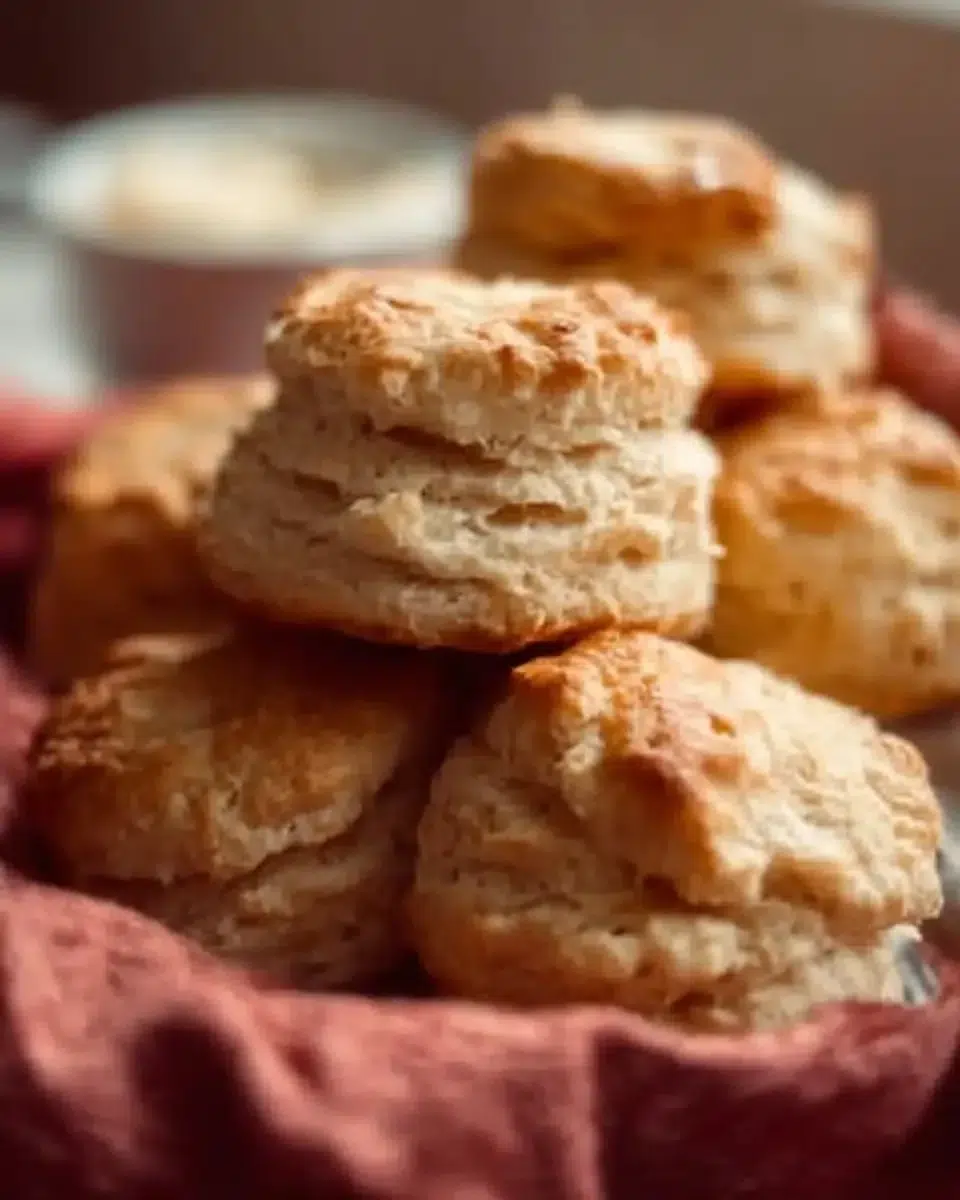
Warm, layered biscuits that split into buttery flakes the moment you pull them from the oven. These buttermilk biscuits bake up tall, tender, and reliably flaky using a simple technique that home cooks can repeat. After testing this version eight times with different flours and butter temperatures, I settled on a ratio and method that gives consistent rise and deep flavor. I developed and refined this recipe while teaching pastry classes, so you get clear timing and sensory cues at every step. Read on for ingredient notes, precise steps, pro tips, and shortcuts so you can make perfect biscuits without guesswork. If you enjoy simple baking projects, you might also like this Blueberry Crinkle Cookies for a sweet follow-up treat.
Why This Recipe Works
- Cold butter in small pieces creates steam during baking, which lifts layers and produces flakes.
- A brief fold-and-turn method builds gentle layers without developing too much gluten.
- Buttermilk’s acidity reacts with baking powder to help rise and adds tangy flavor.
- Minimal handling keeps the dough tender; do not overmix — stop as soon as no dry flour is visible.
- Cutting biscuits straight down keeps layers intact; twisting the cutter can seal edges and reduce height.
Ingredients Breakdown
- All-purpose flour 375 g (3 cups): Provides structure. Using higher-protein flours will make chewier biscuits.
- Baking powder 12 g (2½ tsp) and baking soda 2 g (½ tsp): Leavening agents work together—baking soda balances acidity while powder adds lift.
- Kosher salt 8 g (1½ tsp Diamond Crystal) — if using Morton’s, use 1 tsp (because Morton’s is denser).
- Unsalted butter 113 g (½ cup), very cold and cut into 1 cm (¼-inch) cubes: Butter creates steam pockets. Do not soften.
- Buttermilk 240 ml (1 cup), cold: Adds moisture, acidity, and flavor. For a tangier biscuit, use cultured buttermilk.
- Optional: 15 ml (1 tbsp) heavy cream brushed on top for extra browning.
- Optional add-ins: 50 g (½ cup) grated sharp cheddar for cheesy biscuits; fold in lightly at the end.
Substitutions and impact warnings:
- Greek yogurt for buttermilk: Use 180 g (¾ cup) yogurt + 60 ml (¼ cup) milk. This will make the dough denser and more tangy.
- Butter alternatives: Stick with butter for the best flaky layers. Margarine or spreads contain water and oils that change texture.
- Gluten-free: Replace flour with a 1:1 gluten-free blend and add ½ tsp xanthan gum; rise may be lower.
For a savory spread or compound butter to serve with these, try pairing them with a recipe for homemade mounjaro to add bright flavor.
Essential Equipment
- Large mixing bowl and medium bowl for butter handling.
- Box grater or pastry cutter for cutting butter into flour. A grater speeds the process and keeps butter cold.
- Bench scraper for folding the dough.
- 6 cm to 7 cm (2½–3 inch) round biscuit cutter. If you don’t have one, use a clean glass.
- Baking sheet lined with parchment and a wire rack for cooling.
- Oven thermometer (recommended) to confirm 230°C (450°F) — many ovens run cool or hot.
- If you need a sheet-pan alternative, see tips on sheet pans and oven setup in this sheet pan guide.
Step-by-Step Instructions
Prep Time: 15 minutes.
Cook Time: 12–15 minutes.
Inactive Time: None.
Total Time: 27–30 minutes.
Servings: Makes 8 biscuits; serving size: 1 biscuit.
Step 1: Preheat and measure
Preheat your oven to 230°C (450°F) and position a rack in the center. Line a baking sheet with parchment. Measure 375 g (3 cups) all-purpose flour, 12 g (2½ tsp) baking powder, 2 g (½ tsp) baking soda, and 8 g (1½ tsp) kosher salt into a large bowl.
Step 2: Cut the butter into the flour
Add 113 g (½ cup) very cold, cubed unsalted butter. Using a box grater or pastry cutter, work the butter into the dry mix until pea-sized and some smaller flakes remain, about 30–60 seconds of work. The mixture should look coarse and slightly shaggy.
Step 3: Add buttermilk and form a loose dough
Pour 240 ml (1 cup) cold buttermilk into the bowl in two additions, folding gently with a spatula until the dough comes together, about 10–15 folds. Do not overmix — stop as soon as no dry flour is visible. The dough should be soft and slightly sticky.
Step 4: Turn, fold, and stack for layers
Turn the dough out onto a lightly floured surface. Pat it into a 20 x 10 cm (8 x 4 inch) rectangle about 2.5 cm (1 inch) thick. Fold the rectangle into thirds like a letter, rotate 90 degrees, and repeat patting to 2.5 cm (1 inch). Repeat this fold-and-pat two more times, 8–10 total folds, to create layers. This takes about 3–4 minutes.
Step 5: Cut the biscuits
Gently pat the dough to 3 cm (1¼ inch) thickness. Using a 6–7 cm (2½–3 inch) cutter, press straight down without twisting. Re-shape scraps gently and cut again; do not overwork the dough. Arrange biscuits on the prepared sheet so they just touch for taller sides, about 8 biscuits. This step takes 5–7 minutes.
Step 6: Brush and bake
Brush tops lightly with 15 ml (1 tbsp) heavy cream for gloss, if using. Bake at 230°C (450°F) for 12–15 minutes until tops are deep golden brown and a skewer comes out dry. Rotate the pan at 8 minutes for even color. Remove and cool on a rack for 5 minutes before serving.
Step 7: Serve or cool
Serve warm split with butter or jam. For storage, cool completely before packing to avoid steam softening the crust. Cooling takes 20–30 minutes.
Expert Tips & Pro Techniques
- Chill everything: Cold butter and cold buttermilk make the best flakes. If your kitchen is warm, chill the bowl for 10 minutes.
- Common mistake — overworking dough: Overmixing develops gluten and yields dense biscuits. Stop folding when layers are visible.
- Shortcut: Grate frozen butter with the large side of a box grater to speed mixing and keep butter cold.
- Make-ahead: Shape and cut biscuits, then freeze on the sheet pan for 30 minutes. Transfer to a bag and freeze up to 1 month. Bake from frozen, adding 3–5 minutes to time.
- Professional technique for home: Use the fold-and-stack method (lamination-lite) to mimic a laminated dough without rolling thin layers.
- For even rising: Cut biscuits so they touch on the pan. Contact supports vertical rise. Space apart if you prefer crisp sides.
- Avoid twisting the cutter. Twist-sealed edges often prevent the biscuit from rising straight up.
Storage & Reheating
- Refrigerator: Store cooled biscuits in an airtight container or resealable bag for up to 3 days. Reheat in an oven to refresh texture.
- Freezer: Freeze baked biscuits individually wrapped in plastic and placed in a freezer bag for up to 2 months. For unbaked biscuits, freeze on a tray, then transfer to a bag; bake from frozen, adding 3–5 minutes.
- Reheating: Reheat in a 175°C (350°F) oven for 8–10 minutes until warmed through. Avoid microwaving, which makes the crust soggy.
Variations & Substitutions
- Cheddar-Herb Biscuits: Add 50 g (½ cup) grated sharp cheddar and 15 g (2 tbsp) chopped chives to the dry mix. Bake the same time.
- Gluten-Free Version: Replace flour with a 1:1 gluten-free blend (375 g) and add ½ tsp xanthan gum. Bake for 14–17 minutes.
- Whole Wheat Blend: Use 200 g (1⅔ cups) all-purpose + 175 g (1⅓ cups) whole wheat. Expect slightly denser texture; no time change.
- Vegan Option: Use vegan butter (keep cold) and 240 ml (1 cup) plant-based cultured buttermilk substitute (1 cup oat milk + 1 tbsp lemon juice). Texture will be slightly different.
- Flaky Drop Biscuits: Skip cutting and drop 60 g (¼ cup) scoops of dough onto sheet. Bake 12–15 minutes; tops will be more rustic.
Serving Suggestions & Pairings
- Classic breakfast: Split and serve with butter and honey, plus a side of scrambled eggs and crisp bacon.
- Savory meal: Use biscuits as sandwich buns with fried chicken and pickles; pair with a simple slaw.
- Comfort pairing: Serve with a bowl of stew or gravy for dipping; they soak up sauces beautifully.
- Brunch boards: Add biscuits to a board with jam, clotted cream, and smoked salmon.
- For more hearty mains to pair with biscuits, consider trying our easy lasagna recipe for a family-style meal.
Nutrition Information
Per serving (1 biscuit) — recipe makes 8 biscuits:
- Calories: 240 kcal
- Total Fat: 11 g
- Saturated Fat: 6 g
- Cholesterol: 35 mg
- Sodium: 550 mg
- Total Carbohydrates: 28 g
- Dietary Fiber: 1 g
- Sugars: 3 g
- Protein: 4 g
Nutrition values are estimates. Actual values may vary based on specific ingredients and preparation methods.
Frequently Asked Questions
Q: Why did my biscuits turn out dense and flat?
A: Most often you overworked the dough or your butter was too soft. Keep butter cold and stop mixing as soon as the dough comes together. Also check that your baking powder is fresh.
Q: Can I make this without eggs?
A: Yes. This recipe has no eggs. The structure comes from flour, butter, and buttermilk. If you want an egg wash for shine, substitute heavy cream.
Q: Can I double this recipe?
A: Yes, double the ingredients and mix in a larger bowl. Work in batches when cutting to avoid crowding. Baking time stays about the same per pan.
Q: Can I prepare the dough the night before?
A: Yes. After shaping into a rectangle and folding twice, wrap tightly and refrigerate up to 24 hours. Cut and bake from cold; you may need an extra 1–2 minutes.
Q: How long do these keep in the fridge?
A: Stored in an airtight container, biscuits keep 2–3 days in the refrigerator. Reheat in a 175°C (350°F) oven for 8–10 minutes.
Q: Why are the bottoms soggy?
A: That can happen if the baking sheet is cool or wet from condensation. Use a preheated baking sheet or parchment and bake on the middle rack.
Q: Can I use self-rising flour instead of all-purpose?
A: You can, but omit added baking powder and salt. Self-rising flour varies between brands, so results will differ.
Conclusion
These biscuits are a small technique with a big reward: flaky layers, tender crumb, and a warm, buttery finish in under 30 minutes. For alternate approaches and family-tested classics, compare this method with Grandma’s Flaky Buttermilk Biscuits and try a simplified version at Ridiculously Easy Buttermilk Biscuits for more inspiration. Happy baking — keep the butter cold and enjoy the layers.
Print
Flaky Buttermilk Biscuits
- Total Time: 30 minutes
- Yield: 8 servings 1x
- Diet: Vegetarian
Description
Warm, layered biscuits that split into buttery flakes, these buttermilk biscuits are easy to make and delicious.
Ingredients
- 375 g (3 cups) all-purpose flour
- 12 g (2½ tsp) baking powder
- 2 g (½ tsp) baking soda
- 8 g (1½ tsp) kosher salt
- 113 g (½ cup) unsalted butter, very cold and cut into cubes
- 240 ml (1 cup) cold buttermilk
- 15 ml (1 tbsp) heavy cream (optional)
- 50 g (½ cup) grated sharp cheddar (optional)
Instructions
- Preheat your oven to 230°C (450°F) and line a baking sheet with parchment.
- Measure the flour, baking powder, baking soda, and salt into a large bowl.
- Add the cold cubed butter and, using a box grater or pastry cutter, work the butter into the dry mix.
- Pour in the buttermilk and gently fold until the dough comes together.
- Turn the dough onto a floured surface, pat it into a rectangle, and fold into thirds.
- Pat the dough to 3 cm (1¼ inch) thickness and cut biscuits with a cutter.
- Brush the tops with heavy cream if desired and bake for 12–15 minutes.
- Serve warm split with butter or jam.
Notes
For best results, keep ingredients cold and avoid overworking the dough.
- Prep Time: 15 minutes
- Cook Time: 15 minutes
- Category: Baking
- Method: Baking
- Cuisine: American
Nutrition
- Serving Size: 1 biscuit
- Calories: 240
- Sugar: 3g
- Sodium: 550mg
- Fat: 11g
- Saturated Fat: 6g
- Unsaturated Fat: 2g
- Trans Fat: 0g
- Carbohydrates: 28g
- Fiber: 1g
- Protein: 4g
- Cholesterol: 35mg

Written by Sadka
Sadka is the founder and editor-in-chief of Al3abFun. Passionate about making delicious food accessible to everyone, Sadka oversees recipe development, nutritional accuracy, and editorial quality across all published content. With a background in food science and digital publishing, Sadka ensures every recipe meets the highest standards of taste, accuracy, and presentation.