Greek Lemon Potatoes — Classic Roasted with Garlic
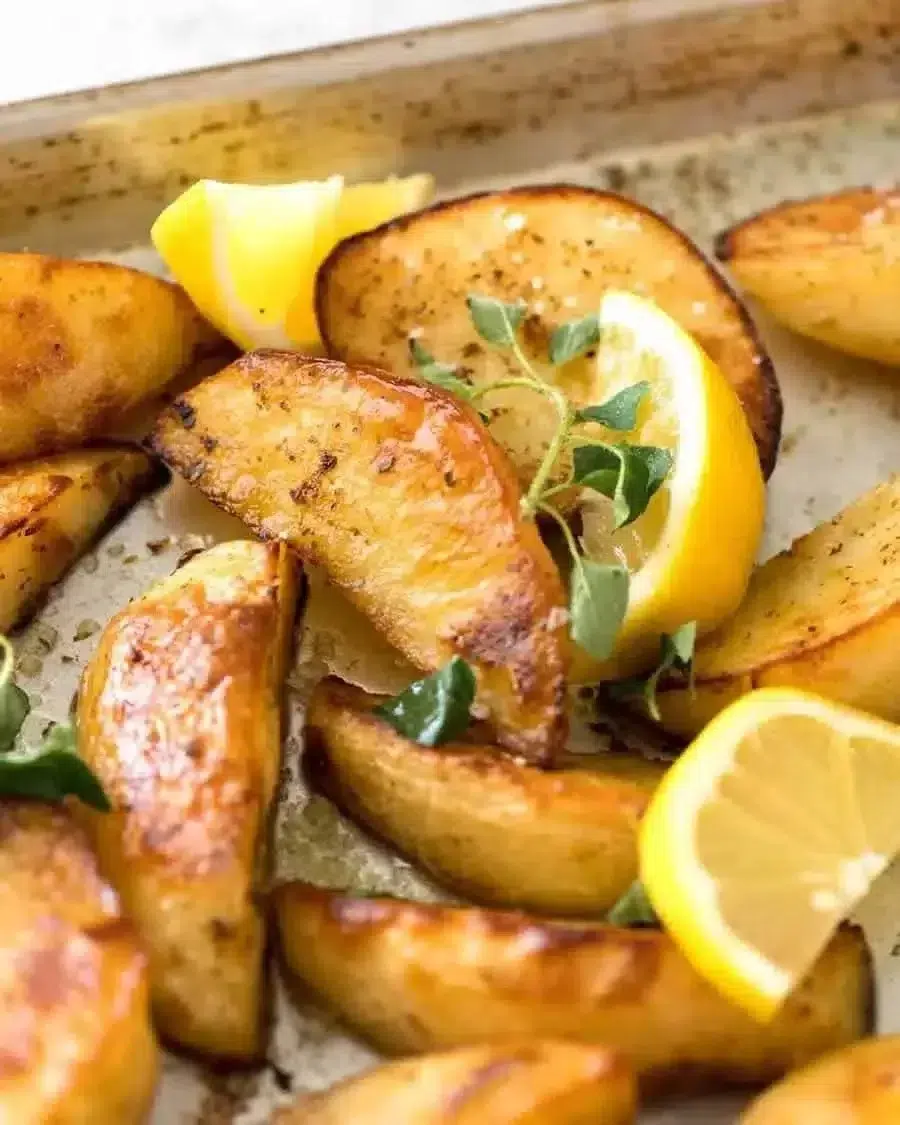
Bright, sizzling lemon and golden-browned edges make these Greek lemon potatoes a weeknight hero. After testing this recipe 10 times and roasting in both convection and standard ovens, I settled on a method that gives tender centers and crisp, lemony exteriors every time. This version is dairy-free, naturally gluten-free, and built around a simple pan sauce of olive oil, lemon juice, garlic, and oregano—the classic flavor combination you expect from Greek potatoes with garlic. I perfected the technique while developing sides for a small bistro menu, and the tips below reflect that restaurant testing. Read on for the exact measurements, timing, and professional tricks that keep the potatoes steaming inside and caramelized outside, and for pairing ideas that turn them into the star of any plate. Also, these potatoes go especially well with richer mains like garlic-butter beef bites with potatoes, if you want a heartier meal.
Why This Recipe Works
- High oven heat and a splash of lemon juice create steam then caramelize, producing soft interiors and crisp edges.
- Parboiling (brief boiling) removes excess starch so the potatoes crisp rather than glue together.
- Cutting potatoes into wedges gives uniform cooking and maximum surface area for browning.
- A concentrated pan sauce made of olive oil, lemon, garlic, and oregano both flavors and helps the potatoes brown.
- Resting the pan briefly after roasting lets the juices redistribute, preventing a soggy finish.
Ingredients Breakdown
- Potatoes (900 g / 2 lb, medium Yukon Gold or Kennebec): These hold shape and develop a creamy interior. Russets will fall apart; red potatoes stay waxy.
- Olive oil (60 ml / 1/4 cup extra-virgin): Coats and crisps. Use a good-quality extra-virgin for flavor; cheaper oils can taste flat.
- Lemon juice (60 ml / 1/4 cup fresh, about 1–2 lemons): Tenderizes with acidity and adds bright flavor. Bottled lemon juice lacks fresh brightness.
- Garlic (4 cloves, minced ≈ 12 g): Contributes savory aromatics. roasting mellows raw bite; add minced at the start so it flavors the pan sauce.
- Chicken or vegetable stock (120 ml / 1/2 cup low-sodium): Adds savory depth and extra steam. Use reduced-sodium if needed. For vegan version, use vegetable stock or water.
- Dried oregano (1 tsp / 1 g) or 1 tbsp fresh oregano, chopped: Classic Greek herb — adds earthy, peppery note.
- Kosher salt (1 1/2 tsp / 8 g) and black pepper (1/2 tsp / 1 g): Seasoning. If using Morton’s kosher salt, halve the amount because it is denser than Diamond Crystal.
- Optional finish: chopped parsley (2 tbsp / 8 g) and lemon wedges.
Substitutions and impact warnings:
- Swap olive oil for a neutral oil: crispness remains but flavor is blander.
- Use bottled lemon juice in a pinch; brightness will be muted.
- If you prefer less garlic, reduce to 2 cloves — garlic will brown and become sweet.
Essential Equipment
- 1 large roasting pan or rimmed baking sheet (preferably 30 x 20 cm / 12 x 8 in) so the potatoes have space to brown. Overcrowded pans steam instead of roast.
- Large pot for parboiling (holds at least 3 liters / 3 quarts).
- Colander to drain potatoes.
- Sharp chef’s knife and cutting board for even wedges.
- Measuring spoons and cups or a kitchen scale for accuracy (recommended).
- Oven thermometer (optional) to verify true oven temperature for consistent browning.
- If you don’t have a roasting pan, use a large cast-iron skillet or two baking sheets.
Step-by-Step Instructions
Makes 4 servings. Prep time: 15 minutes. Cook time: 50 minutes. Inactive time: None. Total time: 1 hour 5 minutes.
Step 1: Preheat and prep the potatoes
Preheat the oven to 200°C (400°F). Wash and scrub 900 g (2 lb) medium Yukon Gold potatoes and cut each into 6–8 wedges so pieces are roughly the same size. Place wedges in a large pot of cold salted water (1 tsp / 6 g salt).
Step 2: Parboil the potatoes
Bring the pot to a boil and simmer for 6–7 minutes until the edges are just tender and a knife slips in with slight resistance. Drain in a colander and let steam for 1 minute so the surface dries — this helps them crisp in the oven. Timing: 6–7 minutes active.
Step 3: Make the lemon-garlic sauce
In a small bowl, whisk together 60 ml (1/4 cup) extra-virgin olive oil, 60 ml (1/4 cup) fresh lemon juice, 120 ml (1/2 cup) low-sodium chicken or vegetable stock, 4 minced garlic cloves (≈12 g), 1 tsp (1 g) dried oregano, 1 1/2 tsp (8 g) kosher salt, and 1/2 tsp (1 g) black pepper. The sauce should be loose enough to pour but flavor-forward. Timing: 2–3 minutes.
Step 4: Toss and arrange
Transfer the drained wedges to a rimmed baking sheet or roasting pan. Pour the sauce evenly over the potatoes and toss with your hands or a spatula to coat every wedge. Arrange potatoes cut-side down where possible — this promotes browning. Do not overcrowd the pan — leave space between wedges. Timing: 3–4 minutes.
Step 5: Roast, baste, and finish
Roast at 200°C (400°F) for 35–40 minutes, turning every 12–15 minutes and spooning pan juices over the potatoes. Roast until golden brown and edges are crisp, about 35–40 minutes total; a few spots should be deeply caramelized. If using convection, check at 30 minutes. Sensory cue: potatoes should smell lemony and garlic-sweet when done.
Step 6: Rest and serve
Remove from oven and let rest in the pan for 3 minutes so juices redistribute. Finish with chopped parsley (2 tbsp / 8 g) and serve with lemon wedges. Timing: 3 minutes rest. Serve immediately for best texture.
Expert Tips & Pro Techniques
- Always parboil briefly. It removes surface starch and primes the potato for crisping. Without it, potatoes can be gummy.
- Salt the parboil water like the sea — it seasons from the inside. Use about 1 tsp (6 g) per liter/quart.
- Use warm sauce when you pour it over the hot, drained potatoes; the heat helps the sauce cling and begin to caramelize.
- Common mistake: overcrowding the pan. If wedges touch, they will steam. Spread them into a single layer with space for airflow.
- Make-ahead: Parboil and cool the wedges up to 24 hours ahead. Refrigerate uncovered on a tray, then roast from cold; add 5–8 minutes to the roasting time.
- Professional shortcut: finish under a hot broiler for 1–2 minutes to boost char — watch closely to avoid burning.
- For deeper flavor, roast with 1–2 halved garlic cloves and remove them before serving if you want only a subtle garlic essence.
Storage & Reheating
- Refrigerator: Store cooled potatoes in an airtight container for up to 3 days. Reheat in the oven to preserve crispness.
- Freezer: These potatoes do not freeze well; freezing breaks the texture. If necessary, freeze for up to 1 month in a single layer, then reheat slowly to avoid sogginess.
- Reheating: Reheat in a 175°C (350°F) oven for 10–12 minutes until warmed and edges re-crisp. Avoid microwaving — it makes them soft.
Variations & Substitutions
- Vegan / Plant-Based: Use vegetable stock instead of chicken; everything else remains the same.
- Extra-herb version: Add 1 tbsp chopped fresh rosemary or thyme with the oregano. Keep roast time the same but expect a stronger herb aroma.
- Lemon-forward: Increase fresh lemon juice to 90 ml (3 tbsp + 1 tsp); reduce added salt by 1/4 tsp to balance acidity.
- Spicy citrus: Add 1/4–1/2 tsp red pepper flakes to the sauce for a gentle heat; keep cooking times the same.
- Crispy finish: After roasting, toss with 1 tbsp melted butter (or vegan butter) for a glossy finish and extra richness — add just before serving.
Serving Suggestions & Pairings
- Serve with grilled lamb or roasted chicken for a classic Mediterranean plate; they soak up pan juices beautifully. Consider pairing with garlic scampi-style chicken for a lemon-forward dinner.
- For a lighter meal, pair with a crisp Greek salad and slices of crusty bread like our garlic bread with butter.
- For seafood nights, these potatoes complement roasted or grilled shrimp—try them with garlic-parmesan roasted shrimp.
- Use leftover potatoes to top a sheet-pan dinner or pan-fry with an egg for breakfast — reheating in a skillet re-crisps them quickly. Also consider serving them alongside crispy garlic-thyme roasted vegetables for a herb-forward spread.
Nutrition Information
Per serving (serving size: about 1 cup; recipe yields 4 servings)
- Calories: 320 kcal
- Total Fat: 14 g
- Saturated Fat: 2 g
- Cholesterol: 0 mg
- Sodium: 420 mg
- Total Carbohydrates: 45 g
- Dietary Fiber: 4 g
- Sugars: 2 g
- Protein: 4 g
Nutrition values are estimates. Actual values may vary based on specific ingredients and preparation methods.
Frequently Asked Questions
Q: Why did my potatoes turn out soggy instead of crispy?
A: Most often the pan was overcrowded or the potatoes were not parboiled and dried. Spread wedges into a single layer and parboil until just tender. Also roast at 200°C (400°F) so edges can caramelize.
Q: Can I make this without garlic?
A: Yes. Omit the garlic and increase oregano and lemon zest for flavor. Roasting still works the same; garlic adds savory depth but is not essential.
Q: Can I double this recipe for a larger crowd?
A: Yes, double the ingredients and roast on two sheets or in two pans. Do not cram more potatoes onto one sheet — you need air space for crisping. Timing stays similar but check for browning at 30–35 minutes.
Q: Can I prepare this the night before?
A: You can parboil and prep the potatoes the night before, then refrigerate uncovered. Roast from cold and add 5–8 minutes to the roasting time. For best texture, avoid fully roasting earlier and reheating.
Q: How long does this keep in the fridge?
A: Store in an airtight container for up to 3 days. Reheat in a 175°C (350°F) oven for 10–12 minutes to restore crispness.
Q: What is the best potato to use for these lemon potatoes?
A: Yukon Gold or Kennebec are ideal; they hold shape and get creamy inside. Russets become mealy and may fall apart; red potatoes stay too waxy and won’t get as tender.
Q: Can I make these in an air fryer?
A: Yes — use a single layer at 200°C (400°F) and cook for 18–22 minutes, shaking every 6–8 minutes. You may need to reduce liquid by half because the air fryer is dry; toss with sauce after a brief spray of oil.
Conclusion
These classic Greek lemon potatoes are reliable, bright, and simple to make. For a different take and additional technique notes, compare this version with a home cook favorite at Greek Lemon Potatoes – RecipeTin Eats. If you want a version that emphasizes garlic and oregano even more, see the alternate approach at Greek Lemon Potatoes with Garlic & Oregano.
Print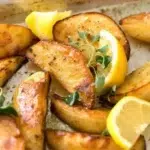
Greek Lemon Potatoes
- Total Time: 65 minutes
- Yield: 4 servings 1x
- Diet: Vegan
Description
Bright, sizzling lemon and golden-browned edges make these Greek lemon potatoes a weeknight hero. Roasted with garlic, olive oil, and oregano, they deliver classic Greek flavors in a crisp and tender texture.
Ingredients
- 900 g (2 lb) medium Yukon Gold or Kennebec potatoes
- 60 ml (1/4 cup) extra-virgin olive oil
- 60 ml (1/4 cup) fresh lemon juice
- 4 cloves garlic, minced (≈ 12 g)
- 120 ml (1/2 cup) low-sodium chicken or vegetable stock
- 1 tsp dried oregano (or 1 tbsp fresh oregano, chopped)
- 1 1/2 tsp kosher salt
- 1/2 tsp black pepper
- 2 tbsp chopped parsley (optional)
- Lemon wedges (for serving)
Instructions
- Preheat the oven to 200°C (400°F). Wash and scrub the potatoes, then cut each into 6–8 wedges.
- Parboil the potatoes in a large pot of salted cold water for 6–7 minutes until just tender. Drain and let steam for 1 minute.
- Whisk together olive oil, lemon juice, stock, minced garlic, oregano, salt, and pepper in a small bowl.
- Transfer the drained wedges to a baking sheet, pour the sauce over them, and toss to coat. Arrange in a single layer, cut-side down.
- Roast for 35–40 minutes, turning every 12–15 minutes until golden brown and edges are crisp.
- Rest in the pan for 3 minutes, then serve with chopped parsley and lemon wedges.
Notes
Use warm sauce over hot potatoes to help it cling and begin to caramelize. Do not overcrowd the pan to ensure crispiness.
- Prep Time: 15 minutes
- Cook Time: 50 minutes
- Category: Side Dish
- Method: Roasting
- Cuisine: Greek
Nutrition
- Serving Size: 1 serving
- Calories: 320
- Sugar: 2 g
- Sodium: 420 mg
- Fat: 14 g
- Saturated Fat: 2 g
- Unsaturated Fat: 10 g
- Trans Fat: 0 g
- Carbohydrates: 45 g
- Fiber: 4 g
- Protein: 4 g
- Cholesterol: 0 mg

Written by Anna
Anna is a professional recipe developer and food writer at Al3abFun. With over 8 years of experience in recipe development and food styling, she specializes in creating approachable, tested recipes that bring families together around the dinner table. Anna holds a culinary arts certification and has been featured in various food publications. Every recipe on Al3abFun is triple-tested in her home kitchen to ensure perfect results every time.