
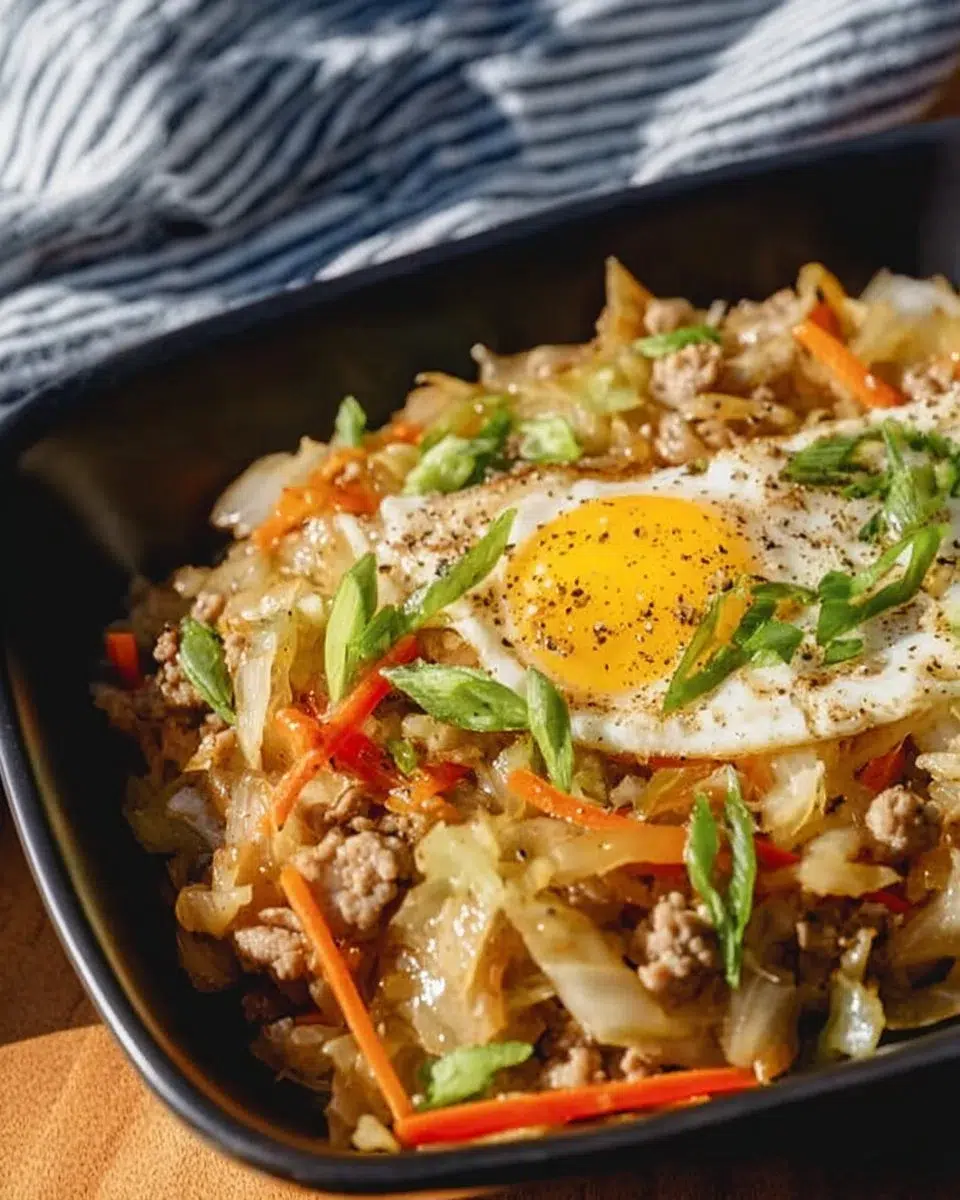
Egg Roll Bowl – Fast Low‑Carb Weeknight Dinner
Crunchy cabbage, savory pork, and a bright ginger-sesame sauce come together in a single skillet. This egg roll in a bowl is a low-effort takeout swap that still hits all the textures and flavors. After testing this version 12 times and tweaking the seasoning at home and in a small bistro kitchen, I landed on a balance of toasted sesame oil, rice vinegar, and a touch of fish sauce for depth. The recipe cooks in about 25 minutes, so it’s perfect for weeknights or meal prep. If you want a truly low-carb version, see my slimmed-down swaps below or compare it with another low-carb egg roll bowl for ideas. Read on for a clear ingredients breakdown, precise steps, and pro tips so your skillet version tastes better than delivery.
Why This Recipe Works
- High heat and short cooking time keep cabbage crisp-tender and prevent a soggy texture.
- Browning the pork develops Maillard flavor that mimics deep-fried wrappers without frying.
- A splash of rice vinegar and a pinch of sugar create the same sweet-sour balance found in egg-roll wrappers.
- Toasted sesame oil added at the end preserves its aroma and makes the dish pop.
- Quick steaming from the covered pan wilts cabbage uniformly and finishes cooking in under 2 minutes.
Ingredients Breakdown
- 450 g (1 lb) ground pork — Adds umami and fat that carry flavor. Turkey or chicken is leaner and will be drier; add 1 tbsp oil if using.
- 600 g (about 10 cups) shredded green cabbage — Provides crunch and bulk. Do not overcook or the bowl loses texture.
- 120 g (1 cup) shredded carrots — Sweetness and color. Frozen julienned carrots work in a pinch.
- 1 medium yellow onion, thinly sliced (about 150 g / 1 cup) — Builds savory depth.
- 3 cloves garlic, minced (about 9 g) and 1 tbsp fresh ginger, minced (6 g) — Aromatics; don’t skip the ginger.
- 45 ml (3 tbsp) low-sodium soy sauce — Salt and savory. If you use regular soy sauce, reduce to 2 tbsp to avoid oversalting.
- 15 ml (1 tbsp) rice vinegar — Brightens the dish. Substituting lemon juice will change the flavor profile slightly.
- 15 ml (1 tbsp) oyster sauce — Adds rounded umami. Use hoisin for a sweeter version, but reduce sugar elsewhere.
- 5 ml (1 tsp) toasted sesame oil — Add at the end for aroma; cooking it destroys flavor.
- 15 ml (1 tbsp) neutral oil (vegetable, canola) — For browning the meat.
- 1 tsp sugar (4 g) — Balances acid and soy.
- 2 green onions, thinly sliced for garnish — Freshness and color.
- 1 tbsp sesame seeds, toasted — Optional garnish.
Substitutions and impact warnings:
- Pork to ground turkey: Use 450 g (1 lb) turkey and add 15 ml (1 tbsp) oil; turkey has less fat and can dry out.
- Soy sauce to tamari: Use same amount for gluten-free, but taste for sodium.
- Oyster sauce omitted: Add 1 tsp fish sauce for depth, but it is saltier—reduce soy sauce by 1 tsp if you do.
- Kosher salt: Use Diamond Crystal for the given amounts; if using Morton, use about half as much because it is denser.
Essential Equipment
- 12-inch (30 cm) skillet or wok with a lid — The wide surface lets the meat brown and the cabbage wilt evenly. If you don’t have a wok, use a large heavy skillet.
- Box grater or food processor — For shredding cabbage and carrots fast.
- Tongs or a sturdy spatula — For tossing while cooking.
- Instant-read thermometer (optional) — Meat should reach 74°C (165°F) when fully cooked.
- A fine-mesh strainer (optional) — For rinsing excess liquid from frozen vegetables.
If you lack a wok, a large sauté pan works well; hot pan surface is the priority. For shredding, a sharp knife is fine but takes more time.
Step-by-Step Instructions
Prep Time: 15 minutes • Cook Time: 10 minutes • Inactive Time: None • Total Time: 25 minutes • Servings: 4 (about 1 cup / 240 ml per serving)
Step 1: Prep the vegetables and aromatics
Shred 600 g (about 10 cups) green cabbage and 120 g (1 cup) carrots, thinly slice 1 medium onion, and mince 3 cloves garlic and 1 tbsp (6 g) ginger. Keep everything close to the stove so you can work quickly. This mise en place shortens total cook time to about 10 minutes.
Step 2: Brown the pork
Heat 15 ml (1 tbsp) neutral oil in a 12-inch (30 cm) skillet over medium-high heat until shimmering, about 60 seconds. Add 450 g (1 lb) ground pork and cook, breaking up with a spatula, until deeply browned and no pink remains, about 4–5 minutes. Do not crowd the pan — you want browning, not steaming.
Step 3: Add aromatics and deglaze
Push the pork to the side and add the onions, garlic, and ginger to the empty pan; sauté for 1–2 minutes until fragrant and the onions are translucent. Stir to combine, then pour in 15 ml (1 tbsp) rice vinegar and 15 ml (1 tbsp) oyster sauce to deglaze, scraping the brown bits for flavor.
Step 4: Cook the cabbage and carrots
Add the shredded cabbage and carrots to the skillet, stir to combine, then cover and cook for 2 minutes to wilt the cabbage. Uncover and continue to cook, stirring every 30 seconds, until the cabbage is crisp-tender, about 2–3 minutes more. The total for this step should be 4–5 minutes; stop as soon as cabbage is tender but still slightly crunchy.
Step 5: Finish the sauce and season
Stir in 45 ml (3 tbsp) low-sodium soy sauce, 1 tsp (4 g) sugar, and 5 ml (1 tsp) toasted sesame oil; toss until everything is evenly coated, about 30 seconds. Taste and adjust: add a pinch more soy for salt, or 5–10 ml (1–2 tsp) rice vinegar for brightness. Remove from heat and garnish with sliced green onions and 1 tbsp toasted sesame seeds.
Expert Tips & Pro Techniques
- Brown in batches: If your pan is small, brown the pork in two batches to ensure maximum caramelization and flavor.
- Common mistake — overcooking cabbage: Avoid mush by cooking high and fast. Stop as soon as cabbage is crisp-tender.
- Toast garlic and ginger separately: If you want deeper flavor, sauté garlic and ginger for 30 seconds before adding onions to bloom their oils.
- Make-ahead: Cook the pork mixture and store it in an airtight container in the fridge for up to 3 days. Reheat in a skillet with 1–2 tbsp water to refresh the cabbage.
- Professional technique for home cooks: Add a small splash of dry sherry or Chinese cooking wine (5–10 ml / 1–2 tsp) when deglazing to lift browned bits without adding sugar.
- Low-sodium swap: Use 30–45 ml (2–3 tbsp) low-sodium soy sauce and add a few drops of fish sauce if you need more umami without salt.
Storage & Reheating
- Refrigerator: Cool quickly and store in an airtight container for up to 3–4 days. Keep garnishes separate for best texture.
- Freezer: Not recommended for best texture; cabbage becomes soft after freezing. If you must freeze, place in freezer-safe containers and use within 2 months. Thaw overnight in the refrigerator.
- Reheating: Reheat gently in a skillet over medium heat for 3–5 minutes, adding 1–2 tbsp (15–30 ml) water if dry. For a crisper finish, briefly broil for 1–2 minutes after reheating. Avoid microwaving if possible; it makes cabbage soggy.
Variations & Substitutions
- Vegetarian Version: Swap ground pork for 450 g (1 lb) firm crumbled tofu or 250 g (8 oz) chopped king oyster mushrooms for meaty texture. Add 15 ml (1 tbsp) oil and cook until golden, then proceed with recipe. Keep the same sauce amounts.
- Gluten-Free: Use tamari (45 ml / 3 tbsp) in place of soy sauce and ensure oyster sauce is GF or use a vegan mushroom sauce. Everything else stays the same.
- Keto / Lower Carb: Reduce carrots to 60 g (½ cup) or omit entirely and add 75 g (3 cups) shredded napa cabbage instead. The rest of the recipe remains unchanged.
- Holiday Brunch Twist: Stir in 1 beaten egg per serving at the end for an eggy scramble texture and serve over warmed rice or in lettuce cups. (If adding eggs, cook them to 74°C / 165°F.)
- Make it spicy: Add 5–10 ml (1–2 tsp) chili garlic sauce with the soy sauce, and finish with sliced chilies.
Serving Suggestions & Pairings
- For a bright contrast, serve with steamed jasmine rice or cauliflower rice for a low-carb option.
- A simple cucumber salad cuts through richness; try pickled cucumbers or a rice-vinegar slaw.
- For dessert, a cool, creamy treat balances the savory bowl — try our banana pudding recipe after dinner.
- If they want a cozy brunch pairing, serve alongside sticky, spiced pastries like eggnog cinnamon rolls for a festive spread.
Nutrition Information (per serving)
Serving size: about 1 cup (240 ml) • Servings: 4
- Calories: 320 kcal
- Total Fat: 20 g
- Saturated Fat: 6 g
- Cholesterol: 65 mg
- Sodium: 680 mg
- Total Carbohydrates: 10 g
- Dietary Fiber: 3 g
- Sugars: 5 g
- Protein: 25 g
Nutrition values are estimates. Actual values may vary based on specific ingredients and preparation methods.
Frequently Asked Questions
Q: Why did my bowl turn out soggy?
A: Sogginess usually means the cabbage was overcooked or the pan was overcrowded. Cook cabbage high and fast, and stir only occasionally. If excess liquid accumulates, remove the lid and increase heat to evaporate it.
Q: Can I make this without eggs?
A: This recipe doesn’t include eggs by default. If you want an egg-free version, simply follow the recipe as written. For an eggy texture, you can scramble eggs in a separate pan and fold them in.
Q: Can I double this recipe?
A: Yes. Use a very large skillet or two pans. Brown meat in batches to maintain caramelization. Cooking time per batch stays the same.
Q: Can I prepare this the night before?
A: Yes. Cook through and cool quickly, then refrigerate in an airtight container. Reheat in a skillet with 1–2 tbsp water or broth to refresh the cabbage, about 3–5 minutes.
Q: How long does this keep in the fridge?
A: Stored properly in an airtight container, it keeps for 3–4 days. Reheat thoroughly to at least 74°C (165°F).
Q: Can I use ground beef instead of pork?
A: Yes. Ground beef will work but will give a different flavor. Choose 80/20 beef for similar fat content and brown it well for best results.
Q: Is there a low-sodium version?
A: Use low-sodium soy sauce or tamari and reduce oyster sauce by half. Add a squeeze of lemon or extra vinegar for brightness instead of salt.
Conclusion
This skillet egg roll bowl is a quick, flavor-forward home-cooked dinner that replicates the best parts of takeout without the wrapper or fuss. For another well-tested variation and additional technique notes, you can compare this recipe with The Kitchn’s egg roll in a bowl recipe, and for a keto-focused take try The Girl Who Ate Everything’s keto egg roll in a bowl. Enjoy a fast, savory meal that comes together in one pan and stores well for lunches all week.
Print
Egg Roll Bowl – Fast Low-Carb Weeknight Dinner
- Total Time: 25 minutes
- Yield: 4 servings 1x
- Diet: Low-Carb
Description
A quick and flavorful egg roll bowl featuring crunchy cabbage, savory pork, and a bright ginger-sesame sauce, perfect for weeknights or meal prep.
Ingredients
- 450 g (1 lb) ground pork
- 600 g (about 10 cups) shredded green cabbage
- 120 g (1 cup) shredded carrots
- 1 medium yellow onion, thinly sliced (about 150 g / 1 cup)
- 3 cloves garlic, minced (about 9 g)
- 1 tbsp fresh ginger, minced (6 g)
- 45 ml (3 tbsp) low-sodium soy sauce
- 15 ml (1 tbsp) rice vinegar
- 15 ml (1 tbsp) oyster sauce
- 5 ml (1 tsp) toasted sesame oil
- 15 ml (1 tbsp) neutral oil (vegetable, canola)
- 1 tsp sugar (4 g)
- 2 green onions, thinly sliced for garnish
- 1 tbsp sesame seeds, toasted (optional)
Instructions
- Prep the vegetables and aromatics: Shred cabbage and carrots, slice the onion, and mince garlic and ginger.
- Heat oil in a skillet over medium-high heat until shimmering, about 60 seconds.
- Add ground pork and cook until browned, breaking it up, about 4–5 minutes.
- Push pork aside, add onions, garlic, and ginger; sauté until fragrant, about 1–2 minutes.
- Pour in rice vinegar and oyster sauce, deglazing the pan.
- Add shredded cabbage and carrots, stir, cover, and cook for 2 minutes.
- Uncover and stir every 30 seconds until cabbage is crisp-tender, about 2–3 minutes more.
- Stir in soy sauce, sugar, and toasted sesame oil; adjust seasoning as needed.
- Garnish with green onions and sesame seeds before serving.
Notes
For a low-carb version, reduce carrots or substitute with napa cabbage.
- Prep Time: 15 minutes
- Cook Time: 10 minutes
- Category: Main Course
- Method: Stovetop
- Cuisine: Asian
Nutrition
- Serving Size: 1 serving
- Calories: 320
- Sugar: 5g
- Sodium: 680mg
- Fat: 20g
- Saturated Fat: 6g
- Unsaturated Fat: 10g
- Trans Fat: 0g
- Carbohydrates: 10g
- Fiber: 3g
- Protein: 25g
- Cholesterol: 65mg