Butter Chicken Recipe — Silky Murg Makhani Made Easy
The first bite is velvet: warm tomato, cream, and butter carrying fragrant spices over tender chicken — this butter chicken recipe delivers that classic comfort in one pan. I developed and refined this version during years cooking Indian food for busy dinner services and testing it at home more than a dozen times to balance spice, tang, and creaminess. It’s approachable for home cooks but uses a few chef techniques to keep the sauce glossy and the chicken succulent. Read on for precise measurements, metric/imperial conversions, timing cues, and pro tips that stop the most common mistakes before they happen. If you enjoy rich, saucy mains, try pairing leftovers with our garlic butter baked chicken for an easy weeknight swap.
Why This Recipe Works
- Slow-cooked tomato paste and sautéed spices develop a deep, rounded flavor without harsh acidity.
- A short yogurt-based marinade tenderizes the chicken and adds a subtle tang without curdling the sauce.
- Finishing with butter and cream — added off heat — keeps the sauce silky, not oily.
- Toasting and blooming the dry spices unlocks aroma and taste far richer than using only pre-ground blends.
- A quick simmer after adding the cream concentrates flavors while preserving a smooth texture.
Ingredients Breakdown
- Chicken thighs (600 g / 1.3 lb), boneless, skinless — Thighs stay moist during simmering; breasts will dry faster. Cut into 2–3 cm (1-inch) pieces.
- Plain yogurt (120 g / 1/2 cup) — Acid and enzymes tenderize the meat. Use full-fat for best texture.
- Lemon juice (15 ml / 1 tbsp) — Brightens flavor; don’t overuse or the marinade will “cook” the yogurt.
- Garlic (8 g / 2 cloves) and ginger (10 g / 1 tbsp), minced — Fresh is essential for brightness.
- Kashmiri or sweet paprika (10 g / 2 tbsp) — Gives red color without heat. If you use cayenne, reduce to 1/4 tsp.
- Ground cumin (5 g / 1 tsp) and ground coriander (5 g / 1 tsp) — Earthy backbone for the sauce.
- Garam masala (5 g / 1 tsp) — Added at the end for fragrance.
- Tomato paste (150 g / 5.3 oz / about 1/2 cup) and canned plum tomatoes (400 g / 14 oz) — Tomato paste provides concentrated umami; whole canned tomatoes break down to give body.
- Heavy cream (120 ml / 1/2 cup) — Adds richness and silkiness. For a lighter dish, use 120 ml (1/2 cup) half-and-half but the sauce will be less rich.
- Unsalted butter (60 g / 4 tbsp) — Adds shine and mouthfeel; finish off-heat to prevent separation.
- Salt: Use Diamond Crystal kosher salt if available — if using Morton’s, halve the quantity because it is denser.
- Optional fenugreek leaves (kasoori methi) (1 g / 1 tsp, crushed) — Adds signature final note; do not omit if you want authentic flavor.
- Sugar or honey (5 g / 1 tsp) — Balances acidity; adjust to taste.
Substitutions with impact warnings:
- Greek yogurt for plain yogurt: good, but it’s tangier and thicker, so thin with 1–2 tbsp water.
- Coconut milk instead of cream: makes it dairy-free but gives a coconut flavor that changes the profile significantly.
- Chicken breasts: use, but reduce simmer time and watch doneness to avoid dryness.
Essential Equipment
- Heavy-bottomed saucepan or Dutch oven, 3–4 L (3–4 qt) — prevents scorching and gives even heat; do not use a thin skillet for the sauce.
- Blender or immersion blender — for a smooth sauce finish.
- Instant-read thermometer — ensures chicken reaches 74°C (165°F) without overcooking.
- Frying pan or sheet for searing (optional) — a quick sear adds color and flavor; you can skip searing but the sauce will be paler.
- Fine-mesh sieve (optional) — to strain the sauce for extra silkiness.
If you don’t own a Dutch oven, a heavy 3–4 L saucepan is a fine substitute; for high-heat searing, use the heaviest skillet you have. For tips on one-pot cooking techniques that match this method, see techniques similar to those used in our easy homemade ramen guide.
Time: Makes 4 servings. Prep 20 minutes | Cook 40 minutes | Inactive time (marinate) 1 hour | Total about 1 hour 20 minutes.
Step 1: Marinate the Chicken
Combine 600 g (1.3 lb) boneless chicken thighs, 120 g (1/2 cup) plain yogurt, 15 ml (1 tbsp) lemon juice, 8 g (2 cloves) minced garlic, 10 g (1 tbsp) minced ginger, 10 g (2 tbsp) Kashmiri paprika, 5 g (1 tsp) ground cumin, and 5 g (1 tsp) salt. Mix until every piece is coated and refrigerate for 1 hour (or up to 4 hours for deeper flavor). Marinating much longer than 6–8 hours can make the texture too soft.
Step 2: Brown the Chicken (optional)
Heat 15 ml (1 tbsp) neutral oil in a large skillet over medium-high heat until shimmering. Sear chicken pieces in batches for 1–2 minutes per side until lightly golden — do not cook through; you want color only. Transfer to a plate; the brief sear adds Maillard flavor that lifts the sauce.
Step 3: Build the Sauce
In the Dutch oven, melt 30 g (2 tbsp) butter over medium heat and add 120 g (1 cup) finely chopped onion. Sauté for 6–8 minutes until translucent and fragrant. Add 5 g (1 tsp) ground cumin, 5 g (1 tsp) ground coriander, and 1 bay leaf; toast for 30–45 seconds until aromatic.
Step 4: Add Tomato and Simmer
Stir in 150 g (1/2 cup) tomato paste and cook, stirring, for 2 minutes to remove rawness. Add 400 g (14 oz) canned plum tomatoes and 120 ml (1/2 cup) water, bring to a simmer, and cook uncovered for 10–12 minutes until slightly reduced and bright. Use an immersion blender to puree until smooth, or transfer to a blender in batches.
Step 5: Finish the Sauce and Add Chicken
Return the sauce to low heat and add the seared chicken pieces with any juices. Simmer gently for 8–10 minutes, stirring occasionally, until the chicken reaches 74°C (165°F) and the sauce coats the back of a spoon. Taste and adjust salt.
Step 6: Cream and Butter Finish
Remove from heat and stir in 120 ml (1/2 cup) heavy cream and 30 g (2 tbsp) unsalted butter until fully incorporated and glossy. Add 1 g (1 tsp) crushed kasoori methi and 5 g (1 tsp) garam masala. Let sit for 2 minutes before serving to let flavors marry. Do not boil after adding cream or the sauce may split.
Step 7: Garnish and Serve
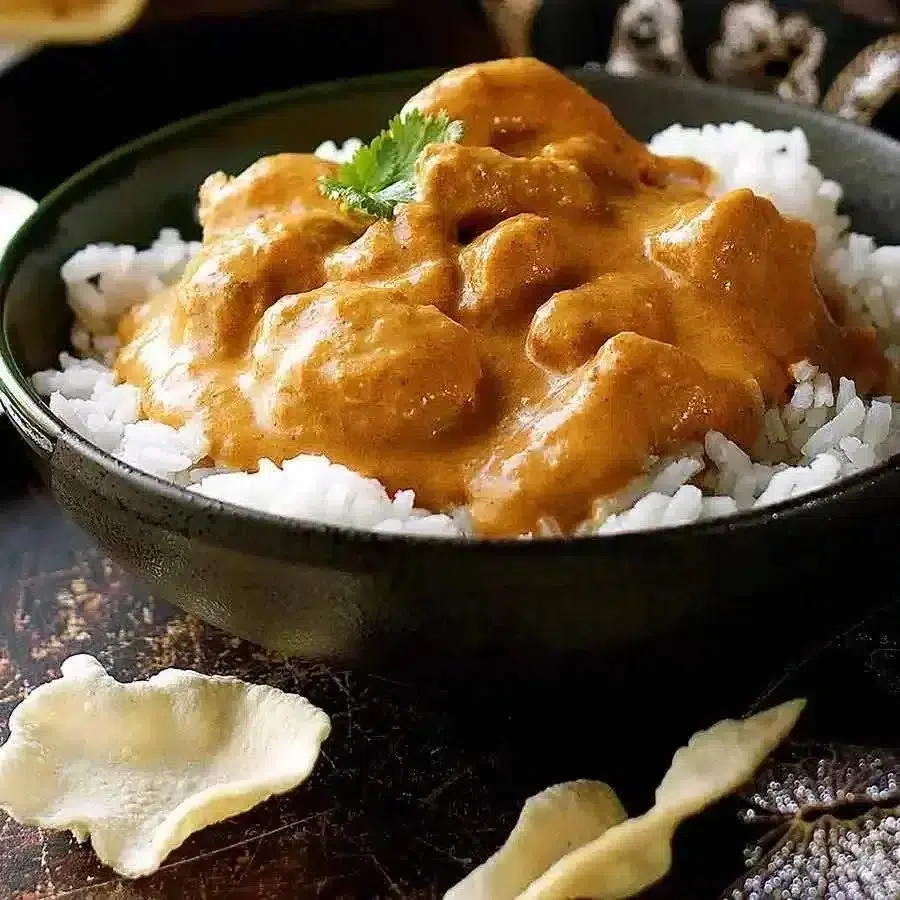
Spoon over steamed basmati rice or warm naan, garnish with fresh cilantro and a drizzle of cream if desired. Leftover sauce makes a great pasta toss — try it with a wide noodle inspired by cowboy butter chicken linguine for a fusion twist.
Expert Tips & Pro Techniques
- Prevent curdling: Always add cream off heat and stir gently. High heat can cause the dairy to break.
- Common mistake: Over-salting early. Salt concentrates as the sauce reduces. Wait until the end to make final adjustments.
- Use a short marinade: 1–4 hours is enough for bite-sized pieces; over-marinating in acidic mixes softens the meat too much.
- Make-ahead: The sauce keeps well; cook through Step 5, cool, then refrigerate up to 3 days. Reheat gently and finish with butter and cream before serving.
- Home pro trick: Bloom whole spices in oil for 20–30 seconds before adding onions. This unlocks oils and adds depth without extra heat.
- Strain for shine: If you want a restaurant-smooth finish, pass the blended sauce through a fine sieve before returning the sauce to the pan.
Storage & Reheating
- Refrigerator: Store cooled butter chicken in an airtight container for up to 3–4 days. Keep rice separate to maintain texture.
- Freezer: The sauce and chicken freeze well for up to 3 months. Cool completely, transfer to freezer-safe containers or bags, leaving 2 cm (3/4 inch) headspace, and freeze flat.
- Thawing: Thaw overnight in the fridge.
- Reheating: Reheat gently on the stovetop over low heat until steaming, then finish with 10–15 g (1/2–1 tbsp) butter and a splash of cream to refresh. Avoid high heat and microwaving for long periods, which can split the sauce.
Variations & Substitutions
- Dairy-free: Replace cream with 120 ml (1/2 cup) full-fat coconut milk and swap butter for 30 g (2 tbsp) vegan butter. Flavor will shift toward coconut; reduce other sweeteners.
- Lighter version: Use 120 ml (1/2 cup) half-and-half instead of cream and reduce butter to 15 g (1 tbsp). The texture will be lighter but still satisfying.
- Slow-cooker adaptation: Sear onions and spices briefly, then add everything to a 3.5–4 L (3.5–4 qt) slow cooker. Cook on low for 4–6 hours. Finish with butter and cream. For a full slow-cooker method, see this garlic butter chicken crockpot adaptation for timing tips.
- Spicy version: Add 1/2–1 tsp cayenne or 1–2 finely chopped green chilies with the onions. Keep the remainder the same.
- Harissa twist: Swap 10 g (2 tbsp) Kashmiri paprika with 20 g (1 tbsp) harissa paste for a North African heat profile; otherwise keep quantities the same and follow the recipe. For inspiration on bold harissa variations, explore harissa butter chicken approaches.
Serving Suggestions & Pairings
- Classic: Steamed basmati rice and warm garlic naan.
- Vegetables: Serve with roasted cauliflower tossed in cumin and turmeric.
- Drinks: A cold lassi (mango or salted) or a light lager balances the richness.
- Garnish: Fresh cilantro, a squeeze of lemon, and a drizzle of cream for presentation.
For a non-traditional pairing that uses the sauce differently, try tossing warmed leftovers with pasta per the linguine idea earlier.
Nutrition Information
Per serving (serving size: about 1 cup sauce + 120 g chicken; recipe yields 4 servings):
- Calories: 520 kcal
- Total Fat: 38 g
- Saturated Fat: 19 g
- Cholesterol: 150 mg
- Sodium: 820 mg
- Total Carbohydrates: 12 g
- Dietary Fiber: 2 g
- Sugars: 6 g
- Protein: 28 g
Nutrition values are estimates. Actual values may vary based on specific ingredients and preparation methods.
Frequently Asked Questions
Q: Why did my butter chicken turn out dry?
A: Dry chicken usually means it was overcooked or the pieces were too small. Use thighs and an instant-read thermometer to remove the chicken at 74°C (165°F). If you used breasts, reduce simmer time.
Q: Can I make this without cream?
A: Yes. Use 120 ml (1/2 cup) coconut milk or 120 ml (1/2 cup) unsweetened almond creamer for a dairy-free option. The flavor and mouthfeel will change — coconut milk adds a distinct coconut note.
Q: Can I double this recipe?
A: Yes. Double everything and use a pot at least 6 L (6 qt) to allow room for stirring and reduction. Cook in larger batches but keep the same simmer times; reduction may take slightly longer.
Q: Can I prepare this the night before?
A: Absolutely. Complete through Step 5, cool, and refrigerate. Reheat gently the next day, then finish with butter and cream to brighten flavors.
Q: How long does this keep in the fridge?
A: Stored in an airtight container, it keeps for 3–4 days. For longer storage, freeze for up to 3 months.
Q: Is there a shortcut for the sauce?
A: Use store-bought tomato puree and add 1 tbsp tomato paste, but the depth will be less. Toasting spices and using paste delivers much more complexity.
Q: How spicy is this recipe and can I adjust it?
A: This recipe is mildly spiced by default. Increase cayenne or green chilies to raise heat. Kashmiri paprika gives color without much heat.
Conclusion
This recipe gives you a reliably silky murg makhani that’s easy enough for weeknights and flexible for meal prep. For a well-loved home-cook version with slightly different spice notes, compare techniques at Swasthi’s classic butter chicken. For a take that leans toward an authentic restaurant-style finish, see the detailed method at Masala and Chai’s authentic butter chicken.
Print
Butter Chicken
- Total Time: 80 minutes
- Yield: 4 servings 1x
- Diet: Gluten-Free
Description
A silky and flavorful butter chicken recipe, perfect for weeknights, with tender chicken in a rich tomato and cream sauce.
Ingredients
- 600 g boneless, skinless chicken thighs, cut into 2–3 cm pieces
- 120 g plain yogurt
- 15 ml lemon juice
- 8 g minced garlic (2 cloves)
- 10 g minced ginger (1 tbsp)
- 10 g Kashmiri or sweet paprika
- 5 g ground cumin (1 tsp)
- 5 g ground coriander (1 tsp)
- 5 g garam masala (1 tsp)
- 150 g tomato paste
- 400 g canned plum tomatoes
- 120 ml heavy cream
- 60 g unsalted butter
- Salt, to taste
- Optional: 1 g crushed fenugreek leaves (1 tsp)
- 5 g sugar or honey (1 tsp)
Instructions
- Combine chicken, yogurt, lemon juice, garlic, ginger, paprika, cumin, and salt in a bowl. Marinate for 1 hour.
- Heat oil in a skillet and sear chicken pieces for 1–2 minutes per side, then transfer to a plate.
- In a Dutch oven, melt butter and sauté onion until translucent.
- Add cumin, coriander, and bay leaf; toast for 30–45 seconds.
- Stir in tomato paste, cook for 2 minutes, then add canned tomatoes and water. Simmer for 10–12 minutes.
- Use an immersion blender to puree the sauce until smooth.
- Return the sauce to low heat and add the chicken. Simmer for 8–10 minutes until cooked through.
- Remove from heat, stir in heavy cream, butter, kasoori methi, and garam masala.
- Let sit for 2 minutes before serving. Spoon over rice or naan.
Notes
For depth of flavor, consider searing chicken pieces before adding them to the sauce. Always add cream off heat to avoid curdling.
- Prep Time: 20 minutes
- Cook Time: 40 minutes
- Category: Main Course
- Method: Braising
- Cuisine: Indian
Nutrition
- Serving Size: 1 cup sauce + 120 g chicken
- Calories: 520
- Sugar: 6g
- Sodium: 820mg
- Fat: 38g
- Saturated Fat: 19g
- Unsaturated Fat: 1g
- Trans Fat: 0g
- Carbohydrates: 12g
- Fiber: 2g
- Protein: 28g
- Cholesterol: 150mg

Written by Sadka
Sadka is the founder and editor-in-chief of Al3abFun. Passionate about making delicious food accessible to everyone, Sadka oversees recipe development, nutritional accuracy, and editorial quality across all published content. With a background in food science and digital publishing, Sadka ensures every recipe meets the highest standards of taste, accuracy, and presentation.