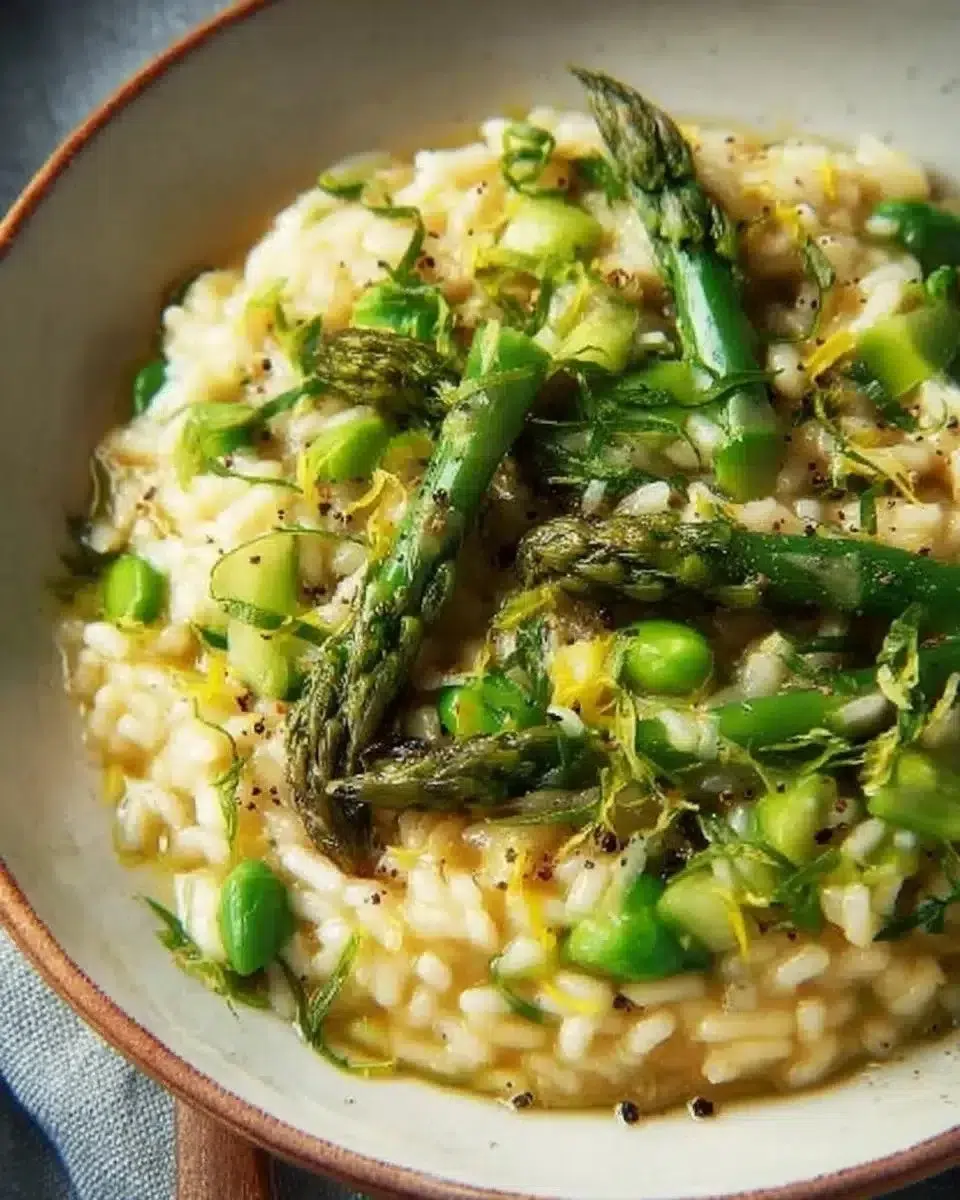
Asparagus Risotto for Spring — Creamy Weeknight Risotto
Bright green asparagus, nutty Parmesan, and silky Arborio rice come together in a bowl that tastes like spring. Asparagus Risotto is both simple and showy: it looks special but cooks fast enough for a weeknight. I refined this version after testing it 8 times in a busy home kitchen to balance speed, creaminess, and fresh asparagus flavor. The rice finishes al dente, the stalks stay tender-crisp, and the sauce is velvety without extra cream. If you like quick seasonal meals, you might also enjoy our collection of 30-minute meals for busy weeknights, which pairs well with this risotto. Read on for exact measurements, timing, and pro tips to get perfect risotto every time.
Why This Recipe Works
- Short, steady simmering of stock releases starch from Arborio rice for a silky, clingy texture.
- Blanching asparagus preserves its bright color and gives a tender-crisp bite that contrasts the rice.
- Finely chopped shallot and a splash of white wine lift flavor without overpowering the delicate veggies.
- Finishing with cold butter and grated Parmesan creates an emulsion that yields a glossy, rich sauce.
- Testing across different stoves showed stirring pace and hot broth temperature are the biggest variables; this method controls both.
Ingredients Breakdown
- Arborio rice — 300 g (1 1/2 cups): High-starch short-grain rice that makes risotto creamy. Do not substitute long-grain rice.
- Vegetable or chicken stock — 1,200 ml (5 cups): Hot stock feeds the rice gradually. Use low-sodium if you want more control over salt.
- Asparagus — 400 g (14 oz), trimmed and cut into 3–4 cm (1–1.5 in) pieces: Tip pieces reserved for garnish. Thicker stalks can be halved lengthwise.
- Dry white wine — 120 ml (1/2 cup): Adds acidity and depth. You may omit and add an extra 60 ml (1/4 cup) stock.
- Shallot — 1 medium (about 60 g), finely chopped: Sweats gently to build the base flavor.
- Garlic — 2 cloves, minced: Adds aroma; do not brown.
- Unsalted butter — 30 g (2 tbsp): For finishing and silkiness. Use more for a richer finish.
- Olive oil — 15 ml (1 tbsp): For sautéing shallot.
- Parmesan cheese — 60 g (1/2 cup) finely grated: Adds umami. Use fresh-grated Parmigiano-Reggiano for best melt and flavor.
- Lemon zest — from 1/2 lemon: Brightens the dish at the end.
- Salt and black pepper: Season to taste. Use Diamond Crystal kosher salt if possible — if using Morton’s, use about half the volume because it’s denser.
Substitutions and impact warnings:
- Swap vegetable stock for chicken stock for more savory depth; flavor will be richer.
- Vegan version: replace butter and Parmesan with 30 g (2 tbsp) olive oil and 50 g (1/2 cup) nutritional yeast — texture will be slightly less creamy.
- Do not replace Arborio with quick-cooking rice; the texture and cooking method will not translate.
Essential Equipment
- Heavy-bottomed sauté pan or shallow wide pot (3–4 quart / 3–4 L): Wide surface helps even cooking and evaporation.
- Saucepan to keep stock hot: A cold broth will stall rice cooking.
- Wooden spoon or heatproof spatula: Stir gently to release starch.
- Chef’s knife and cutting board for asparagus and shallot.
- Fine grater for Parmesan and microplane for lemon zest.
If you don’t have a wide pan, use the widest pot available to increase surface area and help with even evaporative cooking. For blanching asparagus without a steamer, use a mesh sieve and dunk in boiling water, then transfer directly to an ice bath.
See a small-batch simmer guide for techniques that work well when maintaining hot liquids at a steady temperature.
Step-by-Step Instructions
Prep Time: 15 minutes · Cook Time: 25 minutes · Inactive Time: None · Total Time: 40 minutes · Servings: 4
Step 1: Prepare the asparagus and stock
Bring 1,200 ml (5 cups) stock to a gentle simmer in a saucepan and keep it hot over low heat. Trim and cut 400 g (14 oz) asparagus into 3–4 cm (1–1.5 in) pieces; reserve the tips separately. Blanch the asparagus (except tips) in boiling water for 1 minute, then plunge into ice water to stop cooking; drain.
Step 2: Sweat the aromatics
Heat 15 ml (1 tbsp) olive oil in your wide pan over medium heat. Add 1 medium shallot (about 60 g) and sauté until translucent and fragrant, about 3–4 minutes, stirring every 30 seconds. Add 2 cloves minced garlic and cook 30 seconds more.
Step 3: Toast the rice and deglaze
Add 300 g (1 1/2 cups) Arborio rice to the pan and toss for 1–2 minutes until edges are slightly translucent and the rice smells nutty. Pour in 120 ml (1/2 cup) dry white wine and simmer until the liquid almost evaporates, about 2–3 minutes.
Step 4: Add hot stock gradually
Ladle 120–180 ml (1/2–3/4 cup) hot stock into the rice and stir gently until mostly absorbed, about 3–4 minutes. Continue adding stock in 120–180 ml (1/2–3/4 cup) increments, stirring every 1–2 minutes, until rice is al dente, about 18–20 minutes total. Taste at 15 minutes for doneness.
Step 5: Stir in asparagus and finish
When rice is just tender with a slight bite, stir in blanched asparagus pieces and the reserved tips; cook 1–2 minutes until asparagus is heated through. Remove from heat and add 30 g (2 tbsp) cold unsalted butter and 60 g (1/2 cup) finely grated Parmesan, stirring to emulsify and create a glossy sauce. Season with salt, pepper, and lemon zest from 1/2 lemon.
Step 6: Rest and serve
Let the risotto rest 1 minute off heat — this allows the sauce to settle. Serve immediately in shallow bowls with extra Parmesan and a drizzle of olive oil.
Expert Tips & Pro Techniques
- Keep the stock hot: Cold stock cools the pan and slows starch release; always ladle from simmering stock.
- Stir, but don’t obsess: Gentle, frequent stirring (every 30–60 seconds) releases starch without breaking grains. Overstirring can make the texture gluey.
- Taste for texture, not time: Use time as a guide but always taste for al dente — rice should be tender with a tiny center bite.
- Common mistake: Adding all stock at once. This makes the rice stew, not risotto. Add stock gradually and wait until most liquid is absorbed.
- Make-ahead: Cook risotto to 90% doneness, cool quickly, and refrigerate up to 24 hours. To finish, reheat in a wide pan with 120–240 ml (1/2–1 cup) hot stock, stirring until creamy and done.
- Professional trick at home: Finish with cold butter (monté) and cheese off the heat to create an emulsion for a glossy finish.
- If your rice is underdone and broth is gone, add hot water 60 ml (1/4 cup) at a time and keep going.
Storage & Reheating
Refrigerator: Store leftovers in an airtight container for up to 3 days. Cool within 2 hours of cooking.
Freezer: Risotto freezes okay for up to 1 month in a freezer-safe container. Thaw in the fridge overnight before reheating. Texture will be slightly softer after freezing.
Reheating: Reheat gently in a wide skillet over medium-low heat with 60–120 ml (1/4–1/2 cup) hot stock or water per serving, stirring until loose and creamy, about 4–6 minutes. Avoid microwaving when possible — it can make the texture uneven.
Variations & Substitutions
- Vegan Version: Replace 30 g (2 tbsp) butter with 30 ml (2 tbsp) olive oil and 60 g (1/2 cup) grated vegan Parmesan or 50 g (1/2 cup) nutritional yeast. Finish with lemon zest. Keep cook times the same.
- Spring Pea & Asparagus Risotto: Stir in 150 g (1 cup) shelled peas in the last 2 minutes for color and sweetness. Flavor remains fresh; no other time changes needed.
- Lemon-Herb: Add 1 tbsp chopped fresh tarragon and 2 tbsp chopped chives at the end. Keep the same base but reduce salt slightly to compensate for added herbs.
- Mushroom & Asparagus: Sauté 200 g (7 oz) sliced mushrooms first, then remove and add back when finishing. Cook time increases by 2–3 minutes for mushrooms to brown.
- Gluten-Free Note: Risotto is naturally gluten-free if you use certified gluten-free stock. No changes to rice or timing.
Try a simple oven technique if you want to roast mushrooms or other add-ins before folding them in.
Serving Suggestions & Pairings
- Light salad: Serve with a peppery arugula salad dressed in lemon vinaigrette to cut richness.
- Protein: Pan-seared salmon or a simple roasted chicken breast pair well; for a contrast try air-fried asparagus or steak recipes alongside.
- Wine: A crisp Pinot Grigio or a light Vermentino complements the lemon and vegetable notes.
- Garnish: Extra lemon zest, a sprinkle of flaky sea salt, and fresh parsley make the plate pop.
Nutrition Information
Serving size: about 1 bowl (1 cup) — Recipe makes 4 servings.
Per serving (estimate):
- Calories: 420 kcal
- Total Fat: 14 g
- Saturated Fat: 6 g
- Cholesterol: 20 mg
- Sodium: 520 mg
- Total Carbohydrates: 56 g
- Dietary Fiber: 3 g
- Sugars: 3 g
- Protein: 12 g
Nutrition values are estimates. Actual values may vary based on specific ingredients and preparation methods.
Frequently Asked Questions
Q: Why did my risotto turn out mushy?
A: Mushy risotto usually means the rice was overcooked or too much liquid was added at once. Use Arborio rice, add hot stock in increments, and stop when rice is al dente.
Q: Can I make this without butter or Parmesan?
A: Yes. Use 30 ml (2 tbsp) olive oil and 50 g (1/2 cup) nutritional yeast for a vegan option. Expect a slightly different mouthfeel and less creaminess.
Q: Can I double this recipe?
A: Yes, you can double the ingredients, but use a wider pan and maintain the same gentle stirring technique. Work in a pan that gives enough surface area so evaporation is steady.
Q: Can I prepare this the night before?
A: Partially — cook to about 90% doneness, cool quickly, and refrigerate. Finish by reheating with 120–240 ml (1/2–1 cup) hot stock until done.
Q: How long does risotto keep in the fridge?
A: Store in an airtight container for up to 3 days. Reheat with a splash of hot stock to bring back creaminess.
Q: My asparagus got soggy. How do I avoid that?
A: Blanch asparagus 60–90 seconds and shock it in ice water to stop cooking. Add it to the risotto in the final 1–2 minutes so it warms but stays crisp-tender.
Q: Can I use frozen asparagus or peas?
A: Yes. Add frozen peas or asparagus in the last 2–3 minutes of cooking. Thawed items cook faster, so adjust timing to preserve texture.
Conclusion
This Asparagus Risotto is a fast, seasonal dish that feels special but needs only a little attention and the right technique. For more ideas that use asparagus and spring vegetables, see this lovely Creamy Pea and Asparagus Risotto recipe that highlights peas alongside asparagus. If you prefer a plant-based take with cashew cream, check this spring risotto variation with roasted garlic and cashew cream for inspiration: Spring Risotto with Asparagus, Peas + Roasted Garlic Cashew Cream.
Print
Asparagus Risotto
- Total Time: 40 minutes
- Yield: 4 servings 1x
- Diet: Vegetarian
Description
A creamy, bright, and quick risotto featuring fresh asparagus and Parmesan, perfect for weeknight dinners.
Ingredients
- 300 g (1 1/2 cups) Arborio rice
- 1,200 ml (5 cups) vegetable or chicken stock
- 400 g (14 oz) asparagus, trimmed and cut into 3–4 cm (1–1.5 in) pieces
- 120 ml (1/2 cup) dry white wine
- 1 medium shallot (about 60 g), finely chopped
- 2 cloves garlic, minced
- 30 g (2 tbsp) unsalted butter
- 15 ml (1 tbsp) olive oil
- 60 g (1/2 cup) finely grated Parmesan cheese
- Lemon zest from 1/2 lemon
- Salt and black pepper, to taste
Instructions
- Prepare the asparagus and stock: Bring stock to a gentle simmer in a saucepan and keep hot over low heat. Blanch asparagus (except tips) in boiling water for 1 minute, then plunge into ice water; drain.
- Heat olive oil in a wide pan over medium heat. Add shallot and sauté until translucent, about 3–4 minutes. Add minced garlic and cook for 30 seconds.
- Add Arborio rice to the pan and toss for 1–2 minutes until edges are translucent. Pour in white wine and simmer until almost evaporated, about 2–3 minutes.
- Ladle hot stock into the rice in increments, stirring until mostly absorbed, about 18–20 minutes total.
- Stir in blanched asparagus pieces and reserved tips; cook for 1–2 minutes until heated through. Remove from heat and add butter and Parmesan, stirring to emulsify.
- Let the risotto rest off heat for 1 minute, then serve immediately with extra Parmesan and a drizzle of olive oil.
Notes
Keep the stock hot to ensure proper cooking. Stir gently and do not add all stock at once to avoid mushy risotto.
- Prep Time: 15 minutes
- Cook Time: 25 minutes
- Category: Main Course
- Method: Stovetop
- Cuisine: Italian
Nutrition
- Serving Size: 1 serving
- Calories: 420
- Sugar: 3g
- Sodium: 520mg
- Fat: 14g
- Saturated Fat: 6g
- Unsaturated Fat: 8g
- Trans Fat: 0g
- Carbohydrates: 56g
- Fiber: 3g
- Protein: 12g
- Cholesterol: 20mg

Written by Anna
Anna is a professional recipe developer and food writer at Al3abFun. With over 8 years of experience in recipe development and food styling, she specializes in creating approachable, tested recipes that bring families together around the dinner table. Anna holds a culinary arts certification and has been featured in various food publications. Every recipe on Al3abFun is triple-tested in her home kitchen to ensure perfect results every time.