Soft & Thick Peanut Butter Cookies
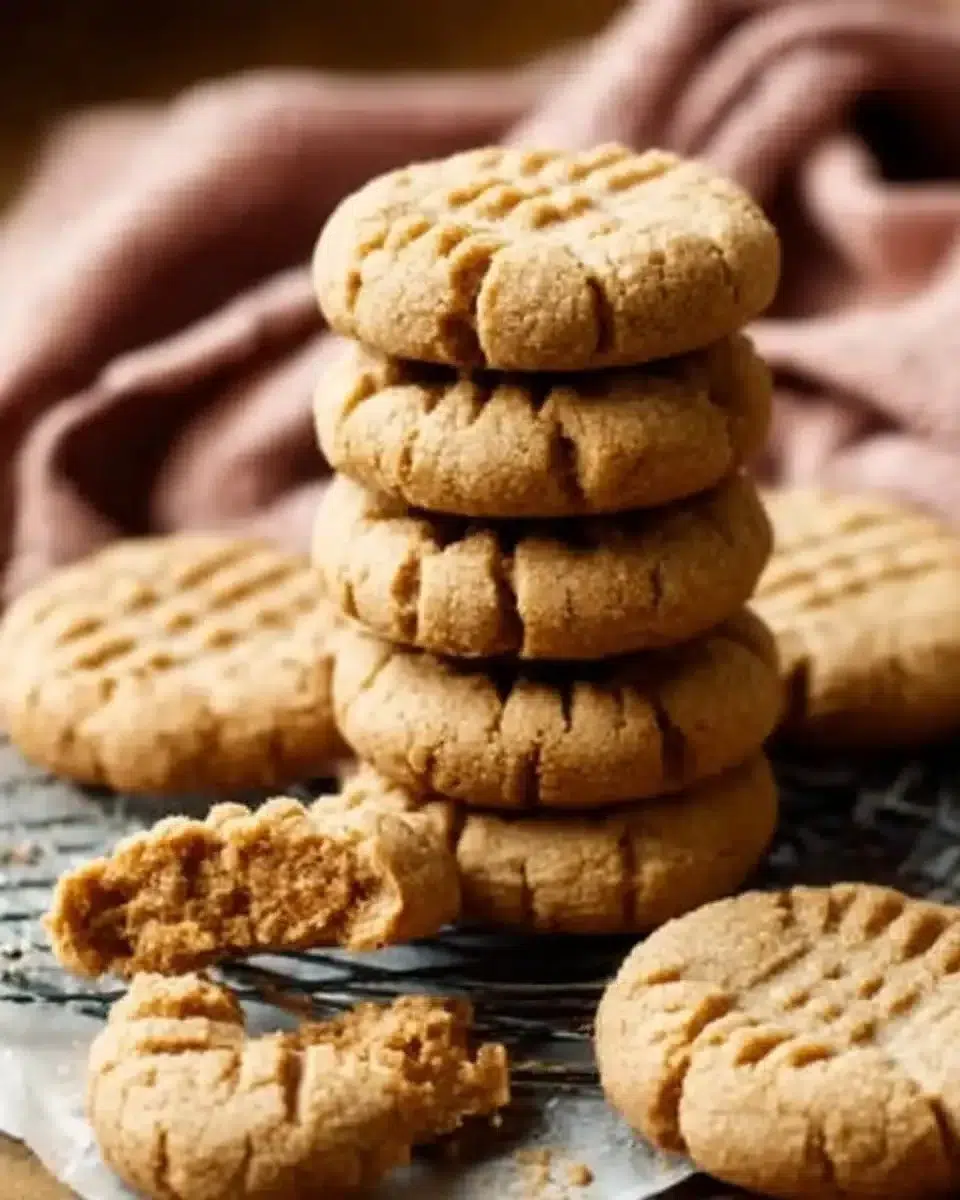
The first bite should be a soft, tender center with a warm peanut aroma and a slightly crisp edge — that’s what these Soft & Thick Peanut Butter Cookies deliver. After testing this recipe 12 times with different peanut butters and chilling times, I settled on a balance of ingredients and technique that reliably yields pillowy, thick cookies every batch. I developed and refined this version while teaching home baking classes, and it’s the one I reach for when I want comfort food that actually looks like it came from a bakery.
This recipe is noteworthy because it uses a small amount of additional flour and an extra egg yolk to build structure without drying the cookie. The dough is lightly chilled to prevent spread, which keeps the cookies thick and soft. If you want a chocolate twist, try our chocolate peanut butter cookie variation for a rich combo of flavors chocolate peanut butter cookies. Read on for a clear ingredient breakdown, precise step-by-step instructions, pro tips, and answers to common questions so you can bake these with confidence.
Why This Recipe Works
- A bit more flour and a single extra egg yolk add body and tenderness without making the cookie cakey.
- Chilling the dough firms the fat so cookies spread less and bake thicker.
- Brown sugar and a short creaming time keep moisture and chew while still allowing the cookies to rise.
- Baking at a slightly higher temperature for a short time sets the edges quickly and leaves centers soft.
- Testing with natural and creamy peanut butter showed that natural brands make the cookies more intensely peanutty but slightly oilier—adjust chilling time accordingly.
Ingredients Breakdown
- All-purpose flour — 300 g (2 1/3 cups): Provides structure. If you add too much, cookies become dry and crumbly.
- Baking powder — 5 g (1 tsp): Gives a gentle lift. Do not replace with baking soda only; flavor and texture change.
- Baking soda — 3 g (1/2 tsp): Reacts with brown sugar for a light rise.
- Salt — 4 g (3/4 tsp Diamond Crystal or 1/2 tsp Morton’s): Enhances flavor. If using Morton’s, use slightly less since it is denser.
- Unsalted butter, softened — 170 g (3/4 cup): Adds richness and helps spread. Use unsalted so you control sodium.
- Granulated sugar — 100 g (1/2 cup): Adds sweetness and crispness to the edge.
- Light brown sugar, packed — 110 g (1/2 cup + 2 tbsp): Adds moisture and chew.
- Large egg + 1 extra yolk — 1 large egg and 1 yolk (about 60 g total): Egg whites lighten while the extra yolk adds richness and chew.
- Vanilla extract — 5 ml (1 tsp): Rounds flavors.
- Creamy peanut butter — 240 g (1 cup): Use a brand you like. Natural peanut butter will increase oil content and may require extra chilling to prevent spreading.
- Optional: coarse sugar or flaky sea salt for finishing.
Substitutions with impact warnings:
- Gluten-free: Use a 1:1 gluten-free flour blend and add ½ tsp xanthan gum; texture will be slightly more tender.
- Dairy-free: Substitute plant-based butter, but cookies may be less rich and slightly more brittle.
- Sugar swaps: Replacing brown sugar with all granulated will reduce chew and moisture.
Essential Equipment
- Baking sheets (two), lined with parchment or silicone mats — rotate halfway through baking for even color.
- Kitchen scale — for consistent, repeatable results.
- Cookie scoop (2 tbsp / 30 ml) — makes uniform rounds and consistent bake times.
- Stand mixer or hand mixer — for creaming butter and sugars. A wooden spoon works, but mixing will take longer.
- Cooling rack — cool cookies completely to set centers.
If you don’t have a scale, use the volume conversions above, but weigh flour after spooning into the cup to avoid dense dough. For a stand mixer, the paddle attachment is ideal; if you only have a whisk, avoid aerating the dough too much.
Step-by-Step Instructions
Prep Time: 15 minutes | Cook Time: 9–11 minutes per batch | Inactive Time: 30–60 minutes chilling | Total Time: 55–85 minutes | Servings: 24 cookies
Step 1: Preheat and prepare
Preheat the oven to 175°C (350°F). Line two baking sheets with parchment paper and set them aside. Chilling the dough later is essential to keep the cookies thick.
Step 2: Mix dry ingredients
Whisk together 300 g (2 1/3 cups) all-purpose flour, 5 g (1 tsp) baking powder, 3 g (1/2 tsp) baking soda, and 4 g (3/4 tsp Diamond Crystal or 1/2 tsp Morton’s) salt in a bowl for 10–15 seconds until evenly distributed. This prevents pockets of leavening powder.
Step 3: Cream butter and sugars
In a mixer, beat 170 g (3/4 cup) softened unsalted butter with 100 g (1/2 cup) granulated sugar and 110 g (1/2 cup + 2 tbsp) packed light brown sugar for 2–3 minutes on medium speed until lighter in color and slightly fluffy. Do not overbeat — you want creaminess, not aeration.
Step 4: Add egg, yolk, vanilla, and peanut butter
Add 1 large egg and 1 extra yolk, mixing 30–45 seconds until combined. Stir in 5 ml (1 tsp) vanilla and 240 g (1 cup) creamy peanut butter until smooth, about 20–30 seconds.
Step 5: Combine with dry ingredients
Add the dry mix in two additions, mixing on low until just combined, 15–20 seconds per addition. Do not overmix — stop as soon as no dry flour is visible. The dough should be thick and slightly sticky.
Step 6: Chill the dough
Scoop dough into 30 ml (2 tbsp) portions and place on a tray, spacing 2 inches apart. Chill for 30–60 minutes. Chilling firms the fat and prevents spreading, yielding thick cookies.
Step 7: Bake
Place chilled dough 6 per baking sheet and bake at 175°C (350°F) for 9–11 minutes, rotating pans halfway through. Remove when edges are lightly golden but centers still look soft — they will continue to set while cooling.
Step 8: Cool and finish
Let cookies cool on the tray for 5 minutes, then transfer to a rack to cool completely. If desired, sprinkle flaky sea salt or coarse sugar on warm cookies for contrast.
Expert Tips & Pro Techniques
- Common mistake: Overbaking. Remove when centers are soft and edges just set — cookies will firm as they cool.
- Use room-temperature butter for even creaming. If butter is too warm, dough will be greasy and cookies will spread.
- Make-ahead: Scoop dough and freeze individual balls on a tray. Transfer to a zip-top bag and bake from frozen, adding 1–2 minutes to bake time.
- Professional trick: Add 1 tbsp cornstarch to the flour for extra tenderness and a slightly cakier lift without losing chew.
- If using natural peanut butter, chill the dough on the baking sheet for 15 minutes after scooping to help solidify the oils and reduce spread.
- For perfectly even cookies, weigh each portion (about 30–32 g per cookie) with a scale rather than using a scoop.
Storage & Reheating
- Refrigerator: Store cooled cookies in an airtight container at room temperature for up to 5 days. If your kitchen is warm, refrigerate for up to 7 days in a sealed container.
- Freezer: Cookies freeze well. Lay cooled cookies in a single layer on a tray, freeze until firm, then transfer to a freezer-safe bag for up to 3 months. Dough balls also freeze well using the make-ahead method above.
- Reheating: Warm cookies in a 160°C (325°F) oven for 4–6 minutes to revive softness. Avoid microwaving — it can make them gummy.
Variations & Substitutions
- Gluten-Free Version: Replace 300 g flour with a 1:1 gluten-free blend (e.g., Bob’s Red Mill) and add ½ tsp xanthan gum if your blend doesn’t contain it. Baking time may increase by 1–3 minutes.
- Chocolate-Peanut Butter: Fold 80 g (3/4 cup) semisweet chocolate chips into the dough and press a few extra chips on top before baking. Bake the same time.
- Lower-Sugar: Reduce granulated sugar to 75 g (6 tbsp) and brown sugar to 85 g (6 tbsp); cookies will be slightly less chewy and less browned.
- Vegan/Dairy-Free: Use plant-based butter and a flax “egg” (1 tbsp ground flaxseed + 2.5 tbsp water equals one egg). Texture will be slightly more tender and fragile; chill longer before baking.
- Salted Peanut Butter Variation: Use a salted peanut butter and reduce added salt to 1/4 tsp Morton’s to avoid over-salting.
Serving Suggestions & Pairings
- Serve warm with a tall glass of cold milk or a mug of black coffee for contrast.
- Top with a smear of jam and a warm cookie for a peanut butter and jelly quick treat.
- Pair with crumbly shortbread cookies or our chocolate-peanut-butter bars for a cookie platter (bake chocolate peanut butter).
- Garnish with flaky sea salt and a drizzle of melted dark chocolate for a dessert plate.
Nutrition Information
Serving size: 1 cookie | Servings: 24 cookies
Estimated per serving: Calories 150 kcal; Total Fat 9 g; Saturated Fat 2 g; Cholesterol 30 mg; Sodium 120 mg; Total Carbohydrates 15 g; Dietary Fiber 1 g; Sugars 9 g; Protein 4 g.
Nutrition values are estimates. Actual values may vary based on specific ingredients and preparation methods.
Frequently Asked Questions
Q: Why did my cookies spread too much?
A: Over-soft butter, too-warm dough, or not chilling the dough are the top causes. Chill the dough 30–60 minutes and make sure butter is only softened, not greasy.
Q: Can I make this without eggs?
A: Yes. Use a flax egg (1 tbsp ground flax + 2.5 tbsp water, rest 5 minutes) for one egg; add an extra binding agent like 1 tsp cornstarch if needed. Expect a slightly different texture.
Q: Can I double this recipe?
A: Yes — double all ingredients and mix in a large bowl or in two batches. Chill the dough in portions so it firms evenly; baking time stays the same.
Q: Can I prepare the dough the night before?
A: Absolutely. Scoop or store the dough, covered, in the refrigerator overnight. Bring it to a slightly cooler temperature for 5 minutes before baking if very firm.
Q: How long do these keep in the fridge?
A: Baked cookies keep at room temperature in an airtight container for about 5 days. If your kitchen is warm, store them refrigerated for up to 7 days.
Q: My cookies are cakey — how do I fix that?
A: Likely too much flour or overmixing. Weigh the flour and mix only until combined. Use the extra yolk and a touch less flour next time.
Q: Can I use crunchy peanut butter?
A: Yes. Crunchy will add texture. For a uniform chew, some pieces may create small pockets where crumbs gather; adjust for personal preference.
Conclusion
These Soft & Thick Peanut Butter Cookies are designed to be forgiving and reliably tender, whether you bake them for a weeknight treat or a cookie swap. For inspiration and an alternate method that emphasizes extra softness, check the detailed tutorial at Soft & Thick Peanut Butter Cookies Recipe – Sally’s Baking Addiction. If you like a slightly different texture and technique, see the comparison and tips at The Best Soft & Thick Peanut Butter Cookies – Design Eat Repeat.
Print
Soft & Thick Peanut Butter Cookies
- Total Time: 55 minutes
- Yield: 24 cookies 1x
- Diet: Vegetarian
Description
Deliciously soft and thick peanut butter cookies with a tender center and slightly crisp edges, perfected through multiple trials.
Ingredients
- 300 g (2 1/3 cups) all-purpose flour
- 5 g (1 tsp) baking powder
- 3 g (1/2 tsp) baking soda
- 4 g (3/4 tsp Diamond Crystal or 1/2 tsp Morton’s) salt
- 170 g (3/4 cup) unsalted butter, softened
- 100 g (1/2 cup) granulated sugar
- 110 g (1/2 cup + 2 tbsp) light brown sugar, packed
- 1 large egg + 1 extra yolk
- 5 ml (1 tsp) vanilla extract
- 240 g (1 cup) creamy peanut butter
- Optional: coarse sugar or flaky sea salt for finishing
Instructions
- Preheat the oven to 175°C (350°F) and line two baking sheets with parchment paper.
- Whisk together the flour, baking powder, baking soda, and salt in a bowl.
- Beat the softened butter with granulated sugar and light brown sugar until creamy.
- Add the egg, extra yolk, vanilla, and peanut butter, mixing until smooth.
- Combine the dry ingredients in two additions until just mixed.
- Scoop the dough into portions and chill for 30–60 minutes.
- Bake the chilled dough for 9–11 minutes, rotating halfway through.
- Cool on the tray for 5 minutes before transferring to a rack.
Notes
Chilling the dough is essential for thick cookies. Use room-temperature butter for best results. If using natural peanut butter, consider chilling the dough longer to prevent spreading.
- Prep Time: 15 minutes
- Cook Time: 11 minutes
- Category: Dessert
- Method: Baking
- Cuisine: American
Nutrition
- Serving Size: 1 cookie
- Calories: 150
- Sugar: 9g
- Sodium: 120mg
- Fat: 9g
- Saturated Fat: 2g
- Unsaturated Fat: 7g
- Trans Fat: 0g
- Carbohydrates: 15g
- Fiber: 1g
- Protein: 4g
- Cholesterol: 30mg

Written by Sadka
Sadka is the founder and editor-in-chief of Al3abFun. Passionate about making delicious food accessible to everyone, Sadka oversees recipe development, nutritional accuracy, and editorial quality across all published content. With a background in food science and digital publishing, Sadka ensures every recipe meets the highest standards of taste, accuracy, and presentation.