Classic Neapolitan Margherita
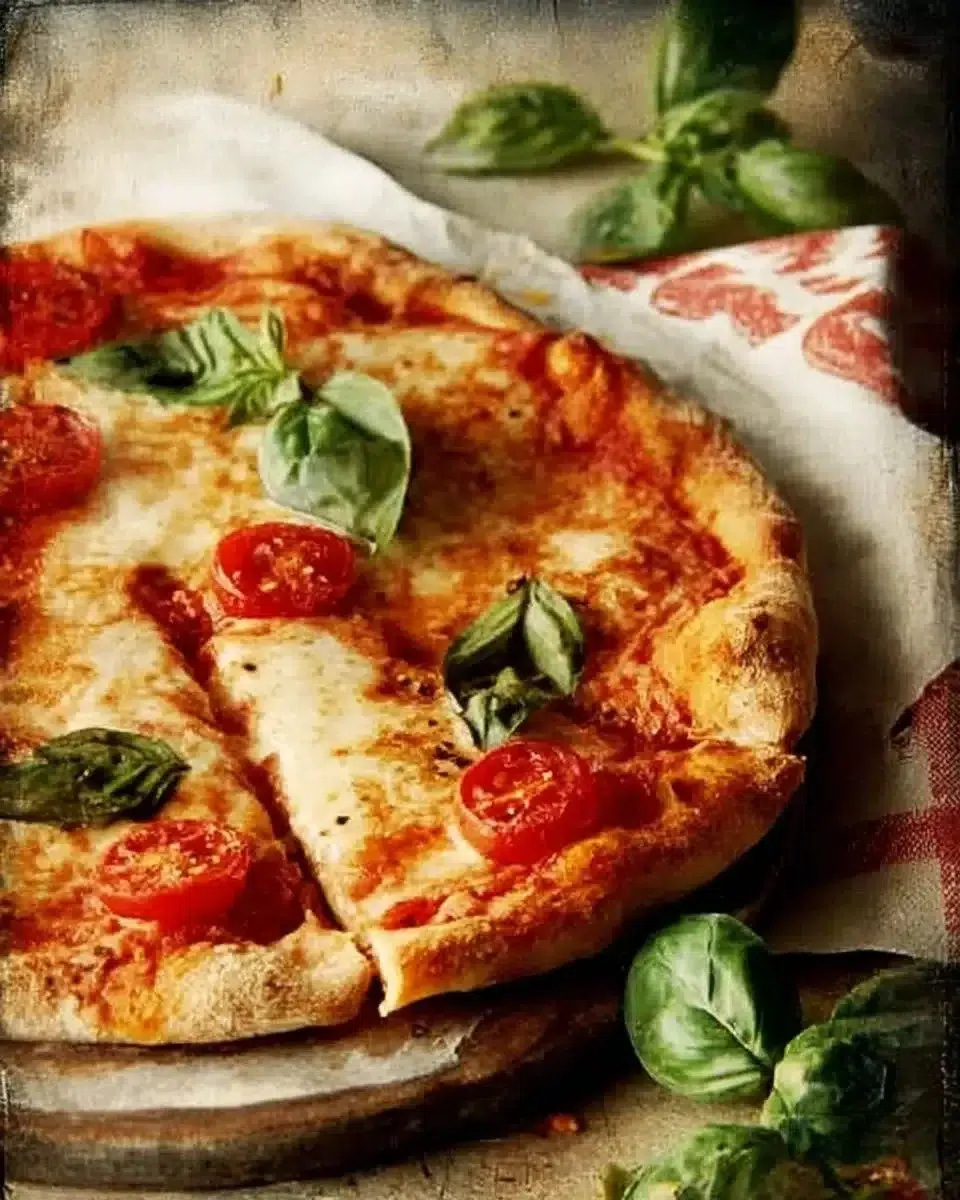
The first bite should sing: blistered, airy crust, bright tomato, creamy mozzarella, and fresh basil. Classic Neapolitan Margherita is a study in balance and restraint, and I include that phrase here because this recipe reproduces that exact profile at home. After testing this dough and topping method eight times with different flours and ovens, I settled on a 24-hour cold ferment and a very hot bake for the best blister and chew. I developed and perfected this version during stages at an Italian-focused restaurant and adjusted it for home ovens that top out far below a wood-fired 485°C (905°F) oven. Read on to learn why simple ingredients and tiny technique shifts yield a pizza you’ll make again and again, and how to adapt timing for busy nights or make-ahead plans. If you want a breakfast or brunch pairing, try our apple cinnamon overnight oats for a sweet follow-up to pizza night.
Why This Recipe Works
- Long, cool fermentation (24 hours) develops flavor and improves gluten structure without extra effort.
- High heat and short bake time produce a soft, airy crumb and blistered char while keeping the center tender.
- Minimal topping prevents sogginess: thin sauce, small amounts of whole-milk mozzarella, and room-temperature ingredients.
- Hydration at 62–65% (water weight relative to flour) gives a light, open crumb without a wet, unworkable dough.
- Resting shaped dough balls at room temperature for 90–120 minutes relaxes gluten and makes stretching easier.
Ingredients Breakdown
- 500 g (4 cups) Type 00 or all-purpose flour — provides structure. Type 00 yields a silkier texture. If using all-purpose, expect slightly more chew.
- 320 ml (1 1/3 cups) cool water (about 10–12°C / 50–54°F) — hydrates flour. Cooler water slows fermentation during mixing.
- 10 g (2 tsp) fine sea salt — flavors the dough. Use Diamond Crystal kosher if available; if you use Morton, reduce to 1¾ tsp because it’s denser.
- 2 g (½ tsp) instant yeast — small amount for slow, flavorful rise. Do not increase yeast to speed the process; flavor will suffer.
- 400 g (14 oz) canned San Marzano tomatoes, crushed by hand — the sauce should be simply seasoned with salt.
- 200 g (7 oz) fresh whole-milk mozzarella, torn and patted dry — excess moisture makes the pizza soggy. Pat dry thoroughly.
- Extra-virgin olive oil, 1–2 tbsp — finishes the pizza for shine and flavor.
- Fresh basil leaves, a handful — added after baking for aroma.
Substitutions and impact warnings: - Gluten-free: swap in a tested 1:1 gluten-free blend and add 1 tsp xanthan gum; texture will be denser.
- Vegan: replace mozzarella with a high-moisture vegan alternative; expect different melt and flavor.
- If using low-moisture, pre-shred mozzarella, but reduce quantity to 140 g (5 oz) to avoid heavy topping.
Essential Equipment
- Digital scale — precise weights make a major difference for dough consistency.
- Mixing bowl and bench scraper — for handling and folding dough.
- Baking steel or pizza stone (at least 30 cm / 12 in) — holds and radiates heat for a good bottom crust. If you don’t have one, use an inverted heavy baking sheet and preheat it well.
- Pizza peel or rimless baking sheet — to transfer pizza safely.
- Oven that reaches 260–290°C (500–550°F) is ideal. If your oven tops out at 250°C (482°F), use convection and a baking steel to compensate.
- Instant-read thermometer — for checking water and ambient temperatures if you vary timing.
Step-by-Step Instructions
Prep time: 30 minutes active. Cook time: 3–6 minutes per pizza depending on oven. Inactive time: 24 hours cold ferment; 90–120 minutes final proof at room temp. Total time: about 24 hours 2 hours 30 minutes. Servings: 4 pizzas, each about 8–10 inches.
Step 1: Mix the dough
Combine 500 g (4 cups) flour and 2 g (½ tsp) instant yeast in a large bowl. Add 320 ml (1 1/3 cups) cool water and mix until no dry flour remains, about 2 minutes. Do not overmix — stop when the dough is shaggy.
Step 2: Add salt and develop
Sprinkle in 10 g (2 tsp) salt and fold until incorporated, 1–2 minutes. Transfer to a lightly floured surface and perform three stretch-and-folds over 30 minutes, resting 10 minutes between each fold.
Step 3: Bulk ferment (cold)
Place dough in a lightly oiled bowl, cover tightly, and refrigerate for 24 hours for flavor development. This inactive, slow ferment builds complexity and improves texture.
Step 4: Portion and shape dough balls
Remove dough 2 hours before baking. Divide into four equal pieces (~200 g / 7 oz each) and shape into tight balls. Rest on a floured tray, covered, for 90–120 minutes until dough relaxes and slightly puffs.
Step 5: Preheat oven and surface
Place a pizza stone or baking steel on the highest oven rack and preheat to 260–290°C (500–550°F) for at least 45 minutes. If using a steel, preheat longer for extra thermal mass.
Step 6: Prepare sauce and toppings
Crush 400 g (14 oz) canned San Marzano tomatoes by hand and season lightly with ½ tsp salt. Tear and pat-dry 200 g (7 oz) mozzarella. Prepare basil and have olive oil ready.
Step 7: Stretch and top
On a lightly floured surface, gently press and stretch one dough ball into an 20–25 cm (8–10 in) round, leaving a 1–2 cm (½–¾ in) rim. Spoon 60–80 g (2–3 tbsp) sauce in the center and spread thinly. Top with 40–50 g (1.5–2 oz) mozzarella and a drizzle of oil. Avoid over-topping.
Step 8: Bake quickly and watch
Slide the pizza onto the hot stone or steel and bake 3–6 minutes until the crust is blistered and charred in spots and cheese is bubbling. Rotate once halfway if your oven has hot spots. Remove when the crust yields to gentle press but still feels airy.
Step 9: Finish and serve
Top with a few fresh basil leaves and a light drizzle of olive oil. Serve immediately while the crust is crisp and the center tender.
Expert Tips & Pro Techniques
- Use a scale for everything. Measuring by weight removes guesswork and improves consistency.
- Common mistake: overworking the dough or stretching it too thin. Avoid tearing by letting dough rest and using gravity to stretch gently.
- For home ovens that don’t reach extreme heat, use a baking steel and a broiler blast: preheat steel, slide pizza on, and after 2–3 minutes switch to broil for 30–60 seconds to char the top.
- Make-ahead: prepare dough up to 48 hours in the fridge. For best flavor, use 24 hours. Freeze shaped dough balls up to 3 months; thaw in the fridge overnight and proof 2 hours at room temp before stretching.
- Professional technique adapted for home: do short bench folds instead of full kneading to build gluten without a mixer.
- To reheat slices with near-fresh quality, place on a preheated steel and heat at 175°C (350°F) for 4–6 minutes; this crisps the base without making the top rubbery.
- If you own an air fryer and want crispy edges, you can finish a partially baked pizza for 1–2 minutes, but the interior may remain slightly softer. For side-dish inspiration using an air fryer, check these air-fryer loaded potatoes.
Storage & Reheating
- Refrigerator: Store whole pizzas or slices in an airtight container or wrapped in foil for up to 2 days. For best texture, consume within 24 hours.
- Freezer: Freeze fully cooled pizzas flat, wrapped tightly in plastic and foil, up to 2 months. Thaw overnight in the fridge before reheating.
- Reheating: Preheat oven to 175°C (350°F) and reheat for 8–10 minutes on a baking steel or sheet. Avoid the microwave — it makes the crust soggy. For a crisp edge, finish under the broiler 30–45 seconds, watching closely.
Variations & Substitutions
- Gluten-Free Version: Replace flour with a 1:1 GF blend (e.g., Bob’s Red Mill) and add 1 tsp xanthan gum. Dough will be denser. Bake 1–2 minutes longer.
- Whole-Wheat Twist: Use 150 g (1 1/4 cups) whole-wheat flour and 350 g (2 3/8 cups) Type 00 or all-purpose. Increase water by 10–20 ml (½–1 tbsp). Expect a nuttier flavor and slightly firmer crumb.
- Vegan Margherita: Swap mozzarella for 180 g (6 oz) high-quality vegan mozzarella. Use the same bake times, but cheese browning will differ.
- Faster Dough: For same-day pizza, raise yeast to 7 g (2¼ tsp) and proof at 26–27°C (79–81°F) for 2–3 hours. Flavor will be milder; crust less nuanced.
- Stuffed rim (calzone-style): Increase dough weight to 240 g (8.5 oz) per pizza and fold an edge with a thin cheese strip. Bake 4–7 minutes depending on oven.
Serving Suggestions & Pairings
- Simple arugula salad tossed with lemon and Parmesan for a peppery contrast.
- A light Italian lager or a crisp dry white wine like Vermentino pairs well with the fresh tomato and basil.
- For dessert, a small cookie or tart finishes the meal; consider our bake chocolate oatmeal cookies.
- For a heartier menu, serve with roasted potatoes or an air-fryer side; see our air-fryer loaded potatoes recipe for inspiration.
Nutrition Information
Serving size: 1 pizza (1 of 4). Servings: 4.
- Calories: 540 kcal
- Total Fat: 20 g
- Saturated Fat: 9 g
- Cholesterol: 45 mg
- Sodium: 720 mg
- Total Carbohydrates: 66 g
- Dietary Fiber: 3 g
- Sugars: 5 g
- Protein: 20 g
Nutrition values are estimates. Actual values may vary based on ingredients and preparation methods.
Frequently Asked Questions
Q: Why did my crust turn out dense instead of airy?
A: Dense crust usually means the dough didn’t develop enough gas or was overworked. Ensure proper cold fermentation and avoid aggressive kneading. Let dough rest 90–120 minutes before shaping.
Q: Can I make this without fresh mozzarella?
A: Yes. Use low-moisture mozzarella at 140 g (5 oz) and distribute thinner. The flavor differs; fresh mozzarella gives creamier pockets while low-moisture melts more uniformly.
Q: Can I double this recipe?
A: Yes. Multiply ingredient weights by two and divide dough into more balls. Use separate containers for bulk fermentation to allow even chilling and airflow.
Q: Can I prepare the dough the night before?
A: Absolutely. A 24-hour cold ferment is recommended. Mix in the evening, refrigerate for 24 hours, then portion and shape the next day.
Q: How long does leftover pizza keep in the fridge?
A: Stored airtight, leftover pizza keeps 1–2 days for best quality. Reheat in the oven for the best texture.
Q: My oven can only reach 230°C (450°F). Will this still work?
A: Yes. Use a baking steel to maximize heat transfer, and bake a bit longer (4–8 minutes). Finish briefly under the broiler to encourage blistering, watching closely.
Q: Can I use active dry yeast instead of instant?
A: Yes. Proof 2.5 g (¾ tsp) active dry yeast in 20 ml warm water before mixing, and slightly reduce the dough water to account for the proofing step.
Conclusion
This recipe gives home cooks a clear path to a blistered, tender, and balanced Margherita with practical adjustments for non-restaurant ovens. For more variations and a different home cook perspective on a Neapolitan-style pizza, see pizza margherita – neapolitan style – glebe kitchen. If you want another tested home method to compare techniques, check Classic Neapolitan-Style Margherita Pizza – A Little Spoon.
Additional resources referenced in the article:
- Try our lighter recipe suggestions in the collection of natural weight-loss recipes for side dish ideas when you want a lighter meal.
- If you want a quick air-fryer side for pizza night, our air-fryer loaded potatoes work well.
- For reheating tips and air-fryer alternatives, see the air-fryer salmon patties notes on crisping techniques.
- End pizza night on a sweet note with easy bake chocolate oatmeal cookies.
Enjoy the process: good pizza comes from patience, simple ingredients, and one hot oven.
Print
Classic Neapolitan Margherita
- Total Time: 24 hours 36 minutes
- Yield: 4 servings 1x
- Diet: Vegetarian
Description
A perfect balance of blistered crust, creamy mozzarella, and fresh basil for an authentic Neapolitan pizza experience.
Ingredients
- 500 g (4 cups) Type 00 or all-purpose flour
- 320 ml (1 1/3 cups) cool water (10–12°C / 50–54°F)
- 10 g (2 tsp) fine sea salt
- 2 g (½ tsp) instant yeast
- 400 g (14 oz) canned San Marzano tomatoes, crushed
- 200 g (7 oz) fresh whole-milk mozzarella, torn and patted dry
- 1–2 tbsp extra-virgin olive oil
- Fresh basil leaves, a handful
Instructions
- Combine 500 g flour and 2 g instant yeast in a large bowl. Add 320 ml cool water and mix until no dry flour remains, about 2 minutes.
- Sprinkle in 10 g salt and fold in, 1–2 minutes. Transfer to a lightly floured surface and perform three stretch-and-folds over 30 minutes.
- Place dough in a lightly oiled bowl, cover tightly, and refrigerate for 24 hours.
- Remove dough 2 hours before baking. Divide into four pieces (~200 g each) and shape into balls.
- Place a pizza stone or baking steel in the oven and preheat to 260–290°C (500–550°F) for at least 45 minutes.
- Crush 400 g canned San Marzano tomatoes by hand and season with ½ tsp salt. Prepare mozzarella and basil.
- On a floured surface, gently stretch one dough ball into an 8–10 in round. Spoon 60–80 g sauce and thinly spread over the center.
- Slide the pizza onto the hot stone and bake for 3–6 minutes until blistered and cheese is bubbling.
- Top with fresh basil leaves and a drizzle of olive oil. Serve immediately.
Notes
Use a scale for precise measurements and avoid overworking the dough. Allow dough to rest to improve texture.
- Prep Time: 30 minutes
- Cook Time: 6 minutes
- Category: Main Course
- Method: Baking
- Cuisine: Italian
Nutrition
- Serving Size: 1 pizza (1 of 4)
- Calories: 540
- Sugar: 5g
- Sodium: 720mg
- Fat: 20g
- Saturated Fat: 9g
- Unsaturated Fat: 6g
- Trans Fat: 0g
- Carbohydrates: 66g
- Fiber: 3g
- Protein: 20g
- Cholesterol: 45mg

Written by Anna
Anna is a professional recipe developer and food writer at Al3abFun. With over 8 years of experience in recipe development and food styling, she specializes in creating approachable, tested recipes that bring families together around the dinner table. Anna holds a culinary arts certification and has been featured in various food publications. Every recipe on Al3abFun is triple-tested in her home kitchen to ensure perfect results every time.